Grand Canyon Vs Bryce Canyon – Which Should You Visit?
Planning a trip to the American Southwest and can’t decide whether to visit the Grand Canyon or Bryce Canyon?
I’ve been lucky enough to visit both, and can understand why it’s hard to choose! Both offer unique experiences and jaw-dropping scenery.
The answer isn’t as simple as just choosing one – everyone is different and will give you a different answer. If you want my personal opinion, I found Bryce Canyon, though smaller, to be much more beautiful and breathtaking than the Grand Canyon. So if I would choose to return to one over the other, this would be my choice.
However, what you really need to think about is what kind of trip you are taking, and where you’ll be going. These two national parks are not in close proximity to one another – so where will you be going and when?
This post compares the major differences between Grand Canyon vs Bryce Canyon to give you all the information you need to choose one for your upcoming trip. (But if you ask me… I’d say visit both if you can!)

Grand Canyon Vs Bryce Canyon: Overview
| Feature | Bryce Canyon | Grand Canyon |
|---|---|---|
| Size | 10 miles wide, over 20 miles long | 277 miles long, up to 18 miles wide, depth of 6,093 feet |
| Elevation | 8,000 ft to 9,000 ft | 8,803 ft (North Rim) 7,498 ft (South Rim) |
| Closest Major Airport | McCarran International Airport (LAS) Las, Vegas & Salt Lake City International Airport (SLC) | Phoenix Sky Harbor International Airport (PHX) & McCarran International Airport (LAS) |
| State | Utah | Arizona |
| Number of Visitors | 2 million | 6 million |
| Best Tour | Private Guided Hike & Picnic | Grand Canyon Helicopter Tour |
| Best Hike | Queen’s Garden Loop | Bright Angel Trail |
| Best Lookout Point | Sunrise and Sunset Points | Mather Point |
| Best Easy Hike | Bryce Canyon Rim Trail | Grand Canyon Rim Trail |
Differences in Size and Geography: Grand Canyon vs Bryce Canyon
One of the biggest difference between the Grand Canyon vs Bryce Canyon, is their size. While both being awe-inspiring national parks, they vary considerably in terms of their size and geography.
The Grand Canyon, located in Arizona, is significantly larger, stretching over 277 miles in length and reaching depths of over a mile.
It spans across a vast area of approximately 1,902 square miles, making it one of the largest canyons in the world – that’s incredible! (I mean, it is called the Grand Canyon after all…). The canyon is also known for its layered bands of colourful rock revealing millions of years of geological history.
Bryce Canyon, situated in Utah, is considerably smaller, covering an area of just 56 square miles. However, it makes up for its smaller size by its unique geological structures known as hoodoos.
These are tall, thin spires of rock that protrude from the bottom of arid basins and “broken” lands. Bryce Canyon is not a canyon in the traditional sense, but rather a collection of giant natural amphitheaters along the eastern side of the Paunsaugunt Plateau.
Despite their differences in size and geography, both parks offer distinct and captivating landscapes that will absolutely blow you away.

The Grand Canyon Receives More Visitors Than Bryce Canyon
One of the important factors to consider when you making your decision will mostly like – which is busier, Grand Canyon or Bryce Canyon?
Every year, millions of visitors are drawn to both the Grand Canyon and Bryce Canyon National Parks. However, the number of visitors to the Grand Canyon significantly surpasses those who visit Bryce Canyon.
In 2019, the Grand Canyon National Park welcomed nearly 6 million visitors, while Bryce Canyon saw just over 2.5 million.
There are several reasons why the Grand Canyon attracts more tourists. Firstly, the Grand Canyon’s immense size and grandeur have made it an iconic symbol not just of Arizona, but of the United States as a whole.
Its sheer scale and the dramatic depth of the canyon make for memorable, panoramic vistas that are often captured in photographs and films, thus attracting more tourists.
Secondly, the Grand Canyon offers a wider variety of activities for visitors, including river rafting in the Colorado River, mule trips, and numerous hiking trails varying in difficulty, catering to both adventure seekers and casual visitors.
Lastly, the Grand Canyon’s accessibility also contributes to its popularity. It is relatively close to several major cities like Las Vegas and Phoenix and is well-served by road networks and airports, making it an easily reachable destination for both domestic and international tourists.
While Bryce Canyon garners fewer visitors, its otherworldly landscape of colourful hoodoos and unique geology make it a must-visit destination if you’re seeking a less crowded, equally stunning alternative to the Grand Canyon.


Weather and Climate: Grand Canyon vs Bryce Canyon
Now, let’s talk about the weather because it can make or break your trip. The Grand Canyon and Bryce Canyon may be neighbours on a map, but their climates can be surprisingly different.
First up, the Grand Canyon. This big guy has a semi-arid climate with rainy summers and snowy winters. The South Rim is usually milder and drier, with temperatures that can reach up to a toasty 85°F (29°C) in the summer and dip to about 20°F (-7°C) in the winter.
The North Rim is colder and wetter and is closed to vehicles in the winter. You can however explore on foot, skis or snowshoes. Bring your coats and boots if you plan a winter visit. And remember, the bottom of the canyon can be way hotter than the rim, so pack plenty of water if you’re going for a hike.
On the other hand, Bryce Canyon is like the quirky cousin with its high-altitude desert climate. Being higher up means colder temperatures. Even in the height of summer, temperatures rarely exceed a comfortable 80°F (26°C), but at night, they can fall close to freezing – so it can get pretty chilly!
I camped at Bryce Canyon back in July of 2018 and it was the coldest night of my trip! So don’t be fooled into thinking Utah is always warm in the summer!
Winters at Bryce are cold, with lots of snow and temperatures that often drop below 0°F (-17°C). And let’s not forget those thunderstorms in late summer, a true spectacle of Mother Nature if you ask me.
Precipitation
When it comes to precipitation, both the Grand Canyon and Bryce Canyon have their seasons of rain and snow, but the timing and volume differ due to their geographical and climatic differences.
The Grand Canyon receives an average annual rainfall of about 15 inches, with the bulk of this falling during the summer months in the form of monsoon-like thunderstorms.
In contrast, winter at the Grand Canyon brings light to moderate snowfall, particularly on the North Rim (which is closed from December to May).
Bryce Canyon, on the other hand, receives an average annual precipitation of about 18 inches. Unlike the Grand Canyon, Bryce sees most of its rainfall in the winter months as heavy snow due to its higher altitude and colder climate.
The summer months also bring afternoon thunderstorms, albeit less frequently than at the Grand Canyon. The combination of snow and ice during the winter months creates a stunning contrast to Bryce’s red rock formations – it’s simply beautiful!
While both parks experience a mix of rain and snow throughout the year, the Grand Canyon’s precipitation is more evenly distributed, whereas Bryce Canyon receives more snow due to its high-altitude desert climate.
Both parks do experience snow fall in winter, so be prepared for road closures if visiting at this time of year.

Getting To & Around Grand Canyon Vs Bryce Canyon
Getting to the Grand Canyon and Bryce Canyon involves either driving or flying into nearby airports and then driving to the parks.
Getting to Grand Canyon
The nearest major international airports to the Grand Canyon are Phoenix Sky Harbor International Airport (PHX) in Phoenix, Arizona, and McCarran International Airport (LAS) in Las Vegas, Nevada.
From Phoenix, it’s approximately a 3.5-hour drive to the South Rim of the Grand Canyon. If you’re coming from Las Vegas, expect a slightly longer drive of about 4.5 hours, or opt to take a tour bus from Las Vegas to the Grand Canyon.
The nearest domestic airport is the Flagstaff Pulliam Airport (FLG) in Flagstaff, Arizona.
If you’re driving from Flagstaff, it’s a shorter trip of roughly 1.5 hours. The main road you’ll take to the Grand Canyon from Flagstaff is US-180 N and AZ-64 W.
If you prefer not to drive, there are also shuttle and bus services available from nearby cities such as Flagstaff and Phoenix.
Getting to Bryce Canyon
The closest major airport to Bryce Canyon is McCarran International Airport (LAS) in Las Vegas, Nevada. From Las Vegas, it’s approximately a 4-hour drive. Or from Salt Lake City International Airport (SLC) in Utah, it’s a 4.5-hour drive to the park.
However, a smaller airport, Cedar City Regional Airport (CDC) in Cedar City, Utah is closer, but has fewer flights. From Cedar City, it’s about a 1.5-hour drive to Bryce Canyon. The main road you’ll take to Bryce Canyon from these airports is UT-14 E.
If you’re starting from the town of Panguitch, Utah, you can reach the park in roughly 30 minutes via UT-63 S.
Remember to check the road conditions and weather forecasts before your trip, as conditions can change rapidly in these areas, especially in winter months.
Getting Around The Parks
Once you’ve arrived at the Grand Canyon or Bryce Canyon, it’s necessary to explore the best ways to get around these vast and magnificent landscapes.
Grand Canyon
At the Grand Canyon, you have a multitude of options. Private vehicles are permitted on most roads, but during the peak season, the park encourages visitors to use the free shuttle bus system to reduce congestion.
The shuttle buses connect the visitor centre, campgrounds, lodges, and scenic overlooks on the South Rim. The Hermit Road and Desert View Drive are closed to private vehicles during peak season, so the shuttle buses are the only way to access these areas.
On the North Rim, most landmarks must be accessed by private vehicle or by foot, as shuttle service is limited. For the more adventurous, mule trips into the canyon or along the rim are a unique way to explore the park and are available from both rims.
Bryce Canyon
In contrast, Bryce Canyon, due to its more compact size, can be explored mostly on foot or by bicycle. Private vehicles are allowed year-round on the main road from Bryce Point to Rainbow Point. The park’s main scenic drive offers 13 viewpoints over 18 miles, all accessible by car.
Bryce also offers a free shuttle bus system that operates between mid-April and late October. The shuttle makes stops at the park’s most popular viewpoints and trailheads, as well as the visitor centre and campgrounds. If you prefer a bit more adventure, horseback trail rides are a fun way to see the park.
Another popular way to explore both parks is by bike. Bicycles are allowed on roads at both Bryce Canyon and the Grand Canyon. Rentals are available at various locations within the parks. There are also guided bike tours available if you prefer a more informative experience.
For a unique perspective, consider taking a mule ride at either park. The Grand Canyon offers half-day and full-day rides along the rim or to the bottom of the canyon, while Bryce Canyon offers shorter guided rides along the rim trail.

Permits and Entry
To visit either the Grand Canyon or Bryce Canyon, you’ll need to purchase an entrance pass. For the Grand Canyon, a private vehicle pass is $35, a motorcycle pass is $30, and an individual person pass is $20.
These passes are valid for seven days and grant you access to Bryce Canyon, and both the North and South Rims of Grand Canyon. The only exception is the North Rim during the winter closure period.
Alternatively you can purchase an American the Beautiful pass for $80 which grants you access to all National Parks and Federal Recreational Lands in the United States for one year.
In addition to the entrance pass, specific permits are also required for certain activities in both parks. This includes backcountry camping, river trips, commercial filming and photography, and special events.
It’s always a good idea to check the parks’ official websites or contact the park directly for the most accurate and up-to-date information.

Scenic Drives
Both the Grand Canyon and Bryce Canyon offer scenic drives that boast awe-inspiring vistas. The choice between them depends on what you’re looking for in a scenic drive.
The scenic Desert View Drive along the Grand Canyon South Rim extends for 25 miles and offers multiple overlooks, each giving a different perspective of the canyon’s depth and breadth.
The Cape Royal Drive on the North Rim, though less travelled, provides stunning views of the canyon and the Colorado River. If you’re looking for expansive landscapes and a sense of scale that the Grand Canyon is renowned for, then the drives here would be your ideal choice.
On the other hand, Bryce Canyon offers a more intimate experience. The park’s 18-mile scenic drive takes you past some of the most iconic viewpoints, including Bryce Point and Inspiration Point.
Bryce’s high elevation also offers clear, far-reaching views that extend hundreds of miles on a clear day. If you prefer a more compact area with lots of unique geological structures along your drive, Bryce would be the way to go.


Hiking In The Grand Canyon vs Bryce Canyon
When it comes to hiking, both the Grand Canyon and Bryce Canyon offer experiences that are both unique and varied.
The Grand Canyon offers an astonishing assortment of hikes, ranging from short, paved paths to strenuous, multi-day treks.
The Rim Trail extends for about 13 miles (21km) along the canyon’s edge. I did this on my second visit to the Grand Canyon and the views are nothing short of amazing!
The Bright Angel and South Kaibab trails can take you deep into the canyon’s depths. These hikes are strenuous and require proper preparation, but the rewards are unforgettable.
For families, the Grand Canyon offers several accessible paths like the Trail of Time, a 1.3-mile (2km) journey that teaches about the canyon’s geology.
In contrast, the hikes in Bryce Canyon are centered around the park’s unique hoodoo formations. I highly recommend the Navajo Loop Trail, it leads you through a narrow canyon filled with hoodoos and is so stunning, it’s one of my favourite hikes to date.
The Rim Trail here provides family-friendly hiking with panoramic views of the amphitheatres. For longer hikes, trails like the Peekaboo Loop and the Fairyland Loop offer more challenging treks.

Other Activities: Grand Canyon vs Bryce Canyon
Apart from the fantastic hiking trails, both the Grand Canyon and Bryce Canyon offer a multitude of activities.
At the Grand Canyon, river rafting is a top attraction. The Colorado River’s powerful currents make for thrilling whitewater rafting adventures.
For a more leisurely pace, scenic boat tours are also available. If you prefer to stay on land, one can take a mule ride down into the canyon or along the rim, a Grand Canyon tradition that dates back more than a century.
But perhaps one of the most bucket-list worth things to do at the Grand Canyon is a helicopter tour, although not cheap it’s a perspective many never get to see of the Canyon.
Bryce Canyon also offers unique experiences. Due to its high elevation and low light pollution, the park is a haven for stargazing, with ranger-led astronomy programs held regularly.
In winter, cross-country skiing and snowshoeing become popular activities on the park’s groomed trails. Horseback riding is another enjoyable way to explore the park, with tours that take you along the canyon’s rim or into the amphitheater.
The annual Bryce Canyon Geology Festival offers educational fun for the whole family, with guided hikes, presentations, and activities aimed at teaching you about the park’s unique geologic features.
Wildlife Spotting
One of the things I was most excited about when visiting both the Grand Canyon and Bryce Canyon was spotting wildlife – and neither of them disappointed!
Over at the Grand Canyon, it’s not uncommon to spot mule deer and elk, especially in the park’s cooler and greener areas. Keep your eyes peeled for the nimble bighorn sheep on rocky slopes!
The Grand Canyon is also a haven for bird-watchers, with over 370 species taking to the skies here, including the majestic California condor, one of the world’s rarest birds. During my visits to the Grand Canyon, I managed to spot this very bird, as well as a bull-Elk roaming past my tent one morning – what a memorable experience!
Meanwhile, at Bryce Canyon, you’ve got a good shot at spotting the Utah prairie dog – one of the cutest critters you’ll ever see. Now, these guys are pretty rare, so consider yourself lucky if you see one!
Bryce Canyon is also home to over 160 species of birds. However, the real show-stoppers here are the park’s night-time residents. As dusk falls, you might just spot foxes, bobcats, and even mountain lions on the prowl.


Camping: Grand Canyon vs Bryce Canyon
When it comes to camping, both the Grand Canyon and Bryce Canyon have quite a few options.
At the Grand Canyon, you’ll find developed campgrounds like the Mather Campground on the South Rim and the North Rim Campground, both offering tent and RV camping with some necessary amenities.
I must admit that I wasn’t overly impressed with the Mather campground run by the National Park – the bathrooms were incredibly small considering the amount of people camping in the area, which meant long lines, and often they were very dirty because of the excessive use in the peak summer time. However the location is great – so just keep these things in mind.
There’s also the option of backcountry camping, which lets you sleep under the stars in the canyon’s remote areas. Remember, this requires a permit and should only be undertaken by experienced campers.
Bryce Canyon offers two campgrounds: North Campground and Sunset Campground. Both provide tent and RV camping and are conveniently located near some of the park’s most popular hiking trails.
Similar to the Grand Canyon, Bryce also allows backcountry camping, and again, a permit is required.
I must admit that I wasn’t overly impressed with the Mather campground run by the National Park – the bathrooms were incredibly small considering the amount of people camping in the area which meant long lines, and often they were very dirty because of the excessive use in the peak summer time. However the location is great – so just keep these things in mind.
The private campground at Bryce Canyon that I stayed at was beautifully kept and very clean – although these campgrounds may cost more than the ones run by the national park system, they do offer a more comfortable stay.

Sunsets: Grand Canyon vs Bryce Canyon
Let’s chat about the magic hour in these parks, the visually intoxicating sunsets that make your heart skip a beat.
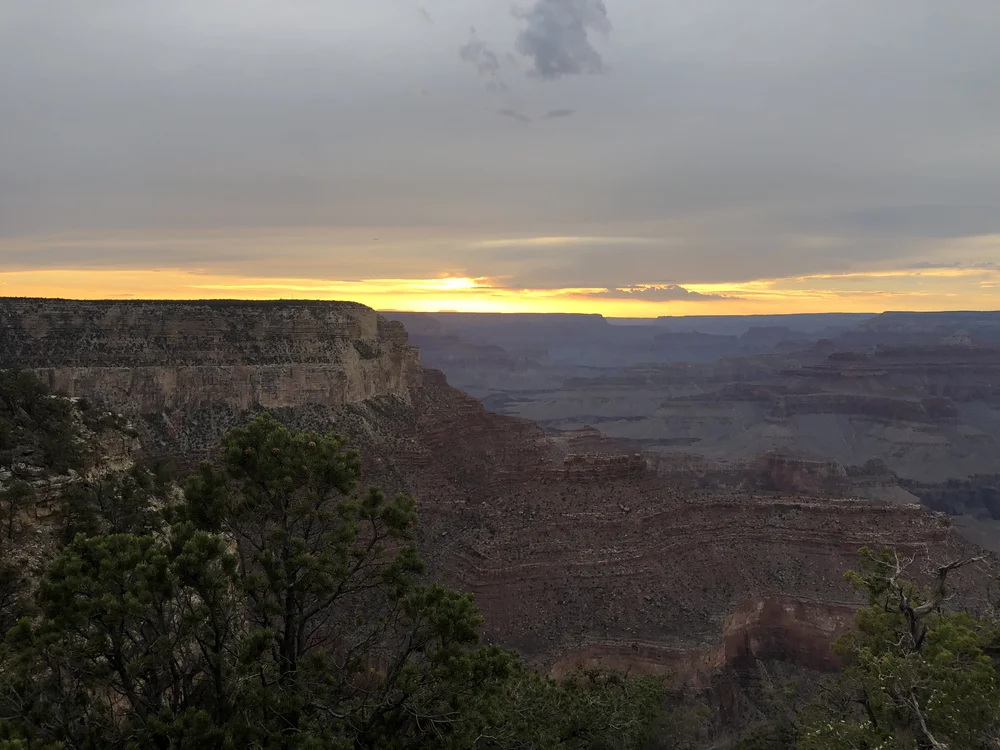
The Grand Canyon’s sunsets are theatrical, to say the least. I can’t speak for the sunsets at Bryce Canyon, but I can attest to the fact that sunsets at the Grand Canyon are not to be missed. We ordered pizza to go and sat and watched the skies turn an array of oranges, yellows then pinks and purples – it was definitely a highlight of my time here! Just be sure to arrive early and find a good spot to settle in.
At the Grand Canyon, Yavapai Point and Hopi Point are popular for their uninterrupted panoramic views of the canyon, ideal for sunset watching.
Pima Point is another excellent spot, offering views of the western end of the Grand Canyon and the Colorado River. If you’re willing to venture a little off the beaten path, Navajo Point, the highest overlook on the South Rim, is a fantastic sunset spot.
Over at Bryce Canyon, Sunset Point is undeniably the most sought-after location for sunset gazing, living up to its name with astonishing views of the sun setting over the hoodoos.
Inspiration Point, with its high vantage point, is another excellent option, offering layered views of the Bryce Amphitheater. For a quieter experience, Farview Point and Swamp Canyon overlooks on the Scenic Drive are less crowded but equally compelling spots to watch the sunset.
Guided Tours: Grand Canyon
There are plenty of tour options at both the Grand Canyon and Bryce Canyon. Depending on the type of tours and activities you want to do during your trip may help in making your choice.
Whitewater rafting is a popular activity at the Grand Canyon, with various tour companies offering half-day to multi-day trips down the Colorado River.
If you’re interested in exploring more of the canyon’s rim and viewpoints, consider booking a guided Jeep or ATV tour. These tours give you access to areas that are not open to private vehicles.
If you want the ultimate tour of the Grand Canyon, a helicopter tour is a must-do experience. You’ll get a bird’s eye view of the vastness and beauty of the canyon, including stunning views of the Colorado River and its rapids.
Guided Tours: Bryce Canyon
At Bryce Canyon, there are also plenty of tour options available.
For those interested in exploring the park on foot, guided hiking tours are available with knowledgeable guides who can take you to the most scenic and hidden parts of the canyon.
If you prefer a more leisurely tour, consider booking a horseback riding tour that will take you through some of Bryce’s iconic trails.
For a unique perspective, try a guided stargazing tour at Bryce Canyon. With minimal light pollution in the area, this is one of the best places in the world to observe the night sky.

Which Is Better For Family Travel, Grand Canyon or Bryce Canyon?
When it comes to family travel, both the Grand Canyon and Bryce Canyon offer fulfilling and memorable experiences, but each has its unique advantages.
The Grand Canyon, due to its sheer size, offers a more diverse range of activities that cater to various age groups and interests.
Mule trips are great for families as these tours provide a relaxing yet engaging way to take in the Canyon’s grandeur.
The educational programs offered at the Grand Canyon are a hit with both kids and adults, offering opportunities to learn about the Canyon’s geology, history, and wildlife.
On the other hand, the trails at Bryce Canyon are generally shorter and less strenuous, making them more suitable for families with young children.
The park’s ranger programs are particularly family-friendly, with activities tailored specifically for children, making learning fun and engaging.
The ATV tours available at Bryce are highly enjoyable for older children and teenagers, offering an adrenaline-pumping way to explore the park.
If your family enjoys a wide range of activities and educational programs, the Grand Canyon would be a better fit. If you prefer short hikes, magical landscapes, and a more compact experience, consider Bryce Canyon.
Commonly Asked Questions
How far apart are the Grand Canyon and Bryce Canyon?
The distance between the Grand Canyon and Bryce Canyon is about 280 miles (450 kilometers) if you travel by car. This distance takes approximately 5-6 hours to cover, depending on the route and traffic conditions.
Can you do Bryce Canyon and Grand Canyon in one day?
While it may be possible – I highly recommend NOT doing this. They are approximately 5-6 hours away from one another and this would make for an incredibly exhausting time. So in a word – no, they can’t both be done in a day. If wanting to visit both, you should spend at least one day in Bryce Canyon and one day in Grand Canyon .
Is Bryce Canyon deeper than the Grand Canyon?
No, Bryce Canyon is not deeper than the Grand Canyon. The Grand Canyon has an average depth of about one mile (1.6 kilometres), whereas Bryce Canyon is much shallower, with the greatest depth being approximately 800 feet (240 metres). The difference in depth contributes to the unique landscapes and experiences each park offers.
What is the difference between Bryce Canyon and a true Canyon?
The primary difference between Bryce Canyon and a true canyon lies in their geological formation. A true canyon, such as the Grand Canyon, is formed primarily through the erosive activity of a river over millions of years. The river cuts a deep and narrow valley with steep sides, commonly known as a canyon. Bryce Canyon, on the other hand, is not a canyon in the traditional sense. It is a series of natural amphitheaters or bowls, carved into the edge of a high plateau.
Which part of the Grand Canyon is the prettiest?
Many people consider the South Rim to be the prettiest, particularly around Yavapai Point and Mather Point. The North Rim also offers equally beautiful vistas but is less visited due to its remote location.

So which is better? Grand Canyon or Bryce Canyon?
I wouldn’t say one is better than other, but different. The Grand Canyon is simply an impressive natural wonder, it’s somewhere I think everyone needs to witness at least once in their life. The vastness and grandeur of the canyon are unmatched.
In contrast, Bryce Canyon’s unique geological formations and hoodoo-filled landscapes make it seem like a dreamland right out of a fairytale.
In terms of beauty, I think Bryce wins. The Hoodoos win me over because they are so unique and delicate. The views here blew me away so much more than Grand Canyon. I also think the climate is milder and therefore I enjoyed hiking here more.
Also consider where you trip will take you – if you’re visiting Vegas, the Grand Canyon is the obvious choice. If you’re exploring other areas of Utah, maybe Bryce makes more sense.
Personally I recommend planning an American Southwest road trip and ticking off Utah’s Mighty 5 along with the Grand Canyon and beyond – it was one of the best road trip I’ve ever experienced.
But ultimately, whether you choose to experience the majesty of the Grand Canyon or the enchantment of Bryce Canyon, both national parks will leave you awestruck and undoubtedly be a highlight of your trip.
About Rachael
Welcome to A City Girl Outside! I’m Rachael, a Londoner who traded the hustle and bustle of city life for the breathtaking beauty of Whistler, Canada. With no prior experience, I dove headfirst into an outdoor lifestyle that now includes hiking, canoeing, and snowshoeing.
What started as a leap into the unknown has become my greatest passion. These days, you’ll find me spending my weekends adventuring in the Canadian wilderness—chasing alpine views, paddling serene lakes, and embracing all that nature has to offer.
A City Girl Outside aims to inspire readers to step beyond their comfort zones, explore the great outdoors, and embrace the wild. Whether you’re a seasoned explorer or a complete beginner like I once was, there’s always room to reconnect with nature and discover the adventurer within.