How To Spend One Day In Denali National Park Itinerary
A trip to Denali National Park is a must for anyone visiting Alaska. Often paired with an Alaskan cruise, spending one day in Denali National Park will give you an unforgettable look into the natural beauty of this vast state.
Denali National Park is most famous for its namesake, Denali, previously known as Mount McKinley. Standing at a breathtaking height of 20,310 feet, it is the highest mountain in North America. Every year thousands of people flock to this national park hoping to see its impressive peak.
Visiting Denali had been high on my Alaska bucket-list for years, and it definitely did not disappoint! Thousands of wildlife call Denali home, some species include the Alaska-Yukon moose, caribou, dall sheep, grizzly bears, and golden eagles. I was lucky enough to spot all except the Caribou!
Spending one day in Denali National Park is enough time to see all the above animals, and get a hike in! With the Pretty Rocks Landslide still being worked on the road into Denali now stops at mile 43, which gives you plenty of time to explore the areas near the entrance.
A City Girl Outside contains affiliate links. If you decide to make a purchase through these links, I will earn a commission at no extra cost to you. Thanks for reading!
👉 Where to stay in Denali National Park


Overview of Denali National Park
Denali National Park, located in Alaska, spans over six million acres of pristine wilderness and is home to North America’s tallest peak, Denali, which stands at 20,310 feet above sea level. The national park was established on February 26, 1917, and sits on the traditional lands of the Koyukon Athabaskan people, who have inhabited the region for thousands of years.
Initially named Mount McKinley National Park, it was created to protect the diverse wildlife and stunning landscapes in the region. Later, in 1980, the park’s name was officially changed to Denali National Park and Preserve, honouring the native Koyukon Athabaskan name for the mountain, which means “The High One.”
Wildlife thrives here, with species such as grizzly bears, moose, caribou, and wolves frequently spotted. You can explore the park through its single road, which offers stunning views and access to recreational opportunities like hiking, camping, and mountaineering.
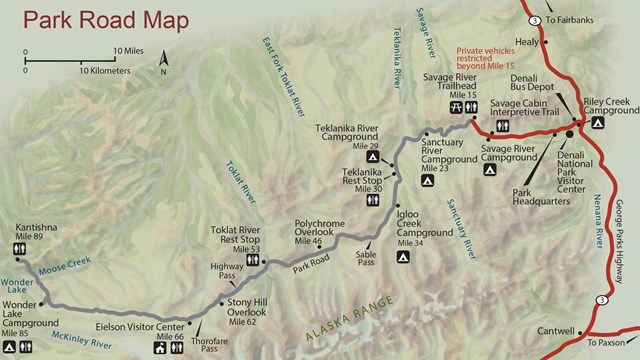
Map of Denali National Park
How To Spend One Day In Denali National Park
If you are pairing a trip to Denali National Park with an Alaska Cruise, most people spend two nights here and spend the whole day within the park. For this itinerary this is what I recommend. We actually spent two whole days in Denali, but the below itinerary is very do-able during one day. Of course I always recommend more time to explore, but if tight on budget – this itinerary includes so much of the park!
Denali Tundra Tour
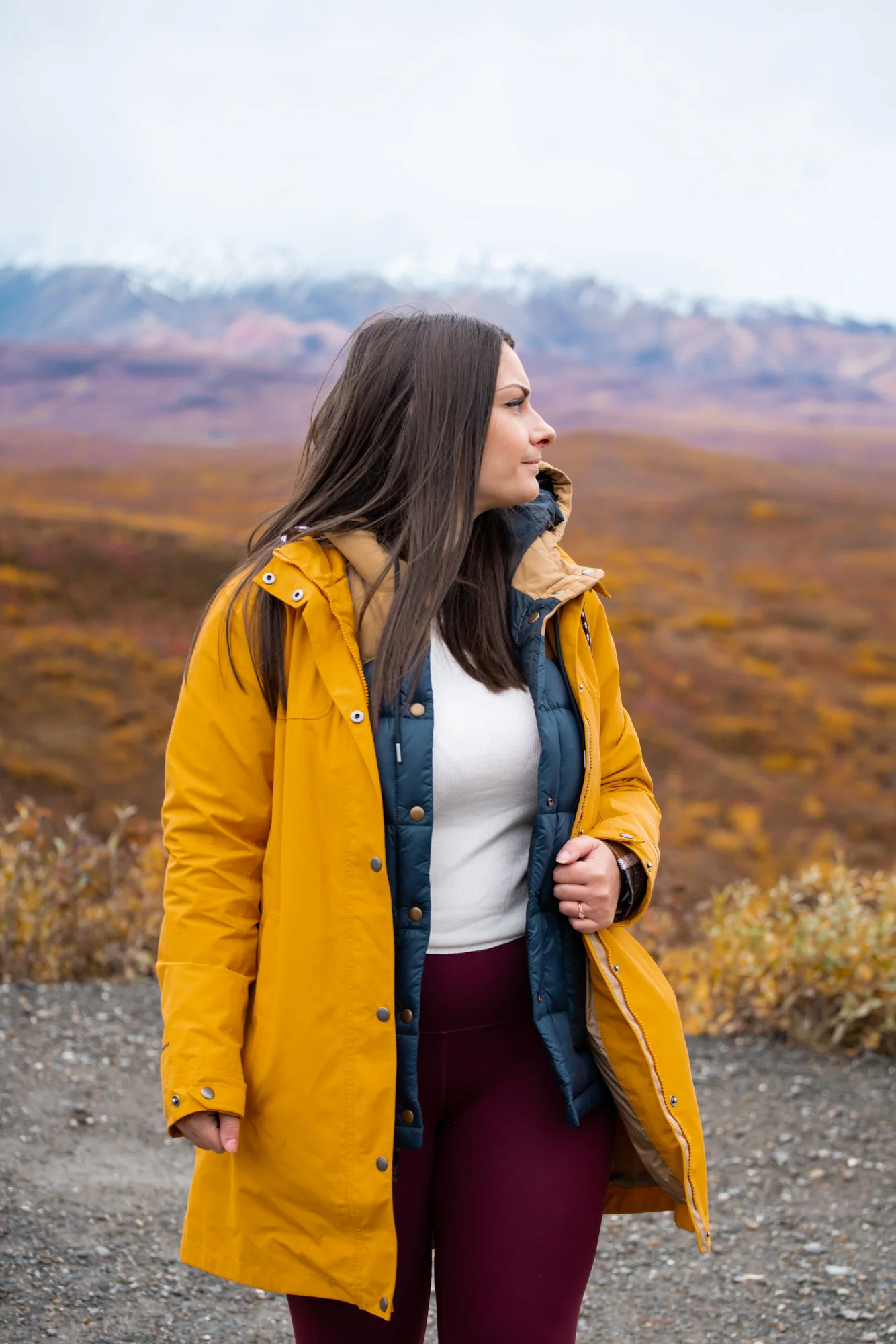
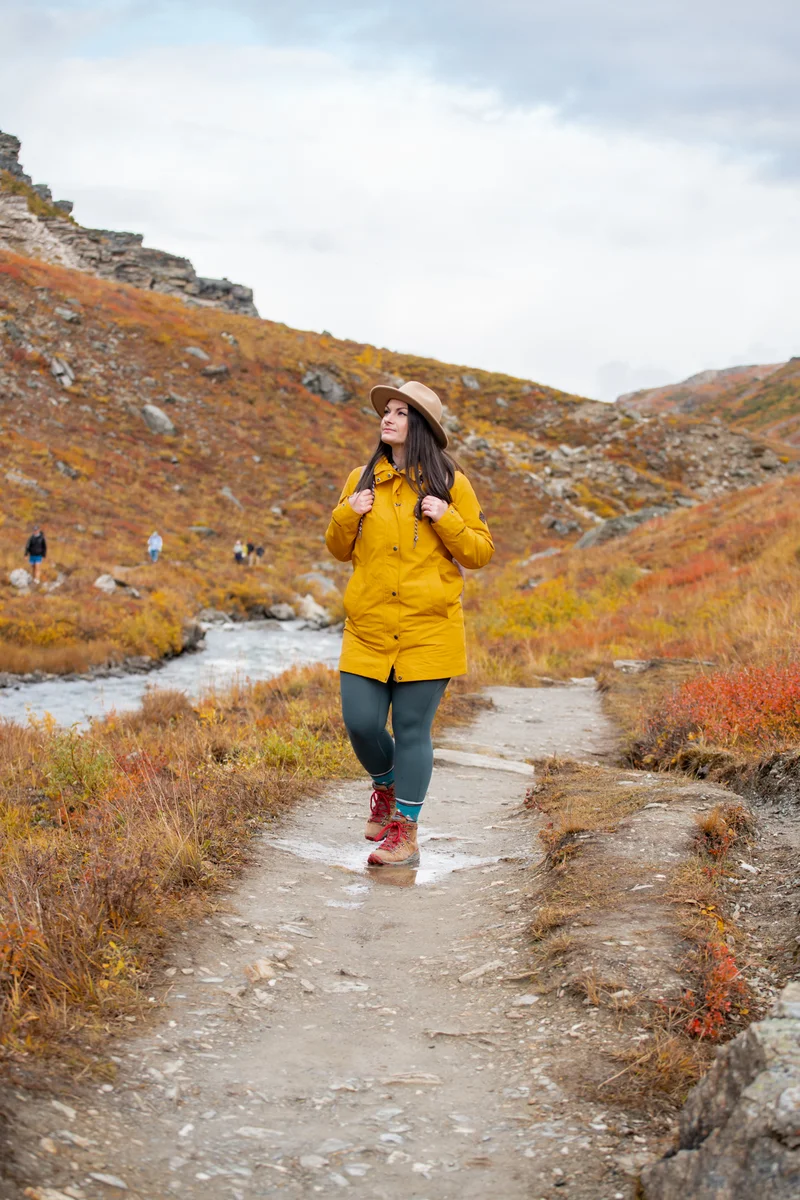
Start your day in Denali with an early morning tour through the park. During my trip to Denali National Park, I opted for the morning Tundra bus tour which gives you the most time in the park and will make stops when wildlife is spotted.
The Tundra Tour is one of the best things to do in Denali – it’s a 6-8 hour guided bus tour through the park’s wilderness. This tour is a great way to see a variety of landscapes while learning about Denali’s history and ecosystem.
You can only drive the first 15 miles of the park in your own personal vehicle, that’s why I recommend booking a Tundra tour. The tour takes you on the only road in the park, which extends for 92 miles and offers stunning views of mountains, valleys, rivers, and tundra. Currently the road only goes to mile 43, due to the Pretty Rocks Landslide.
While on the tour, you have the chance of seeing Denali, North America’s tallest mountain at 20,310 feet. We saw its peak partially during our tour, but not enough to tell it was a mountain. It was very cloudy in September, but the fall colours were out in full force!
During our tour we spotted a MASSIVE moose within the first 15-minutes, as well as some big grizzly bears with cubs, and some dall sheep high on the mountains. I would recommend binoculars for this tour, as many of the animals were quite high up and I could not see them without a zoom lens.
The best time to do the Tundra Tour is early in the morning or the early evening when wildlife is most active.
East Fork Transit Bus
While the Tundra tour is on the pricier side at $144 USD per person, the East Fork Transit Bus is much cheaper at $33 USD. Both the Tundra Tour and East Fork Transit go to mile 43 of the park. You can distinguish the busses by their colour, the Tundra tour busses are light brown, and the paid transit busses are green.
The biggest difference between the Tundra Tour and the paid transit buses (East Fork Transit bus) is that the Tundra Tour is narrated and the green transit busses are not.
One of the reasons I booked the Tundra Tour is because I’d previously read that the cheaper busses do not stop for wildlife – yet when I was on my tour, I noticed every green bus had in fact stopped for wildlife.
The East Fork Transit Bus (green bus) doesn’t sell out as quickly as the Tundra Tour, and you have a better chance of booking these tours either the day of or day before. I personally didn’t find the narration of the Tundra Tour to be anything about the park I didn’t already know, and our tour guide spoke more about herself than the park. For this reason, if I were to do another tour, I’d pick the cheaper one.
Free Transit Busses
There are free transit busses that leave from the Visitor Center and go to mile 15 of the park – where you’ll turn around if you’re driving your own vehicle. We loved riding the free transit busses because the first 15 miles of the park is where we saw all the moose!
Depending on your driver, they’ll pull over shortly for people to get photos. In fact, we found that the drivers on the free busses were more likely to pull over at good spots to get photos than our tour guide on the Tundra Tour. So we rode these busses quite a few times!
Visit Denali’s Sled Dog Kennels
Denali is the only national park in the United States with working sled dogs, and they play a crucial role in maintaining the park during winter months. These sled dogs help rangers patrol the vast wilderness, carrying supplies and assisting with research efforts in areas inaccessible by motorized vehicles.
The kennels are located near the park entrance and are free to visit. During the summer, you can watch a sled dog demonstration where the rangers showcase the dogs’ strength and skill. You can also meet the dogs up close, walk around the kennels, and learn more about their history and significance in the park.
There are three demonstrations a day, at 10am, 2pm, and 4pm from June to September. There is no parking available at the kennels, instead you’ll need to take one of the free transit busses which leave from the visitor centre approximately 40 minutes prior to each demonstration.
If you do miss one of the demonstrations, you can still visit the kennels. The kennels are usually open from 9am to 4:30pm.
Visit The Denali Visitor Centre

Once your Tundra tour finishes, you will be dropped at the Visitor Centre. The centre is open daily during the summer months and is free to enter. It’s an excellent place to learn more about the park, plan your day, and pick up any necessary permits for the backcountry.
Here you can speak to rangers about how to plan the rest of your day, or take one of the free transit busses that run throughout some areas of the park. It also has a short film about Denali that plays throughout the day.
Some of the most popular hikes in Denali start from the visitor centre, such as the Horseshoe Lake Trail and the Mount Healy Overlook.
Visit The Denali National Park Entrance Sign
One of the photos I just HAD to get is of the Denali welcome sign – of all the National Park welcome signs I’ve seen, this is one of the prettiest! The best way to get there is by car, as there is a small parking lot right next to it. Or if you are staying at the Riley Creek Campground, you can easily walk there.
We didn’t have a car when we visited, so we took the free transit bus from the Visitor Centre to Riley Creek Campground and walked from there.
Hike The Savage River Loop Or Book A Discovery Hike
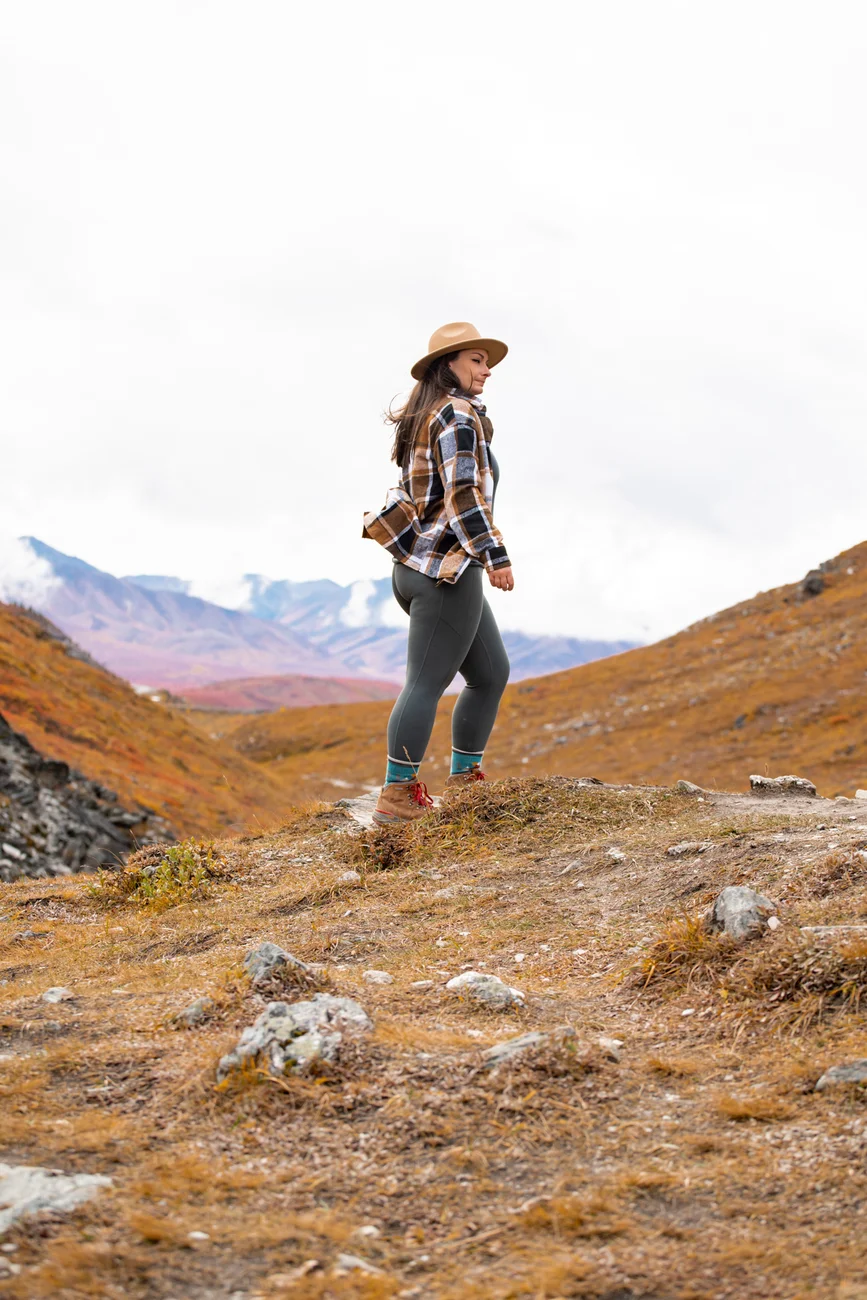
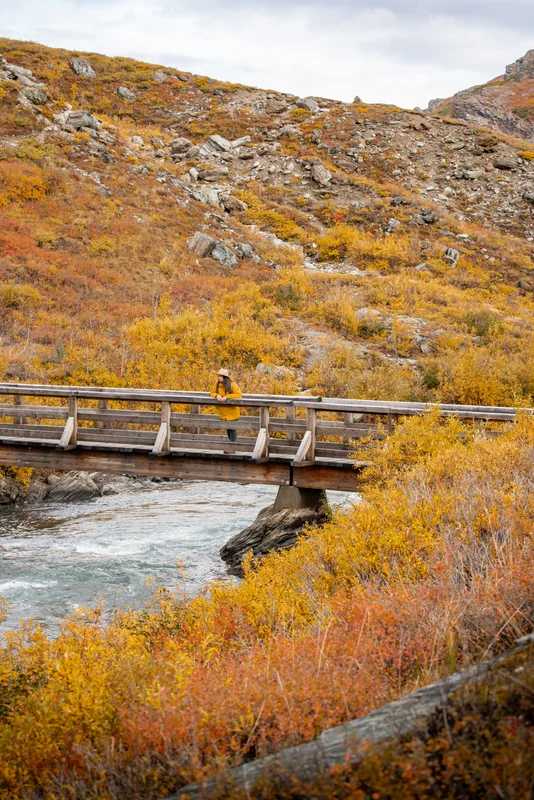
There aren’t many hiking trails in Denali National Park, but thankfully most of the trails are located within the first 15 miles of the park, or near the Visitor Center. We only had time for one hike in Denali – and I think we choose the best one – Savage River Loop!
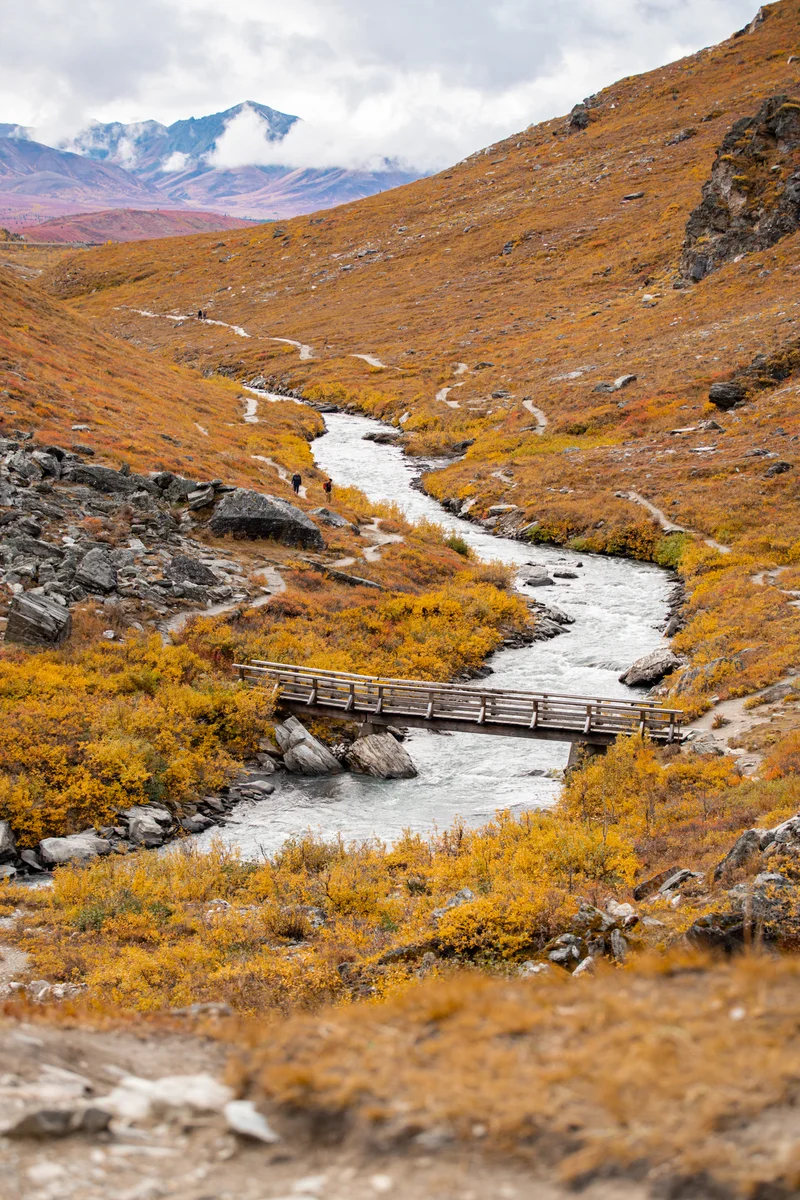
The Savage River Loop is exactly what it sounds like, a trail that loops around the Savage River. The trail was in peak Fall Foliage and so stunning to hike through. At 3.4km round trip, and an elevation of 172 metres, this hike is suitable for the majority of people visiting the park.
At the half-way mark of the trail is a bridge that connects the two sides of the river. I couldn’t believe my eyes when we spotted a Golden Eagle flying above us on the bridge! We decided to venture off the trail and up to an area behind the bridge to watch these Golden Eagles a bit longer.
Although we didn’t see any bears here but we did get to experience the tundra close up, and it really is an incredible landscape.
Book A Discovery Hike
Did you know that hiking off trail in Denali National Park is encouraged? If you’re looking for a more unique experience, I highly recommend booking a Discovery Hike through the Visitor Center. I really wish I’d signed up for one during my trip – so here’s your sign to!
What is a Discovery Hike? These hikes are led by trained naturalists and give you the unique opportunity to explore areas of the park that are not accessible by road or on designated trails. It’s a great opportunity to learn about specific plants or animals and see parts of Denali that most visitors don’t get to see.
These hikes are usually around 5 miles roundtrip and explore different parts of Denali’s wilderness. The hike itself is free, but you will need to purchase a Discovery Hike bus pass which costs $30 per person. Discovery Hikes can only be booked at the Visitor Center in person a day or two in advance.


When To Visit Denali National Park
Denali National Park is open year-round, but the peak season for visitors is during the summer months of June, July and August. During this time, the weather is warmest and there are more activities available. However, if you prefer less crowds and lower prices, consider visiting during the shoulder seasons of May and September.
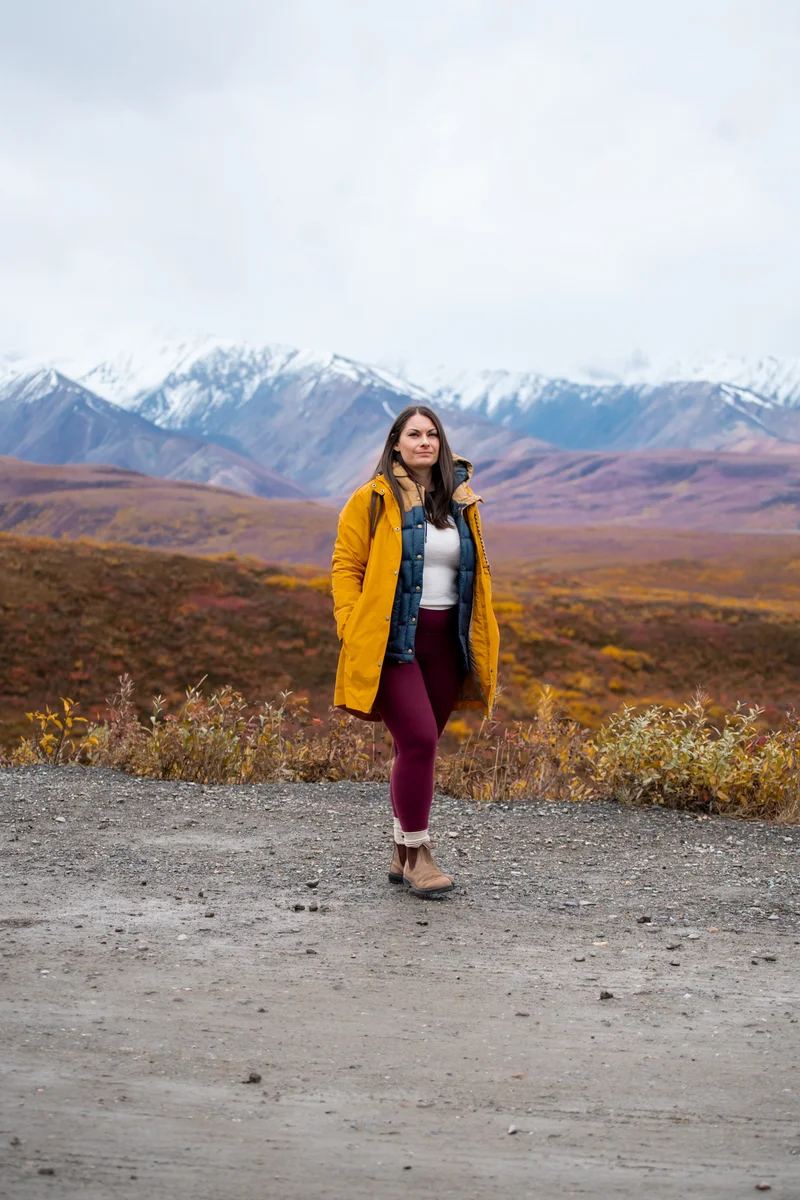
I visited in mid-September, just before the main facilities closed for the winter season, and I think this is a great time to visit! I never expected to see so many autumn hues throughout the park, it was so beautiful. We got super lucky during our visit too as we didn’t experience much rain, which can be the one downfall when visiting in the shoulder seasons.
In winter the park is still open but facilities and services are limited. The Visitor Center is closed from mid-September to mid-May.
How To Get Around Denali National Park
As mentioned above, Denali has free transit busses that operate in and around the first 15 miles of the park. You can access these busses either from the visitor centre or the bus depot.
There are a few routes which include the Riley Creek shuttle, Sled Dog Demonstration shuttle, and the Savage River shuttle. To explore the park, I recommend the Savage River shuttle, which stops at the Savage River trail – where personal vehicles have to turn around. Past this point, only paid-for busses are permitted.
We rode the Savage River shuttle multiple times so we could see the big moose from our tour earlier in the day. The drivers of the free shuttle were a lot better at pulling over for photos, and letting you move around the bus.
For the non-narrated busses that go into the park to mile 43, you can book these at the bus depot, where they depart from.
If you’re staying at a hotel near the park, you can drive yourself or use the free hotel shuttles to get to and from the visitor centre. Most hotels offer a free shuttle, but it is best to check before booking.

👉 General Tips For Visiting
- Bring binoculars to spot wildlife from afar !
- Pack layers as the weather can change quickly in Denali
- Plan ahead for bus rides and activities, especially during peak season
- Respect the park’s rules and regulations to help keep it pristine for future visitors.
- Remember that wildlife is wild and always keep a safe distance when viewing them.
- Be prepared for limited cell phone service and wifi in certain areas of the park.
- Take advantage of educational programs and ranger-led activities to learn more about Denali’s unique ecosystem – especially the discovery hikes!
Is Denali National Park Worth Visiting?
Absolutely! There is so much I didn’t know before visiting Denali – it’s so different from other National Parks in the United States. It’s not a park that’s just about hiking, like so many others. It’s about the sheer beauty of the tundra and wildlife that sets it apart from others.
And the fact that hiking off trail is encouraged is wild to me! Just seeing a moose in the park made my trip, but he was honestly enormous. I’ve never seen antlers that big before!
But planning in advance is the way to go. This place is incredibly busy during the summer months as the cruise lines bring visitors up on the daily. I would consider visiting on your own – and booking everything yourself. I also recommend a car, as many of the animals can be found within the first 15 miles of the park – you can book your rental car through Discover Cars here.
Final Thoughts
That concludes this itinerary for planning your very own one day in Denali. I hope that you enjoy visiting Denali National Park as much as I did. This park blew me away, and although the summer is best for seeing Denali itself, I loved the fall colours of September. I can’t wait to return!
If you are planning a once-in-a-lifetime Alaska vacation, I have more resources on the blog. Check out my Alaska Cruise Tips & Mistakes To Avoid post. I also have plenty more outdoor content throughout North America – you can check out all destinations here.
About Rachael
Welcome to A City Girl Outside! I’m Rachael, a Londoner who traded the hustle and bustle of city life for the breathtaking beauty of Whistler, Canada. With no prior experience, I dove headfirst into an outdoor lifestyle that now includes hiking, canoeing, and snowshoeing.
What started as a leap into the unknown has become my greatest passion. These days, you’ll find me spending my weekends adventuring in the Canadian wilderness—chasing alpine views, paddling serene lakes, and embracing all that nature has to offer.
A City Girl Outside aims to inspire readers to step beyond their comfort zones, explore the great outdoors, and embrace the wild. Whether you’re a seasoned explorer or a complete beginner like I once was, there’s always room to reconnect with nature and discover the adventurer within.