
How To Spend One Day In Quebec City – Full Itinerary
Wondering what to do with only one day in Quebec City? This post has you covered!
Did you know that Canada has its own charming slice of Europe? Quebec, the only predominantly French-speaking province in Canada, boasts a distinct Canadian culture with a touch of French flair. Quebec City, with its iconic Chateau Frontenac, has become one of my favourite places in Canada.
Quebec City’s history is as rich and colourful as its streetscapes. Established by the French explorer Samuel de Champlain in 1608, it is one of the oldest cities in North America, and the only fortified city walls remaining in the Americas north of Mexico.
Today, Quebec City is not just a living museum but also a vibrant metropolis that beautifully blends the old with the new, justifying its status as a UNESCO World Heritage Site.
This 400-year-old city is a dream come true for travellers. In just one day, you can explore the bustling streets of the Old City (Vieux Québec), lined with charming shops, restaurants, and boutiques. The great thing about Quebec City’s compact size, it that it’s actually relatively easy to see the main attractions in a short amount of time.
Place Royale and the historic district of Old Quebec are not to be missed. Take a stroll along the cobblestone streets of Petit Champlain, reputed to be North America’s oldest commercial district. And don’t forget to indulge in a mouthwatering bowl of poutine!
I was blown away by the beauty of Quebec City and its rich history. With so much to see and do, it’s hard to believe that you can experience the best of Quebec City in just one day! But I have you covered with this curated itinerary for a perfect day in Quebec City.
A City Girl Outside contains affiliate links. If you decide to make a purchase through these links, I will earn a commission at no extra cost to you. Thanks for reading!
One Day In Quebec City Itinerary
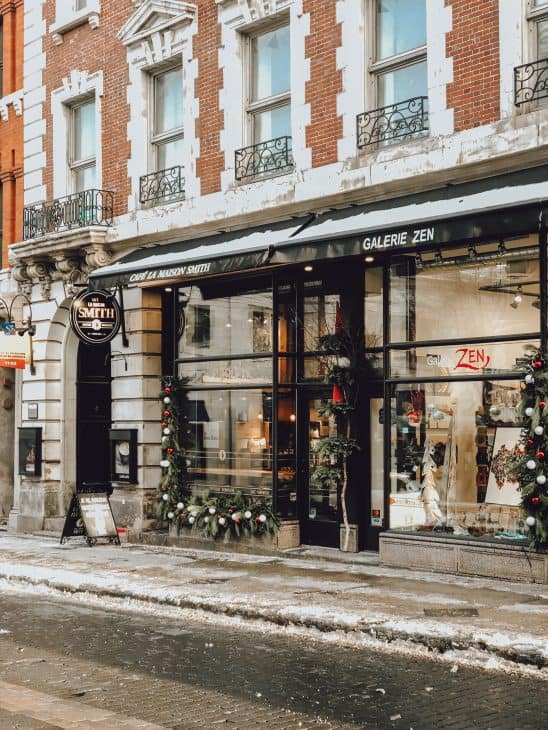
When you first arrive in Quebec City, the best place to start is in Vieux-Québec, also known as Old Quebec. There are two main parts of Old Quebec: Upper Town (Haute-Ville) and Lower Town (Basse-Ville). I recommend starting your day in Lower Town, where you can grab a morning coffee and pastry at Café La Maison Smith. Or if you want something more substantial, head to Cochon Dingue for a hearty breakfast.
Place Royale
Place Royale is an absolute must-see on your one-day trip to Quebec City. It’s the birthplace of French America and a significant landmark in Canadian history.
Place Royale is by far my favourite section of Quebec City. Romantically European cobblestone streets make up what is known as Quartier Petit Champlain, the lower section of Old Quebec City. This historic square is the oldest part of the city and was where Samuel du Champlain established the first French trading post in North America back in 1608.
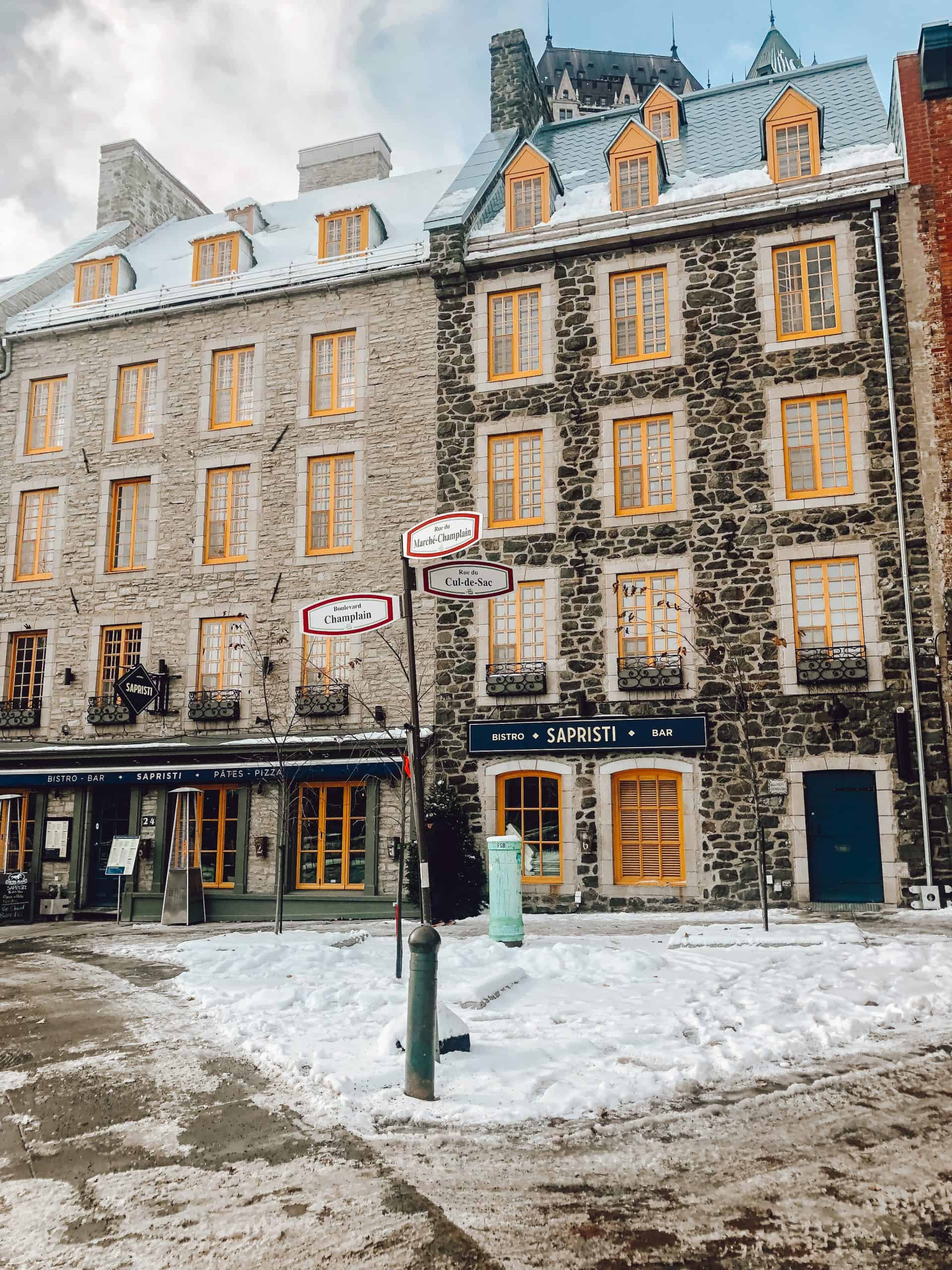
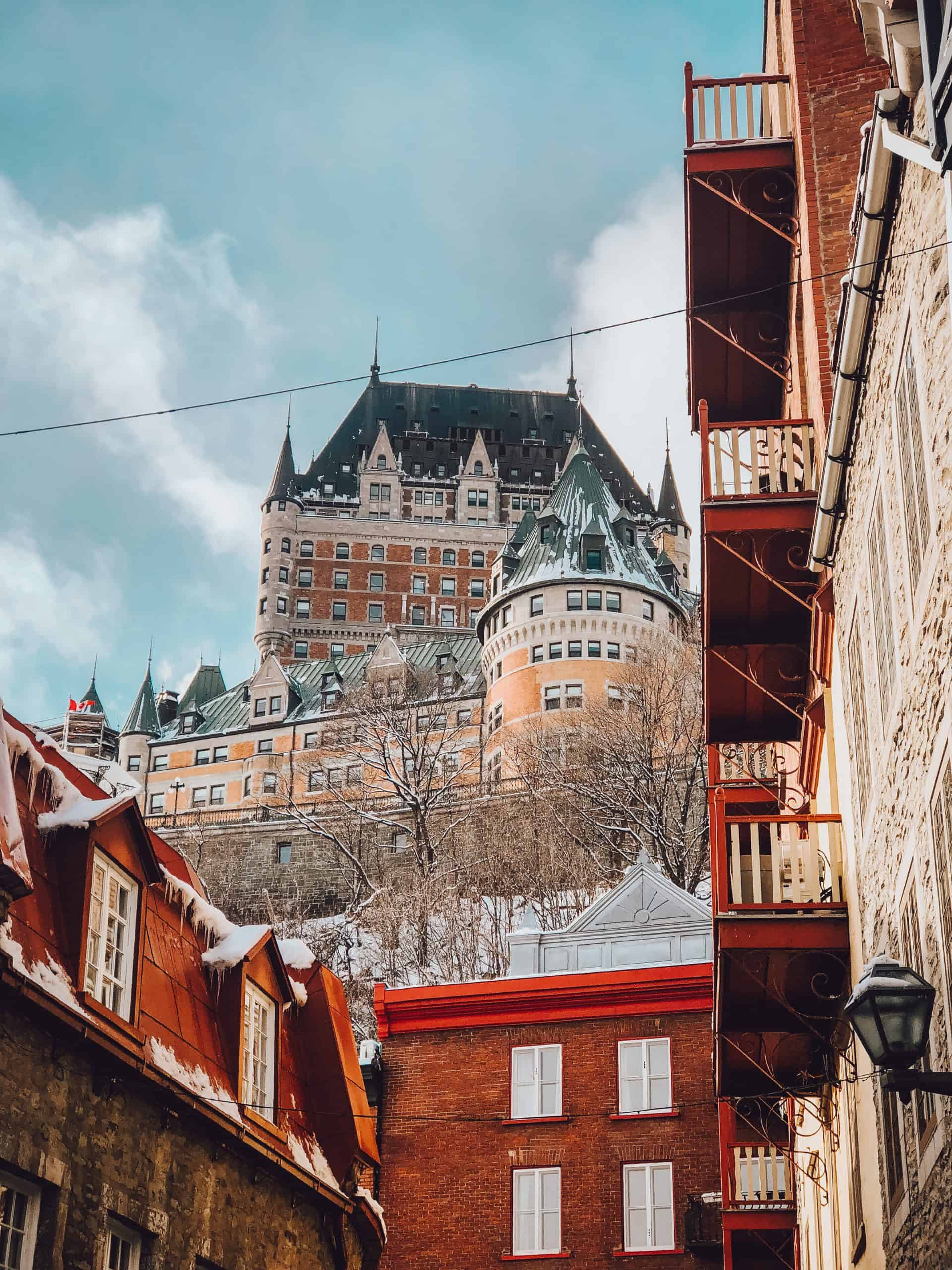
The heart of this historic neighbourhood is a picturesque square, the Place de Paris, where you’ll find the Notre-Dame-des-Victoires Church, the oldest stone church in North America.
The architecture in Place Royale is a stunning testament to its history, with well-preserved 17th and 18th-century buildings adding to the charm of this place. The stone buildings, converted into quaint shops and eateries, are a tribute to Quebec City’s past. Here, you can find everything from artisanal crafts to souvenirs to gourmet food products.
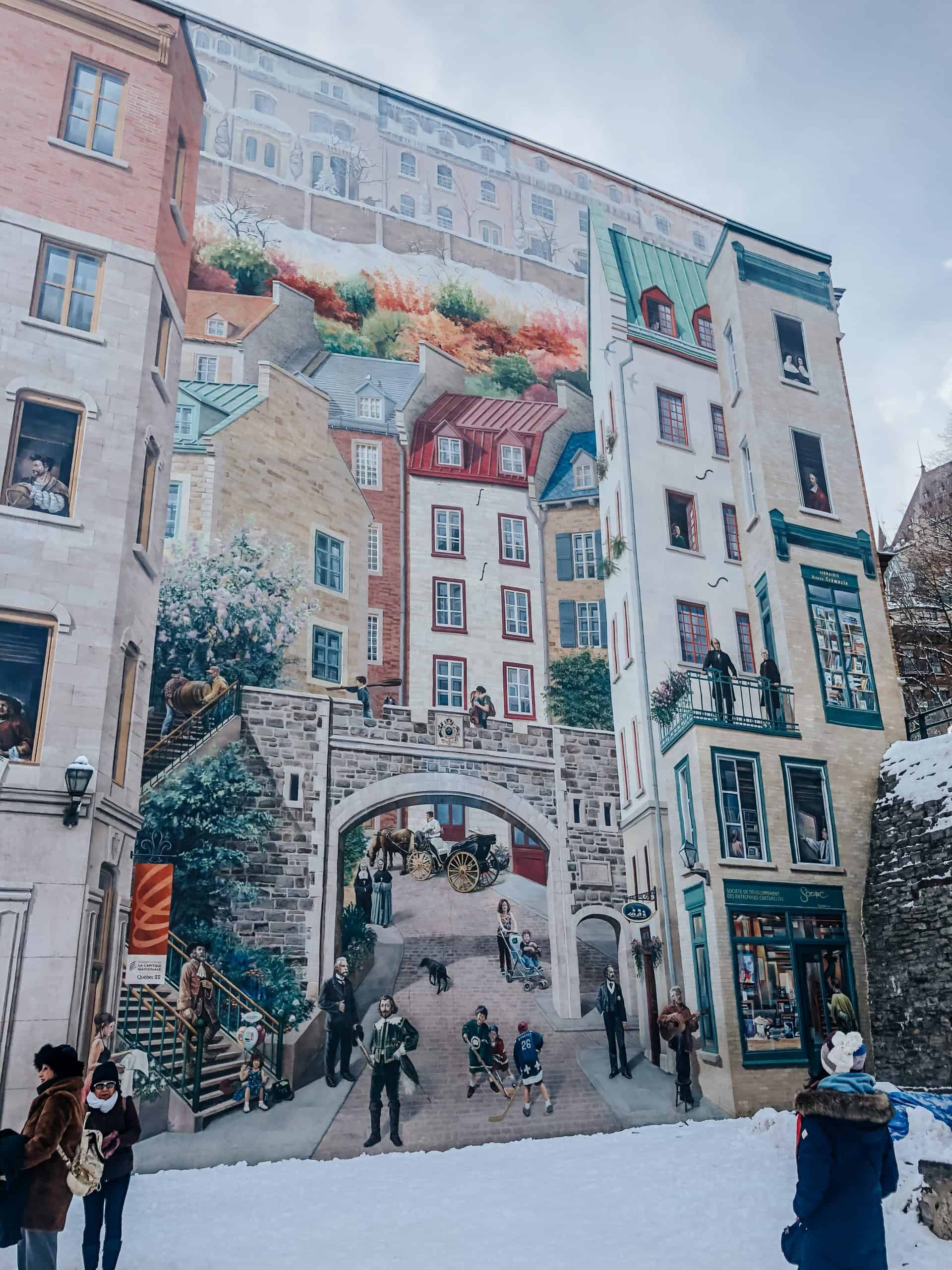
The murals in the area bring history to life, with the famous Fresque des Québécois mural depicting important figures and events from Quebec’s history. As you wander the cobblestone streets of this old square, you’ll feel like you’ve stepped back in time.
The Musée de la Place Royale is a museum where you can learn more about the history of New France and Samuel de Champlain, the founder of Quebec City. Make sure you take a stroll along Rue du Cul-de-Sac where you’ll find the most perfect photo op with the Chateau Frontenac towering above you.

Break Neck Stairs (L’Escalier Casse-Cou)
Head to the Break Neck Stairs, locally known as L’Escalier Casse-Cou, to access the Upper Town of Quebec City. Dating back to 1635, this staircase is the oldest in the city and an integral part of the authentic Quebec City experience.
As the name suggests, the steps are steep, but the little boutiques and cafe terraces along the way provide plenty of excuses for rest stops. The Break Neck Stairs link the Upper Town to the charming Lower Town (Basse-Ville).
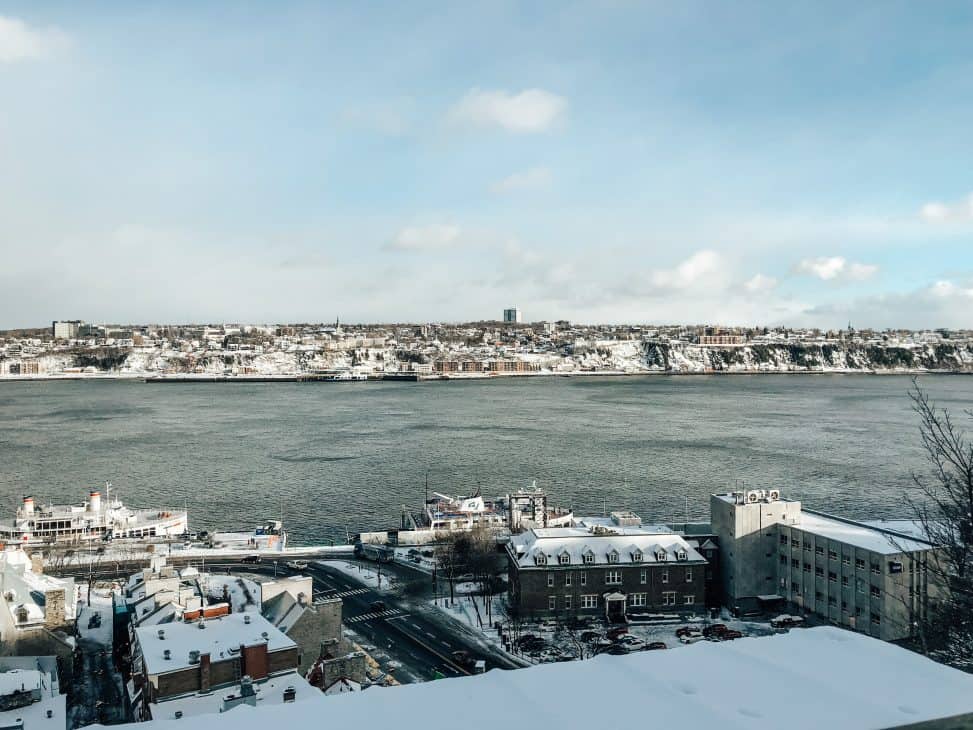
The top of the stairs offers an exceptional view of the Lower Town and the St. Lawrence River, as well as a fantastic overhead view of Rue du Petit Champlain. While the climb might be challenging, it is certainly worth the effort.
Fairmont Chateau Frontenac
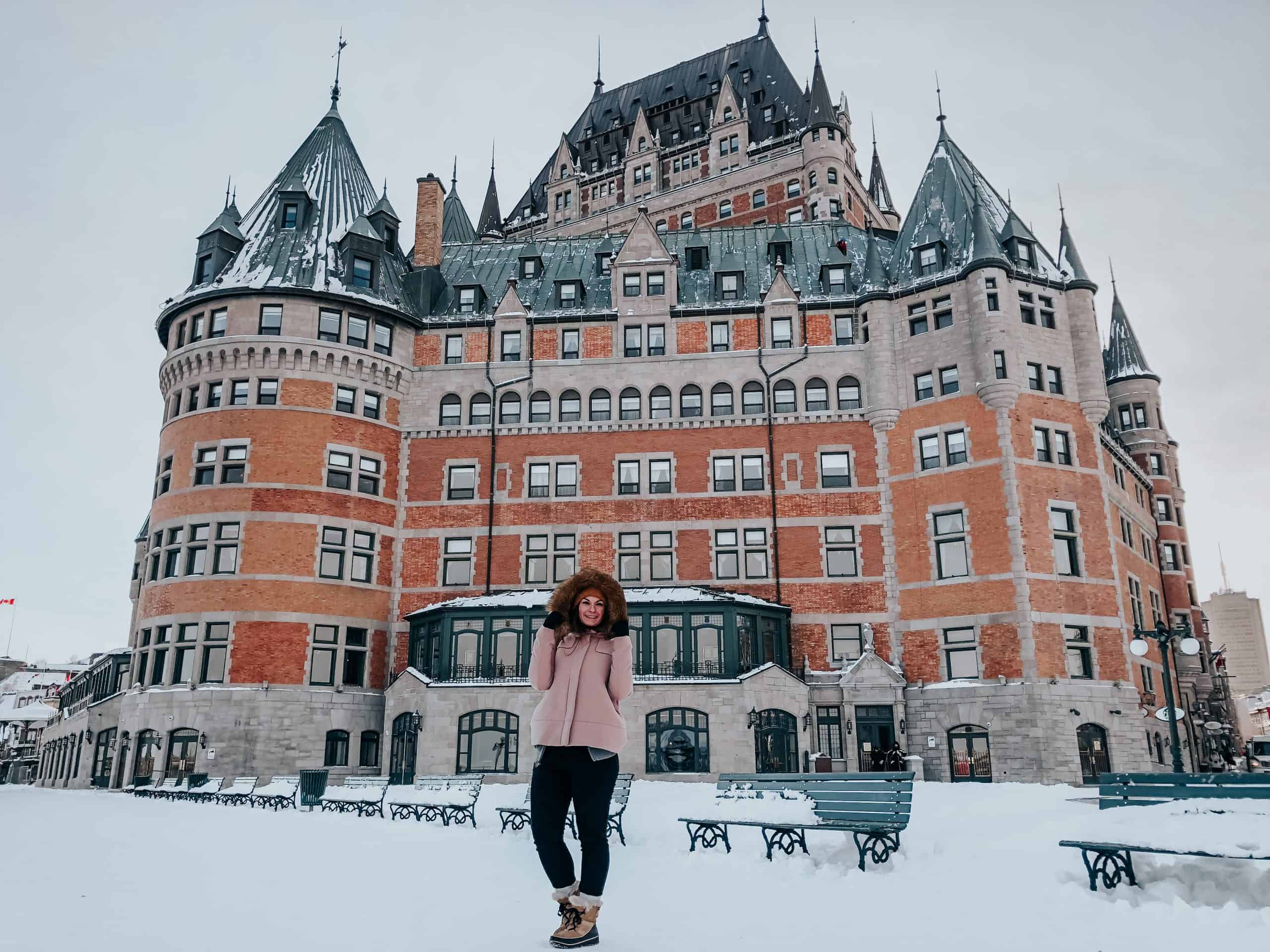
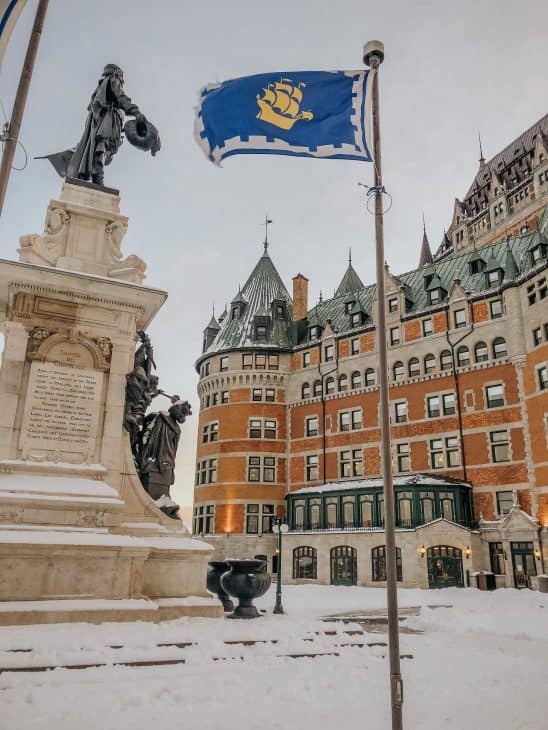
It’s time to explore the Fairmont Chateau Frontenac, Quebec City’s most iconic landmark. This is not only the most popular attraction in Quebec City, but my personal favourite too. It’s hard to describe how beautiful this building is (I guess you’ll just have to visit yourself to see!)
The Chateau Frontenac dominates the city’s skyline and provides a stunning backdrop against the St. Lawrence River. It is the most photographed hotel in the world and should be on your list of things to do in Quebec City in winter!
The hotel was originally built in 1893 by the Canadian Pacific Railway as part of a series of chateauesque luxury hotels built across Canada, such as Chateau Lake Louise, The Empress and Hotel Vancouver, to encourage luxury tourists to use their railway services.
Even if you’re just passing through for a day, this sumptuous hotel is impossible to miss. Named after Louis de Buade, Count of Frontenac, who was a notable French governor, the Chateau Frontenac’s history is as vast and vibrant as the city itself.
You’ll often see this hotel referred to as the “Castle on the hill” because it looks like a castle on a hill! You don’t have to be a guest to enjoy the hotel, you can take a guided tour of the hotel, where you’ll learn about its rich history and cultural significance.
During the winter in Quebec City the Chateau Frontenac looks like something from a Disney fairytale, dusted in snow and standing tall above the city. It’s a great place to warm up when things get cold (like I did!)


Dufferin Terrace
Right next to the Chateau Frontenac lies Dufferin Terrace, a sprawling boardwalk that offers spectacular views of the St. Lawrence River and Old Quebec City.
Dufferin Terrace holds a significant place in Québec City’s history. This beloved promenade, named after Lord Dufferin, a British Governor General of Canada, was constructed in 1879 to prevent the Chateau Saint-Louis ruins from being destroyed.
The site’s history reaches farther back though, as Chateau Saint-Louis was the official residence of the French Governors in the 17th and 18th centuries, and later, of the British Governors. Here, decisions were made that affected the entire North American continent. Today, visitors can learn more about this history through an exhibit located directly on the terrace.
Take a leisurely stroll along this promenade and admire the stunning landscapes while you let yourself get lost in its relaxing atmosphere. Dufferin Terrace is also home to numerous street performers, artists, and musicians.
Don’t forget to take a photo with the iconic statue of Samuel de Champlain, the French explorer who founded Quebec City in 1608.
Afterward, make your way towards La Promenade des Gouverneurs, a scenic boardwalk that leads you to Plains of Abraham.

Plains Of Abraham
Next on your one-day itinerary in Quebec City is the historical Plains of Abraham. The Plains of Abraham, known as “Battlefields Park” in English, is one of Canada’s most important historical sites. This expansive urban park is where the pivotal Battle of Quebec took place in 1759. The British victory over the French was a defining moment in the shaping of Canada’s identity today.
The park is a serene, green oasis perfect for a leisurely walk. There are several monuments and plaques throughout the park that offer fascinating insights into the historical events that occurred here.
A visit to the Plains of Abraham museum, known as the Discovery Pavilion, is highly recommended. The museum provides an immersive audio-visual experience that transports visitors back to the historic battle. For art lovers, the park also houses the National Fine Arts Museum of Quebec, which is home to an extensive collection of Quebec art.
The Plains of Abraham offers stunning views of the St. Lawrence River. The park’s location, high on the cliffs above the river, makes it an excellent spot for panoramic views of the city and beyond.
Citadel Of Quebec
The Citadel of Quebec, also known as La Citadelle de Québec, is a national historic site and the largest military fortification in North America. Located just a short walk from Plains of Abraham, this military installation showcases over 300 years of Canadian history.
Constructed between 1820 and 1850, it was strategically built to protect the city from potential American invasion. Today, it serves as an active military base for the Royal 22e Régiment, the Canadian Forces’ sole French-language regular infantry regiment.
Take a guided tour or explore on your own to learn about the fort’s strategic role in protecting Quebec City throughout its tumultuous past. Catch the Changing of the Guard ceremony, which takes place daily at 10 AM during the summer months. The regiment’s mascot, a charming goat named Batisse, often leads the spectacle.
Explore the Royal 22e Régiment Museum within the walls of the Citadel to delve deep into Quebec City’s military past. The museum boasts an impressive collection of artifacts, uniforms, medals, and historical documents.
Quebec City Parliament Building
From the Citadel, make your way to the Quebec City Parliament Building.
The Quebec City Parliament Building, also known as Hôtel du Parlement, is a must-see on your one-day visit to Quebec City. This architectural gem is home to the Province of Quebec’s National Assembly, where all the legislative magic happens. The Parliament Building stands out with its striking Second Empire architectural style, reminiscent of the Louvre in Paris.
The building houses 24 statues of key figures in Quebec’s history, providing a glimpse into the rich cultural heritage of the province. Guided tours are available and give you a chance to explore the breathtaking interiors and understand the legislative process. With a bit of luck, you might even witness a parliamentary session in action!
Artillery Park
As you continue your one day in Quebec City, make sure not to miss Artillery Park. Located within the fortifications of Quebec, this historic site once served as a military complex under both the French and British regimes. Today, the park serves as a living testimony to Quebec City’s rich military history.
In Artillery Park, you’ll find the Dauphine Redoubt, a building dating back to 1712, and the Officers’ Quarters, one of the city’s oldest houses. There’s also a chance to visit the foundry, which has been restored to its 19th-century glory – it’s a genuine throwback to the city’s industrious past.
Guided tours offer a wealth of information about the evolution of artillery technology and the daily lives of the soldiers who once lived there.
Shopping At Rue Saint-Jean
Rue Saint-Jean is the place to go for all your Quebec City or Canadian souvenirs. This bustling street, located in the heart of Old Quebec, offers a wide range of unique shops and boutiques selling everything from locally crafted jewelry to maple syrup products.
For a true taste of Quebec City, head to Les Délices de l’Érable, where you can sample an array of maple-based treats before purchasing some to take home. Don’t miss out on the chance to try some poutine, a famous Canadian dish made with fries, gravy, and cheese curds. The best spot for poutine on Rue Saint-Jean is undoubtedly Chez Ashton, a local favourite that was recommended to me prior to my trip.
There are lots if cafes along this street so if you’re feeling hungry there’s plenty to choose from. There’s also many coffee shops to keep you fuelled for the rest of the day.

Finish Your Walking Tour Of Upper Town
From Rue Saint-Jean, take a leisurely stroll back to the Chateau Frotenac via some of Quebec City’s other attractions. A stone’s throw away from Rue Saint-Jean, you’ll find the Quebec City Hall. As an excellent example of Second Empire architecture in Canada, City Hall is a quick walk-by attraction.
Next is the Notre-Dame de Quebec Basilica-Cathedral. This stunning Cathedral, the oldest in North America, is noted for its rich history and intricate interior design. Just opposite this church is a beautiful Christmas store selling the most festive ornaments. And right next door is a Roots store, an iconic Canadian brand and great souvenir option.
Just a short walk from the Basilica-Cathedral is the Cathedral of the Holy Trinity. This is the first Anglican cathedral built outside the British Isles.
No visit to Quebec City is complete without a stroll down Rue du Tresor. This narrow alleyway, nestled between the Basilica-Cathedral and Chateau Frontenac, is an open-air art gallery. Here, you can browse through a wide array of artwork by local artists.
Finally, finish your tour at Place d’Armes, a bustling square located right in front of Chateau Frontenac. This picturesque spot is the perfect place to photograph the Chateau Frontenac – especially at sunset!


Quebec City Funicular
As your adventurous one day in Quebec City starts to wind down, there’s no better way to end it than by taking a ride on the Quebec City Funicular. Operating since 1879, this iconic railway links Upper Town to Lower Town and offers an unrivalled perspective of the city. As you descend from the Dufferin Terrace, you’ll be treated to breathtaking views of the St. Lawrence River, Levis City, and the enchanting architecture of Old Quebec.
Upon reaching the bottom, you’ll find yourself in the heart of Rue du Petit Champlain, one of Quebec City’s most charming streets. The funicular ride offers a unique experience, especially during the evening when the city lights begin to twinkle, illuminating the cobblestone streets and historic buildings.
Rue Du Petit Champlain


Rue du Petit Champlain is the perfect spot to conclude your one day itinerary in Quebec City. Recognized as one of the oldest commercial streets in North America, this narrow pedestrian street is particularly well-known for its unique shops offering locally made crafts, artwork, and clothing.
I absolutely loved Rue du Petit Champlain, I think it is the prettiest street in Quebec City, especially right after sunset. Strings of lights twinkle above as you walk past charming storefronts and restaurants. It’s the perfect spot to pick up a souvenir or sit down for a delicious French-Canadian meal to end your time in Quebec City.
During the winter months, Rue du Petit Champlain transforms into a winter wonderland, complete with enchanting holiday decorations and twinkling lights. No matter the season, the street’s beautiful architecture and vibrant energy make it a must-visit.


If You Have Time: Montmorency Falls
If you are visiting Quebec City with a car and have the time, don’t miss the opportunity to take a short 15-minute drive out of town to visit Montmorency Falls. This magnificent waterfall stands at a magnificent 275 feet, making it taller than Niagara Falls!
To reach the top of the falls, you can either take a short yet vigorous hike up the staircase or ride the convenient cable car. After your visit, stop by Manoir Montmorency, located at the top of the falls, to enjoy a meal or snack with a view at the onsite restaurant or cafe.
If you are visiting Quebec City without a car, I would skip this stop and spend longer admiring the beauty of Old Quebec City. I visited as part of a one day tour so this stop was included.
On the day I was visiting the wind chill temperatures were reaching between -15 and -20 and it was COLD! So make sure if you visit you wrap up warm if visiting in winter. You can check out my Canada packing list to help you plan for the colder weather.
During my very short visit here the Falls were not quite frozen and you could hear them from miles away. If you are visiting on days where the weather is milder and can actually hang around to appreciate the falls, there is a suspension bridge and biplane.

Where Is Quebec City?
Quebec City is located in the Quebec province of Canada and stands on the north bank of the Saint Lawrence River. It’s positioned in the southeastern part of the province, approximately 233 kilometres northeast of Montreal. Being the capital of the province, Quebec City is one of the oldest cities in North America, renowned for its rich history, French heritage, and captivating architecture.
How To Get To Quebec City?
There are several ways to get to Quebec City depending on your starting location:
By Air: The Quebec City Jean Lesage International Airport (YQB) serves direct flights from various cities in Canada, the United States, and Europe. From the airport, downtown Quebec City is only a 20-minute drive away.
By Train: Via Rail Canada provides train services to Quebec City from Montreal, Ottawa, and Toronto. The train station, Gare du Palais, is conveniently located in the heart of the city, making it an easy transition to your Quebec City adventure.
By Car: If you’re in the mood for a road trip, driving to Quebec City can offer scenic views, especially if you’re coming from the direction of Montreal along the Saint Lawrence River.
By Bus: Several bus companies, including Orleans Express, offer routes to Quebec City from various cities in Quebec and Ontario. The main bus terminal, Gare d’autocars de Quebec, is centrally located downtown.
Once in Quebec City, the best way to enjoy its charming streets and historic sites is by foot, so pack comfortable shoes for your one-day itinerary in Quebec City.
Is 1 Day In Quebec City Enough?
I visited Quebec City on a day tour was able to do 90% of the things listed in this itinerary. If doing a one day self-guided tour, I imagine you might get more done since you decide how to spend the day. You can also opt to ride the Hop-on Hop-off bus to make the most of your time.
While it is certainly possible to hit the major attractions and get a feel for Quebec City’s unique charm in one day, there is so much more to experience if you have the luxury of extra time. A well-planned one day Quebec City itinerary will allow you to explore the enchanting streets of Old Quebec, taste local cuisine, and shop for souvenirs.
When Is The Best Time To Visit Quebec City?
I think visiting Quebec City in winter is the perfect time to come! Everything feels so festive, with the picturesque cobble stones covered in a light dusting of snow. It would be the perfect place to celebrate Christmas. The city is beyond beautiful. It’s no wonder Old Quebec City is a UNESCO World Heritage site!
Visiting Quebec City in the fall allows you to experience the hues of autumn foliage.This season also offers milder temperatures, making it comfortable for outdoor exploration.
As spring arrives, Quebec City comes alive with people basking in the sun and embracing the outdoors once again. Parks and gardens burst into bloom, creating a vibrant array of colours.
Summer is the perfect time to relish the great outdoors. And don’t forget to soak up the sun while savoring delectable meals on the city’s inviting outdoor restaurant terraces.
How To Get Around Quebec City
The best way to get around Quebec City is to walk. Many of it’s narrow streets and squares are pedestrian only so you will only be able to get to them on foot. Roads in the old city are narrow and parking is limited.
If you decide to stay outside the old city and are exploring further afield hiring a car or taxi a local taxi is recommended. Alternatively you can book day trips for visiting Montmorency Falls or taking an Ice Wine tasting tour.
Where To Eat in Quebec City
Canadian cuisine is amazing, and French Canadian food even more so! The thing I loved about Quebec City is that there were so many Cafés and restaurants to choose from, and they all have a menu that is different from the last. The restaurant prices are also relatively affordable in comparison with other tourist destinations in Canada.
It goes without saying that you NEED to try poutine when visiting Canada. Poutine is a Quebec dish that is popular all over Canada. I must admit when I first saw poutine it wasn’t something I thought I’d like. I was always told “it’s better in Quebec” and “the cheese curds must be fresh”. So I waited 2 years to try it. I tried my very first poutine in Quebec and never looked back. Remember if the cheese curds don’t “squeak” in your mouth they’re not fresh enough! According to my French Canadian friends, the best place to get poutine in Quebec City is Chez Ashton so there you go, you heard it here first!
Apart from poutine which is more of a snack or quick meal, there are plenty of sit down table service restaurants in Quebec City. If you have more than one day in Quebec City you’ll be able to try several. I had lunch in Bistro 1640 and the food was divine. I had the paté to start with a glass of Quebec rosé and the braised beef cheek – so good! I also had this amazing view of the Chateau Frontenac covered in snow.
For anybody that wants to try a beavertail (hint: you need to) they have a store in the Place Royale. (Pssst, the maple and pecan beavertail is amazing!)


History Of Quebec City
I remember the first time I ever saw photos of Quebec City, the majestic Chateau Frontenac sitting high above the town. I remember thinking “Wow! I wonder where in Europe that is?” Only to discover upon further research that it was in fact in North America. My brain could not work out why this quaint little french town existed in Canada.
Quebec City is actually a very important part of Canadian history, and there are several reasons “this quaint European town exists in Canada”. Here is a shortened history for you.
Quebec City was first established in 1608 as a fortified fur-trading post by the French. In 1629 it was captured by the British, until 1632 when the Treaty of Saint-Germain-en-Laye restored it to France. In 1759 the Battle of Quebec occurred on the Plains Of Abraham in which the French were defeated by the British. Most of the French held territory in North America was then ceded to Great Britain by the Treaty of Paris in 1763.
Facts you may not know about Quebec City
- Old Quebec City became an UNESCO World Heritage site in 1985
- Montmorency Falls is 30 metres higher than Niagara Falls
- When it comes to things that are quintessentially Canadian, most people will think of maple syrup but did you know that around 70% of the world’s maple syrup comes from the province of Quebec?
- Old Quebec City is the only walled city north of Mexico!
- The First European to set foot in the area was French Explorer Jacques Cartier, who arrived in 1535.
- Samuel de Champlain installed the first permanent base in Quebec City in 1608, which grew as a fortified fur-trading post.
- In 2008 Quebec City celebrated it’s 400th anniversary
Where To Stay In Quebec City
Although this is a one-day itinerary in Quebec City, if you can you should consider staying longer. If you are extending your trip over a few days there are plenty of great places to stay in Quebec City.
Here a few recommendations to get you started:
- The Fairmont Chateau Frontenac – If your budget can stretch, a stay at the Frontenac is a dream come true!
- Hotel Maison du Général – This hotel is located in the Old Town and is quintessentially French, includes breakfast!
- Hotel Acadia – I love that the rooms in this hotel feature naked stone feature walls!
What Souvenirs To Buy In Quebec City
Since the province of Quebec produces 80% of the world’s maple syrup, bringing home maple goods and candies is always a good idea. Pure maple syrup is just the best, but you can also find maple lollipops, maple cookies (the best highly recommended) and even maple candied salmon (how Canadian is that?)
Along Rue de Petit Champlain there are many stores that specialize in knitted goods and accessories. Fill up on your plaid shirts, scarves, hats and gloves! Head to the roots store for quintessentially Canadian attire or wander the souvenir shops on Rue Saint-Jean for all your Quebec City themed souvenirs.


Do I Need To Speak French To Visit Quebec City?
Quebec City, like much of the province of Quebec, is predominantly French-speaking, it’s not necessary to speak French to visit the city. Many residents and most service industry workers in Quebec City are bilingual and can converse in English. Menus in restaurants, information in museums, and signage around the city are often available in both French and English. However, learning a few basic French phrases will go a long way with the locals during your one day in Quebec City.
Should I Book A Tour To Quebec City?
Quebec City is one of the top day trips from Montreal, so if you are wanting a quick taste of the city and want someone else to do the planning, or visiting last minute, a day tour is a great option. I took a day trip to Quebec City from Montreal and booked through Viator, who I have also used for tours in New Orleans and Munich.
I actually booked this tour the day before. If the tour is a popular one they will have multiple buses and tours operating on the same day. I have always had incredibly knowledgable guides with this company and great customer service.
The pros of booking a day trip to Quebec City is that you get to see a lot in a short amount of time. My tour also included a trip to Montmorency Falls which is outside of the city and requires driving. My tour guide Rogier was a local of Quebec City, and dug deep into the history of the city in such an engaging way.
A self-guided tour also has its perks, you can wander where you want, when you want. If doing this option I would recommend booking a walking-tour of Quebec City, this way you get a short guided tour of the place but also maximize your free-time to do what you want.
Explore More Of Canada: Related Articles
Click A Pin Below To Save For Later!
Click Below To Pin For Later!


![Wedgemount Lake Near Whistler – Hiking guide [2025]](https://acitygirloutside.com/wp-content/uploads/2021/02/Wedgemount-Lake-Cover-Photo-768x512.jpg)
