
Best Things To Do In Yoho National Park & Travel Guide
Yoho National Park is a true gem within the Canadian Rocky Mountain Parks World Heritage Site. The scenery here is just mind-blowing, with towering mountain peaks, massive glaciers, breathtaking waterfalls, and lakes so blue it’s unreal. As one of the most beautiful places in British Columbia, Yoho National Park offers over 1,300 square kilometres of pristine wilderness to explore.
The park serves as a sanctuary for a wide array of wildlife, including grizzly and black bears, moose and elk, as well as an assortment of captivating bird species. The park’s ecosystem supports a thriving biodiversity that continues to fascinate researchers and nature enthusiasts alike.
Yoho National Park is often overlooked by nearby Banff National Park (and it’s understandable, Banff is breathtaking!) but there is so much more to Yoho than Emerald Lake (stunning in its own right!)
Having visited nearby Banff on many occasions, my most recent road trip to the Canadian Rockies was focused around Yoho National Park, and now I’ve put together this list to help you enjoy this place to the fullest too!
With so much to see and do, it can be overwhelming to plan your trip. To help you make the most out of your visit, I’ve compiled this guide that will take you through the best things to do in Yoho National Park, so you can make the most of your visit to this beautiful destination.

A City Girl Outside contains affiliate links. If you decide to make a purchase through these links, I will earn a commission at no extra cost to you. Thanks for reading!
About Yoho National Park
Yoho National Park, named from a Cree expression of awe and wonder, holds a significant place in Canada’s history. In 1886, it was established as Canada’s second national park, shortly after Banff National Park. The park was originally created to preserve its unique landscape, particularly the towering Takakkaw Falls and serene Emerald Lake, both important icons of the park’s natural heritage.
The park’s history is also deeply intertwined with the construction of the Canadian Pacific Railway, specifically the Spiral Tunnels. These engineering marvels, built in the early 20th century, are still in use today and provide a fascinating glimpse into Canada’s railway history.
The park’s rich fossil deposits further add to its historical significance, offering an insight into prehistoric life. Evidence of the Burgess Shale fauna, some of the world’s oldest and most complex fossils, can be found here.
The cultural history of Yoho National Park is equally compelling. The park’s territory was once the traditional hunting grounds of the Ktunaxa, Stoney Nakoda, and Secwépemc Nations, and their spiritual connection to the land continues to be recognized and respected.
Yoho National Park’s unique combination of natural beauty, historical significance, and cultural heritage contribute to its status as a UNESCO World Heritage Site. The park continues to captivate visitors from around the world, serving as a testament to Canada’s commitment to preserving its stunning natural landscapes and rich history.
Do You Need A Parks Pass For Yoho National Park?
Yes, visitors are required to have a park pass for Yoho National Park. This pass helps to support visitor services and facilities, ensuring that the park remains well-maintained and accessible for everyone to enjoy.
You can purchase your pass online, at the park entrance, or any Parks Canada visitor centre. Different rates apply for daily and annual passes, and discounts may be available for seniors and families. Remember to keep your pass visible in your vehicle at all times while in the park.
If coming from Calgary, there is a parks gate in Canmore. And if coming from the west (Vancouver/Whistler/Revelstoke) there are several booths along the way including Mount Revelstoke NP, Glacier NP, Golden Visitor Centre and the town of Field (which is in Yoho NP)
For more information on the different pass tiers, see below:
Parks Canada National Parks Pass Info
If you are visiting or planning a trip to any of Canada’s National Parks (Including Banff, Jasper and, Yoho), you will need to purchase a parks pass. There are a number of options available.
Single Day Admission:
This option is great if you only plan to spend a day or two in a National Park. Valid for one person per day. See the Parks Canada website for current rates. Children 17 or younger are free.
Group Daily Admission:
This is a great option if you have up to 7 people per one vehicle. It is cheaper than purchasing a pass for each person. See the Parks Canada website for current rates.
Parks Canada Discovery Pass:
A discovery Pass is, in my opinion, the best option for people visiting in groups for a week or more. This is an annual pass and is valid from the day you buy it. It will give you 365 days of entry to all of Canada’s National Parks. I purchased this for my 12 day trip to the Banff and Jasper in 2021 and used it 3 more times in Banff in 2022 and another for Pacific Rim in Tofino. If you are planning on traveling around Canada for an extended period of time, this is worth the money!
The Discovery Pass will cover up to 7 people per vehicle. You can purchase the Discovery pass online or in person when you arrive. See the Parks Canada website for current rates.
Is Yoho National Park in BC or Alberta?
Yoho National Park is located in British Columbia, not Alberta. It resides in the heart of the Rocky Mountains, in the southeastern region of British Columbia, Canada.
While it’s close to Alberta’s border and often associated with the neighbouring Alberta parks, it is indeed in BC. Its location makes it a great romantic getaway from Alberta.
This majestic park lies on the western slopes of the Canadian Rocky Mountains. It is bordered by Kootenay National Park on the southern side and Banff National Park on the eastern side. The park’s western boundary is defined by the Great Divide, with the Canadian provinces of Alberta and British Columbia on either side.
→ Check out my Canada packing list for all seasons for all the essential items you’ll need when visiting Canada year-round, from hot to cold! (Don’t come unprepared like I did!)
Best Things To Do In Yoho National Park
1. Emerald Lake


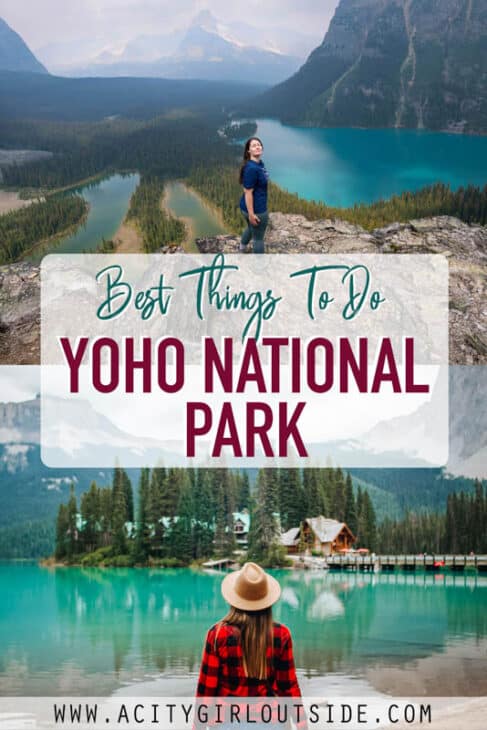
We’re starting this list off with the most popular attraction in Yoho National Park – Emerald Lake! Emerald Lake is nothing short of incredible. As its name suggests, this lake boasts breathtaking emerald green waters that are simply mesmerizing. The stunning colour of the water comes from light refraction off the white deposits of marl (a type of sedimentary rock) on the lake’s bottom.
If you only have time to visit one place in Yoho National Park during your trip to the Canadian Rockies, make sure it Emerald Lake. Sure it’s the busiest, but that just means it’s totally worth it!
It is the largest lake in Yoho National Park and can be easily accessed by a short walk or scenic drive from the town of Field. One of the great things about Emerald Lake is its accessibility. Similar to Lake Louise, it’s simply a case of parking and walking a paved walkway to the lakeshore.
The lake offers stunning views of the iconic Mount Burgess and Wapta Mountain. There’s a loop trail that takes you around the lake, and there is even an option to rent a canoe (it’s cheaper than Lake Louise!) and explore the lake from a different perspective.
The Emerald Lake Lodge is one of the best places to stay in Yoho National Park. I was lucky enough to stay here in the spring when the lake was still covered in a blanket of snow – it was so magical! You can check out my full review of Emerald Lake Lodge to find out more.
2. The Natural Bridge
The Natural Bridge is in the same vicinity as Emerald Lake, in fact you have to pass to to reach the Lake, so may as well make a stop here!
The Natural Bridge is a fascinating geological rock formation that has been naturally sculpted by the erosive forces of the rushing water, resulting in a bridge-like structure over the Kicking Horse River. It’s easily accessible from the road and offers great photo opportunities, especially in spring and early summer when the water levels are at their peak.
In the winter months, the river freezes over and provides a completely different perspective of the Natural Bridge. Interpretive signage around the bridge provides insights into the geological history of the area.
3. Lake O’Hara
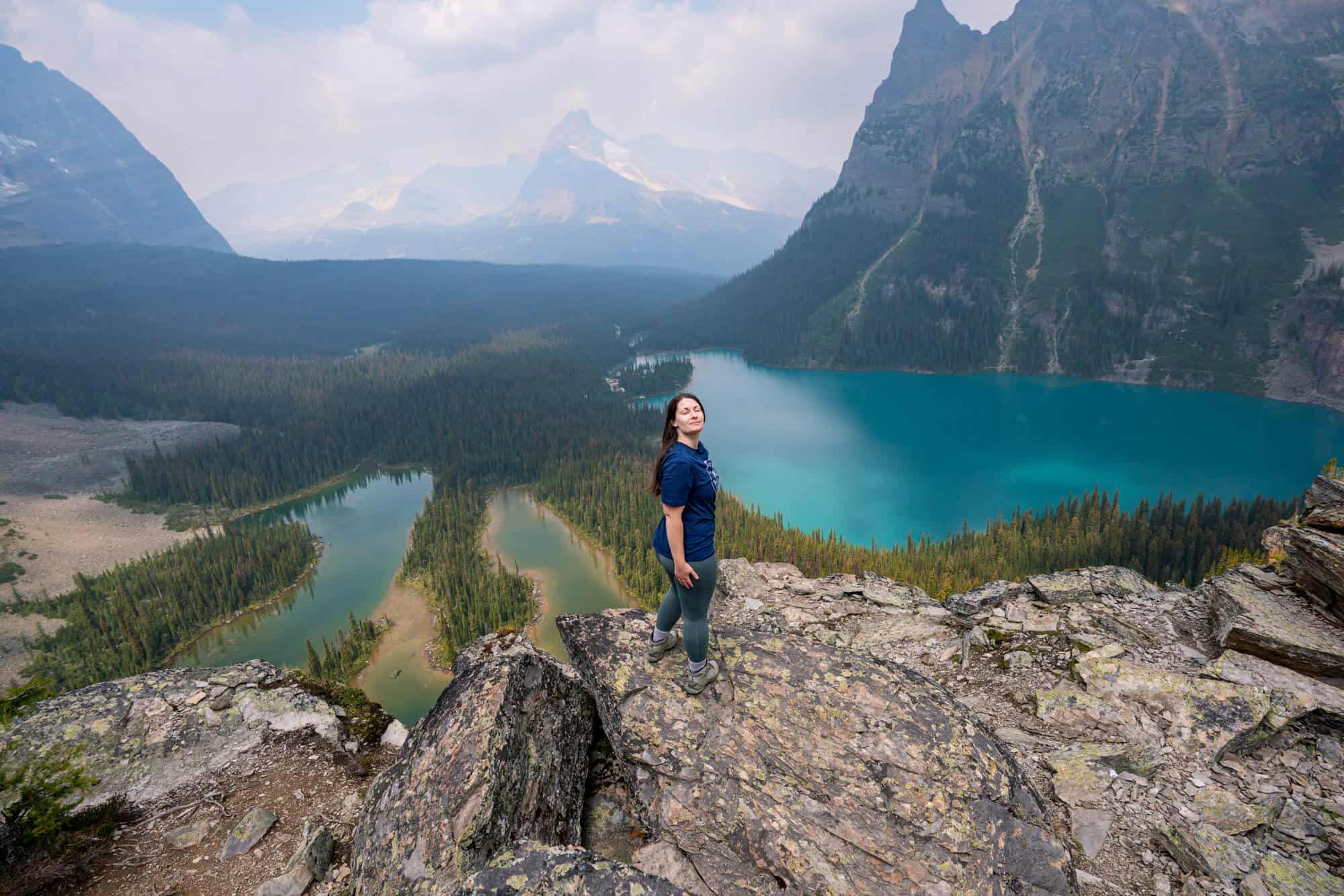
Lake O’Hara is by far the most beautiful place in Yoho National Park (and quite possibly the Canadian Rockies) My recent visit solidified my opinion that Lake O’Hara was pretty much perfection! I celebrated becoming a Canadian citizen here in 2023 and it will remain a special place in my heart.
Now I guess you’re wondering – how do I get to Lake O’Hara? This is the tricky part. Lake O’Hara is a delicate environment and therefore Parks Canada tries to limit the number of visitors. But this just make it all the more special.
There are a few options for visiting Lake O’Hara and almost all of them involve booking a reservation on the shuttle bus. Unlike Emerald Lake, you cannot drive to Lake O’Hara. The shuttle, ran by Parks Canada, leaves from the Lake O’Hara parking lot several times a day from June to October. You will need to make a reservation in advance for the shuttle.
Camping permits and shuttle reservations for Lake O’Hara are some of the sought after reservations in the Canadian Rockies – you can check out my full guide to Lake O’Hara for more information. If you’re not one of the lucky ones, you can opt to hike the 11km FSR road, or splurge and book a night at Lake O’Hara Lodge.
4. Takakkaw Falls
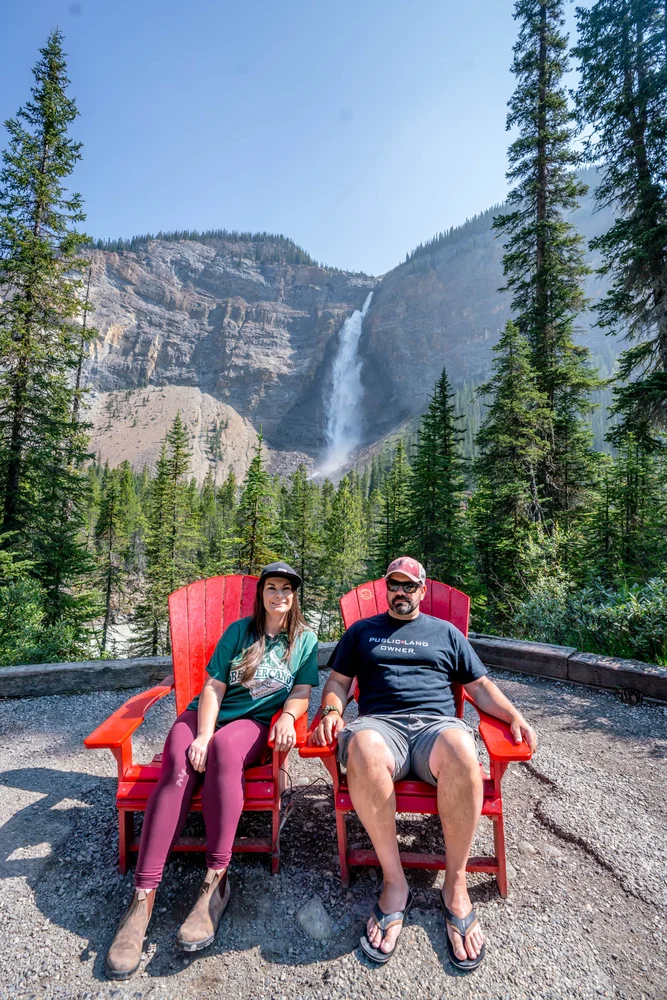
Next up on this list is one of Canada’s highest waterfalls – Takakkaw Falls, one of the most impressive waterfalls I have see in the Canadian Rockies. With its powerful cascading waters, it’s easy to see why this waterfall is one of the top things to do in Yoho National Park. The word “Takakkaw” translates to “magnificent” in Cree, and that’s definitely an accurate description.
With a staggering height of about 380 meters (1,250 feet), Takakkaw Falls is the second highest waterfall in Canada. The falls are situated just off the winding Yoho Valley Road, which offers breathtaking views of the surrounding mountains.
A short walk from the parking lot will take you across a bridge to a viewpoint where you can witness the falls up close. Takakkaw Falls can be quite powerful in late spring and early summer when snowmelt increases the flow of water. However, it’s still a worthwhile stop at any time of year.
5. Wapta Lake
Just to the east of Takakkaw Falls, you’ll find the serene Wapta Lake, another must-see in Yoho National Park. This glacier-fed lake is known for its brilliantly clear waters, which beautifully mirror the sky and surrounding peaks on a calm day. The lake is easily accessible from the highway and offers picnic areas with spectacular views.
5. Wapta Falls
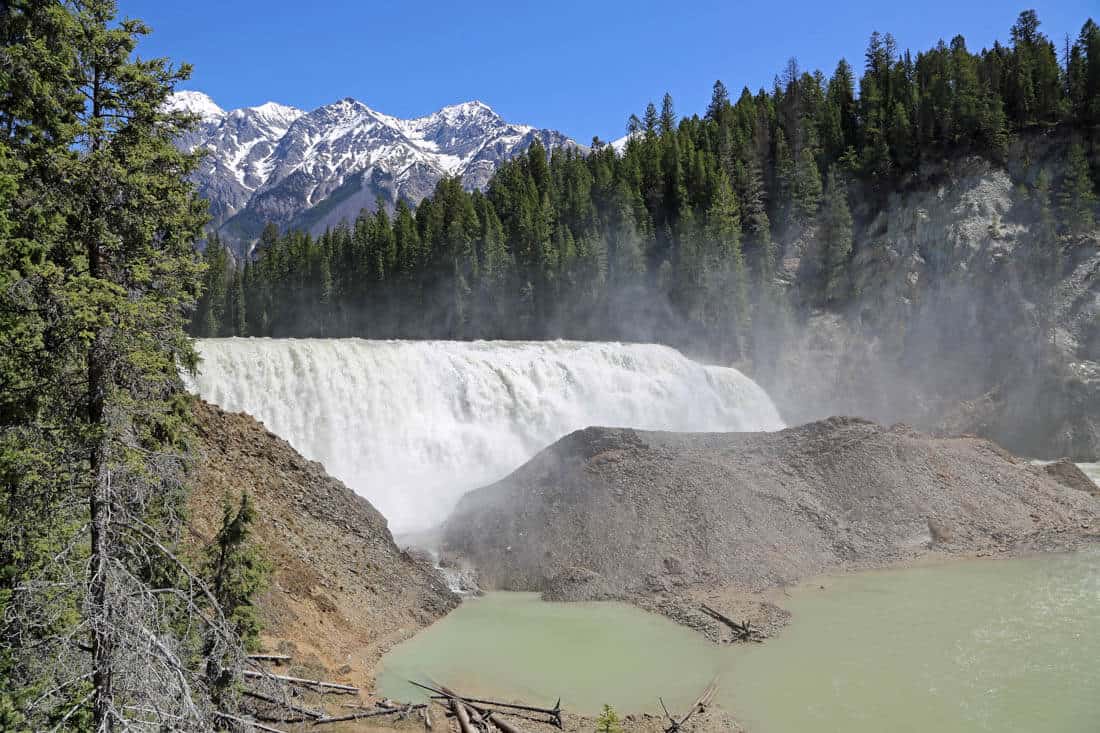
Wapta Falls is the largest waterfall on the Kicking Horse River and one of the best places to see in Yoho National Park. Located at the park’s western outskirts, the waterfall is named after the Nakoda word for “river.”
The waterfall showcases an impressive display of nature’s power, with a drop of approximately 30 metres and spanning around 150 metres in width.
Visitors can reach Wapta Falls via a moderately easy 4.6-kilometre round trip trail. The trail meanders through lush forests and wildflower meadows. As you approach the waterfall, you’ll be greeted by the thunderous sound of the water and a spray that often forms a rainbow on sunny days — a picture-perfect moment not to be missed.
7. Sherbrooke Lake
Sherbrooke Lake is a bit of a hidden gem in Yoho National Park, tucked away in a quiet corner of the park. Located just off the Trans-Canada Highway, Sherbrooke Lake can be accessed via a 6-kilometre hike with an elevation of 165 metres. The trail takes you through a beautiful forest before arriving at the tranquil lakeshore. You can also hike around the entire lake, which is approximately 7 kilometres.
8. Burgess Shale
Burgess Shale is one of the most fascinating and significant points of interest in Yoho National Park. Recognized worldwide for its vast deposit of marine animal fossils, it is renowned as one of the world’s most important fossil sites. Dating back over 500 million years to the Cambrian period, the Burgess Shale provides an extraordinary glimpse into the early evolution of life on Earth.
The fossils found at Burgess Shale are remarkable for their diversity and exceptional preservation. They include a wide variety of ancient marine animals, some of which are so well-preserved that their soft tissues, such as gills and digestive systems, are still visible. Many of these organisms have no modern counterparts, and their study has greatly expanded our understanding of the history of life.
Visiting Burgess Shale is a unique experience, but it is not for the faint of heart. The site can only be accessed through a guided hike, which is a strenuous, full-day trek that covers over 20 kilometres round-trip and ascends over 800 metres in elevation. Despite the challenging journey, the reward of witnessing these ancient remnants of life in their spectacular mountain setting is truly unparalleled.
For anyone with an interest in palaeontology, geology, or natural history, a visit to Burgess Shale is undoubtedly one of the best things to do in Yoho National Park.
9. Iceline Trail
The Iceline Trail offers some of the most spectacular glacier views in Yoho National Park. This trail ranges between 14 to 21 kilometres round trip, depending on how far you choose to hike. It takes you past several stunning glacial lakes and offers panoramic views of the Yoho Valley, Takakkaw Falls and the Daly Glacier. The trail has a steep elevation gain of 710 metres and can be strenuous for some, but the awe-inspiring vistas make every step worthwhile.
10. Town of Field
Field is home to fewer than 200 residents, lending the town a friendly, small-town vibe that’s instantly welcoming. I have passed by Field on many occasions, and on my most recent trip I finally ventured into the town to check it out. The town is almost stuck in time, it really transports you to a bygone area. I think the building I found most fascinating was the tiny abandoned railway station.
Field is a great place to stop for lunch. I highly recommend the Truffle Pig which is located in the cutest alpine cabin (it’s a big cabin!) The food here is amazing with service to match.
The Yoho National Park Visitor Centre is also located in Field. The centre is an excellent starting point for any visit to the park, offering valuable information about the park’s history, wildlife and staff are available to answer any questions. There are also working toilets here (a luxury if you’ve been backpacking for a few days!)
You can pick up maps, trail guides and other resources to plan your adventures in the park. The centre has a store selling snacks, water bottles and souvenirs to commemorate your visit to Yoho National Park.
The Yoho Visitor Centre also provides National Park fishing permits for purchase. If you’re interested in trying your hand at fishing in the pristine waters of the park, a permit is a necessity. The staff at the centre can assist you with the permit process.
When Is The Best Time To Visit Yoho National Park
The best time to visit Yoho National Park largely depends on the activities you’re interested in. If you’re looking to hike, camp, or enjoy the stunning wildflowers, the summer months from June to August provide the warmest weather and longest days. This is also the peak season, so expect more crowds at popular attractions.
The shoulder seasons of spring (April to May) and fall (September to October) offer the chance to enjoy the park’s natural beauty with fewer crowds. Spring ushers in blooming flowers and gushing waterfalls from the snowmelt, while fall offers a spectacle of vibrant colours as the leaves change.
Winter (November to March) in Yoho National Park is filled with snow-capped mountains and frozen waterfalls. This season is perfect for winter sports, with opportunities for snowshoeing, cross-country skiing, and ice climbing. Just remember, many facilities and roads may be closed or have limited access during this time, so it’s essential to check ahead.
Where To Stay In Yoho National Park
Emerald Lake Lodge
Emerald Lake Lodge is a beautifully rustic property that brings the quintessential Canadian lodge experience to life. Nestled on the shores of the park’s jewel-toned Emerald Lake, the lodge offers stunning views, cozy accommodations, and easy access to outdoor activities.
Each room features wood-burning fireplaces and private balconies, and the lodge has a range of amenities, including a restaurant, bar, spa, and hot tub. It’s the perfect spot for a romantic getaway or a family vacation.

Cathedral Mountain Lodge
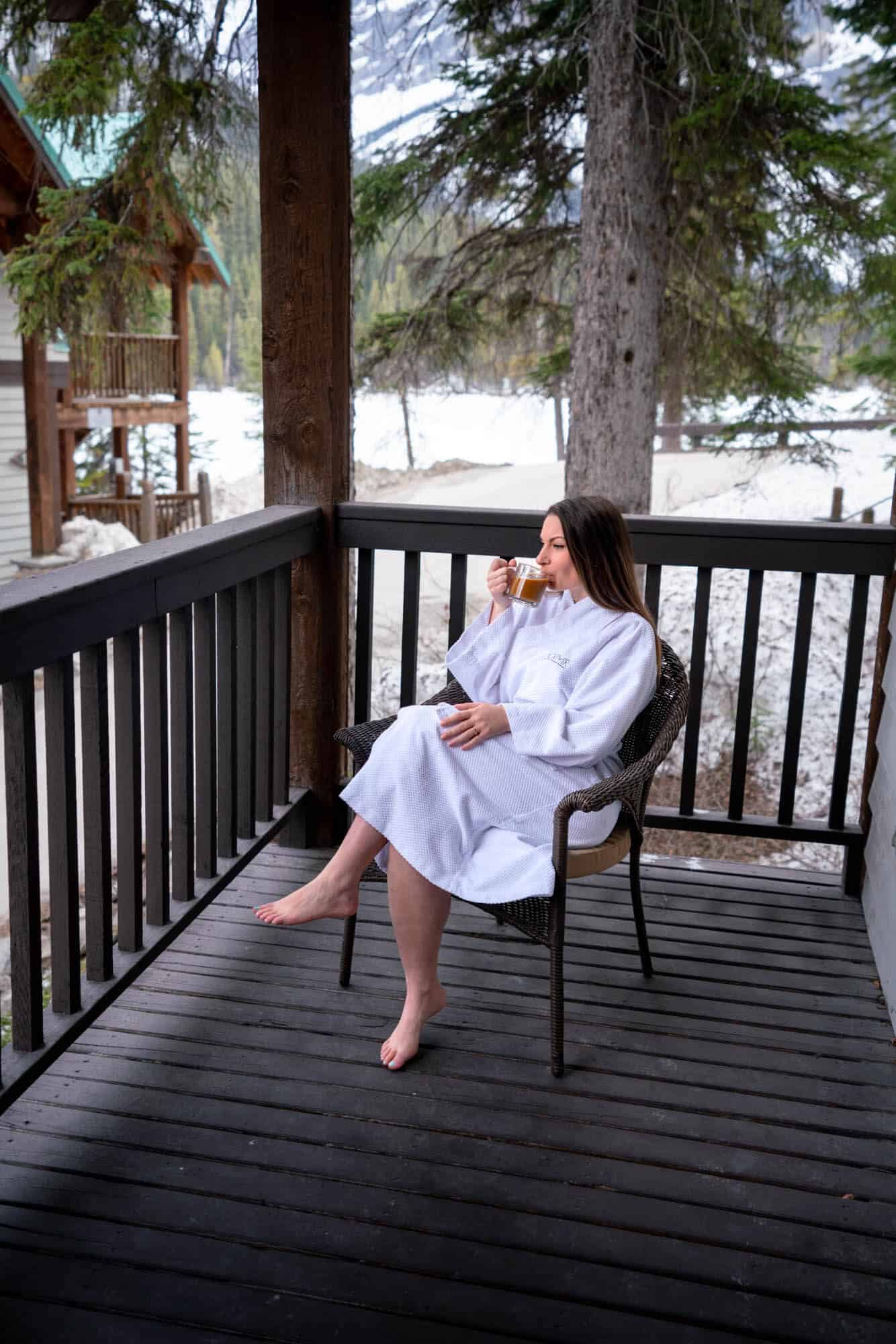
Just a stone’s throw away from the park’s entrance, the Cathedral Mountain Lodge offers comfort and convenience in one package. This riverside lodge is ideally located for those who want immediate access to the park’s trails, waterfalls, and other attractions.
The rustic, timber-built cabins come with plush beds, luxurious baths, and private decks overlooking the Kicking Horse River or Yoho’s majestic peaks. The lodge’s gourmet dining, featuring locally sourced ingredients, is another highlight not to be missed.
Yoho National Park Campgrounds
The park offers several campgrounds, like Kicking Horse and Takakkaw Falls, which provide basic amenities, beautiful settings, and direct access to hiking trails. Waking up to the sights and sounds of the wilderness is an unforgettable experience that truly encapsulates the best things to do in Yoho National Park.
Thanks For Reading!
I hope this guide to Yoho National Park has inspired you to plan your own visit and discover all that this incredible park has to offer. Yoho is absolutely stunning and honestly one of my favourite areas of Canada. With its diverse landscapes, rich history, and endless outdoor activities, it truly deserves a spot on your road trip through the Canadian Rockies.
Click A Pin Below To Save For Later!
About Rachael
Welcome to A City Girl Outside! I’m Rachael, a Londoner who traded the hustle and bustle of city life for the breathtaking beauty of Whistler, Canada. With no prior experience, I dove headfirst into an outdoor lifestyle that now includes hiking, canoeing, and snowshoeing.
What started as a leap into the unknown has become my greatest passion. These days, you’ll find me spending my weekends adventuring in the Canadian wilderness—chasing alpine views, paddling serene lakes, and embracing all that nature has to offer.
A City Girl Outside aims to inspire readers to step beyond their comfort zones, explore the great outdoors, and embrace the wild. Whether you’re a seasoned explorer or a complete beginner like I once was, there’s always room to reconnect with nature and discover the adventurer within.


