
Vancouver To Banff Road Trip Itinerary – 3 Epic Routes!
If you’re looking for an epic way to experience the Rocky Mountains, a road trip from Vancouver to Banff is definitely it. But where do you start and what are the best stops along the way? Don’t worry, I’ve got you covered with this ultimate guide.
The first time I did this trip (yes, I’ve experienced it on several occasions) It was an unforgettable road trip that left me with memories for a lifetime and an insatiable desire to go back again (and again). The drive itself is approximately 10 hours, but you’ll want to take your time and make frequent stops along the way.
There are a ton of scenic stops along the way, so don’t be afraid to take detours and explore the hidden gems that British Columbia and Alberta have to offer. In fact, I highly recommend it! Some of my best experiences on this road trip were from spontaneous stops and adventures.
This road trip is definitely one for the bucket list – don’t even think about skipping it. Plus, it’s the perfect opportunity to bust out your favourite road trip playlist and belt out your best rendition of “Don’t Stop Believin'”. This trip through Western Canada will make you wonder why you haven’t explored the region before, and you’ll see why in no time!
So without further ado, let’s jump into the details of this epic road trip from Vancouver to Banff! In this post I’ll cover everything you need to know – from the top recommended places to stop, to what to do in each location, and even what local delicacies you have to try.
(By the way, this is gonna be a long post, so you might wanna grab a pen and take some notes!)

A City Girl Outside contains affiliate links. If you decide to make a purchase through these links, I will earn a commission at no extra cost to you. Thanks for reading!
Vancouver to Banff Road Trip Overview
There are several routes you can take on the drive from Vancouver to Banff, depending on your starting and ending points. But one thing’s for sure – you won’t be disappointed with any of them!
The most direct route from Vancouver to Banff is actually through the Coquihalla Highway (Highway 5) – this route is 847km long and takes approximately 9 hours 15 minutes without stops. But this route is also the least scenic, and what fun would that be?
In this guide, I’ll take you through the classic Vancouver to Banff route via the Sea to Sky Highway and the Trans-Canada Highway (Highway 1), which takes about 10 hours without stops. There will be plenty of places that’ll make you want to hit the brakes and soak in the beauty.
But I’ve also listed two alternative routes at the end of this post too, which will explore other incredible places such as the Okanagan Valley, Mount Robson, Jasper and the Icefields Parkway.
Now, I know what you’re thinking – “It’s gonna be a long drive, isn’t it?” Well, yes and no. Yes, because there’s just so much to see that you’ll want to stop every few minutes for pictures. And no, because this drive is actually pretty manageable and can be completed in a week (more if possible!) if you plan it out properly. Plus, with the numerous stops along the way, you won’t even feel like you’re driving long distances.
Note: The driving time from Vancouver to Banff may vary depending on road conditions, traffic, and your own pace. I recommend taking at least 7-10 days for this road trip so that you can explore each stop at a leisurely pace. But you can amend it to 3-5 days and just leave out some places.
If you are returning to Vancouver by car, you could even spread out these stops and do some on the journey back. There’s also the option to choose one of the other two routes listed to take on the way back.
Before hitting the road, make sure your car is in good condition for a long drive. Check the fluids, tires, and brakes to ensure a safe journey. Also, remember to pack some snacks and drinks for the road – you’ll thank me later!
Okay, let’s get down to business. You’ve got a long drive ahead of you, but trust me, these stops will make it totally worth it. Here are my top picks for must-see places on your Vancouver to Banff road trip!
→ Check out my Canada packing list for all seasons for all the essential items you’ll need when visiting Canada year-round, from hot to cold! (Don’t come unprepared like I did!)
Route #1: Vancouver to Banff Via Whistler & Duffey Lake Road
Vancouver
You’ll kick off your road trip in the bustling city of Vancouver. This awesome west coast seaport city is where your Vancouver to Banff drive begins!
Vancouver is absolutely stunning (as you’ll see with most of the stops on this itinerary) with a mix of urban and natural beauty. Even though Vancouver is a city, you’ll never feel like you’re missing out on nature – it’s got snow-capped mountains up north and the beautiful Pacific Ocean to the west.
Stanley Park: Stanley Park is a true gem of Vancouver and a must-visit on your way to Banff. This 400-hectare natural wonder is one of the largest urban parks in North America – it’s actually bigger than New York’s Central Park! (Which is incredible because Central Park is massive)
Stanley Park is like the city’s own backyard, but you won’t find just any old swing sets here. Instead, you can expect lush forests, beautiful gardens, historic landmarks, and even a beach or two. Biking the famous seawall is a great way to experience the park to its fullest. It’s a 9 km (5.6 miles) path that wraps around the park’s outer edge and promises some seriously breathtaking views.
My favourite part of Stanley Park however, is the famous Totem Poles at Brockton Point. These spectacular monuments are one of the most visited attractions in British Columbia, telling the stories of First Nations history in the area.
The Vancouver Aquarium is located right in the middle of the park and is home to over 50,000 animals including dolphins, seals, penguins, and so much more. And don’t miss the park’s miniature train—it’s a hit with both the little ones and the young at heart.

Granville Island: Granville Island is an urban oasis right in the heart of the city. It’s more of a peninsula than an actual island, but don’t let that fool you. This vibrant spot is packed with a myriad of unique attractions that are sure to make it a highlight of your road trip.
Start off by meandering through the bustling Granville Island Public Market. This place is a foodie’s paradise, with an array of fresh produce, locally-sourced meats, artisan cheeses, delicious bakery items, and more. And if you’re a seafood lover, you’re in for a treat! You’ll find some of the freshest catches here, from Pacific Northwest salmon to succulent oysters. It’s the perfect spot to grab a picnic lunch to enjoy by the waterfront.
But Granville Island isn’t just about the food. It’s also a hub of arts and culture. Take a stroll around the Railspur District, where you’ll find a collection of artist studios. Whether you’re into pottery, jewellery, painting, or glassblowing, you’ll find it all here. It’s fascinating to watch the artisans at work, and maybe even pick up a piece or two to remember your trip.
For the beer lovers out there, don’t forget to stop by the Granville Island Brewing Co. This is Vancouver’s first microbrewery, and these guys know their beer! Take a tour of the brewery, learn about the crafting process, and of course, sample a pint or two. Their English Bay Pale Ale is a must-try!
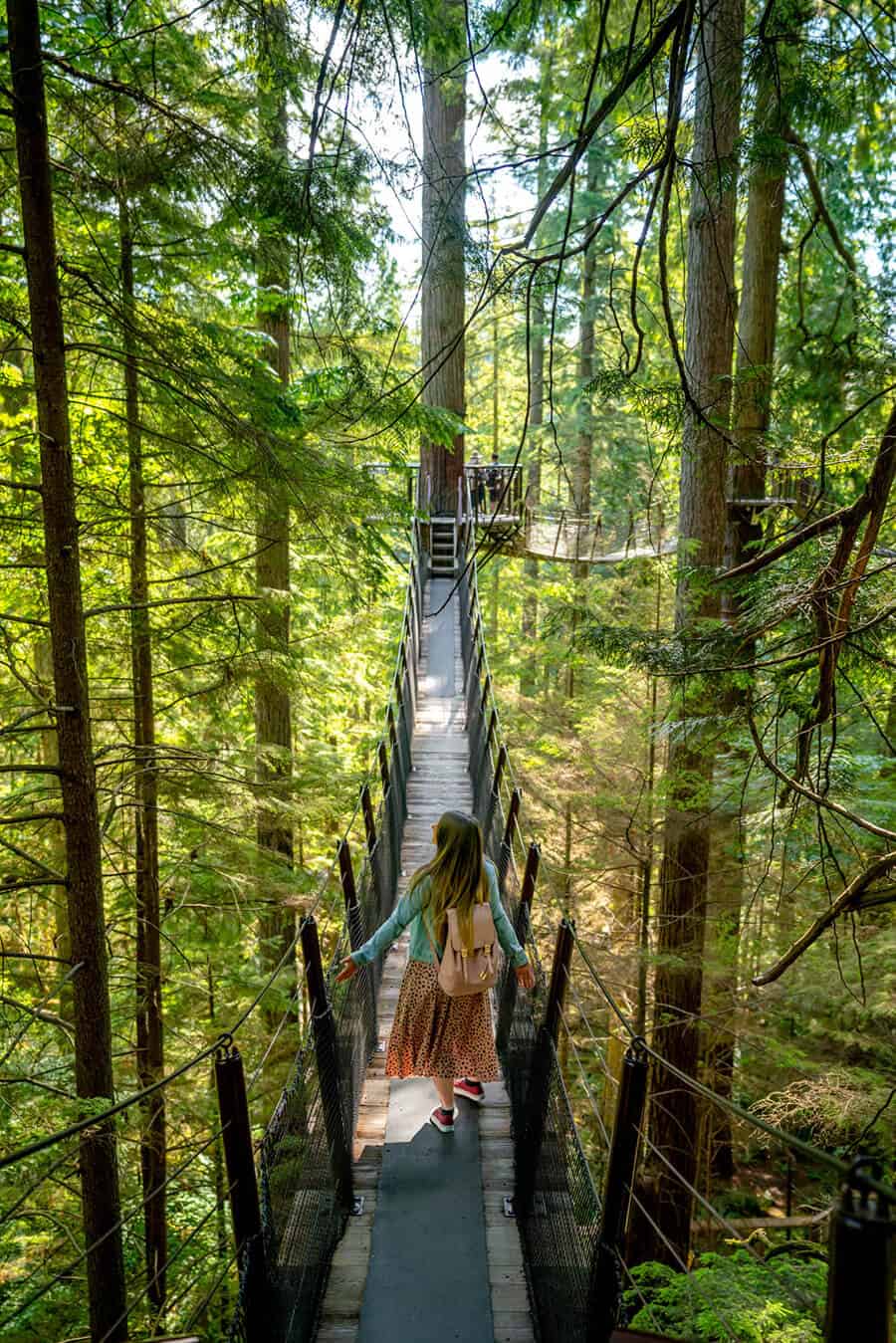
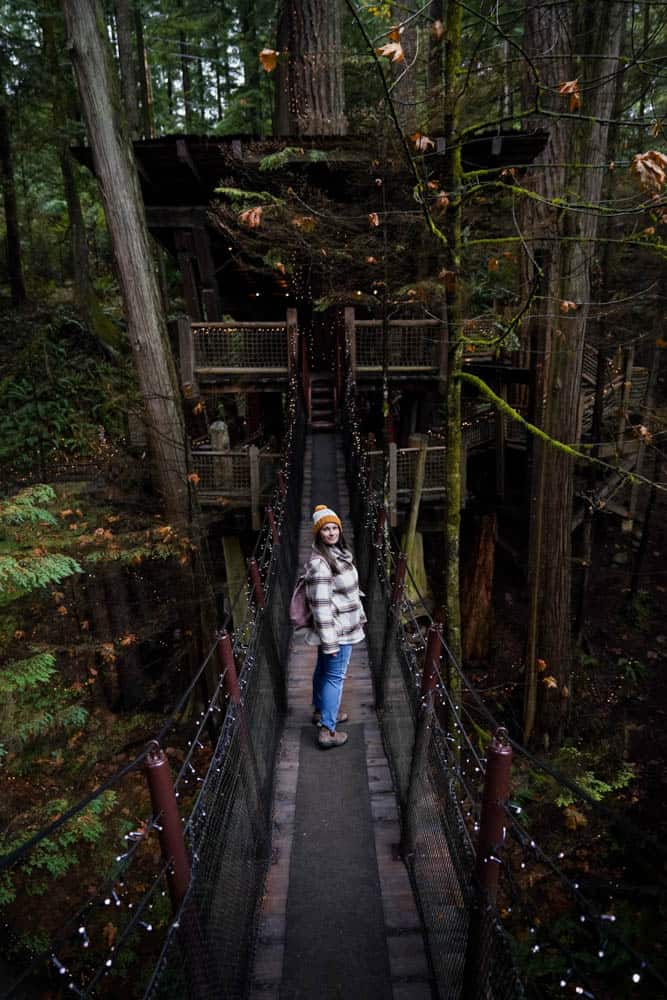
Capilano Suspension Bridge: The Capilano Suspension Bridge isn’t just any ordinary bridge, my friends. Nope, it’s a heart-racing, adrenaline-pumping, 137-metre long bridge strung high above the Capilano River. It’s one of Vancouver’s oldest and most thrilling attractions – and with good reason!
As you sway 70 metres above the river (that’s about the same height as a 20-story building, by the way), you’ll get a bird’s-eye view of the lush rainforest below. Seriously, the views from up here are downright mesmerizing. But it’s not just about the bridge – there’s a whole park to explore here.
If you’re feeling particularly adventurous, check out the Cliffwalk. This cantilevered walkway (read: hangs off the edge of a cliff) takes you on a thrilling journey through the rainforest via a series of suspended walkways with glass floors. Yup, you read that right – glass floors!
For a more serene experience, wander through the Treetops Adventure, a series of seven suspension bridges connected by platforms attached to eight massive Douglas fir trees. You’ll be able to explore the forest at your own pace, from a unique, elevated perspective.
If you have some time before starting your journey, I highly recommend spending at least 2 days in Vancouver.
Where To Stay In Vancouver
- Fairmont Pacific Rim: Offering stunning views of the city and harbour, the Fairmont Pacific Rim is a luxurious and modern hotel located at the heart of Vancouver. It features a rooftop pool and extensive spa facilities.
- The Listel: This eco-friendly hotel is located near the shopping district of Robson Street and offers contemporary rooms with art and modern amenities. The hotel also features an on-site restaurant and bar.
Shannon Falls


Your Vancouver to Banff road trip wouldn’t be complete without a visit to Shannon Falls, British Columbia’s third-highest waterfall. It’s located just off Highway 99, and towers 335 metres high which means you can often see it right from the highway.
The park surrounding the falls offers a network of well-marked trails, so take some time to explore the area. To reach the falls is an easy, short trail that leads right to the base of the falls where you can feel the cool mist on your face. It’s just about a kilometre long, and when you finally get to the falls, you’ll be amazed.
The best time to visit is in late spring and early summer when the winter snow on the nearby mountains has melted, making the falls even more powerful. There is no entry fee for Shannon Falls which makes it a great rest stop and one of the best free things to do in Squamish.
Sea to Sky Gondola
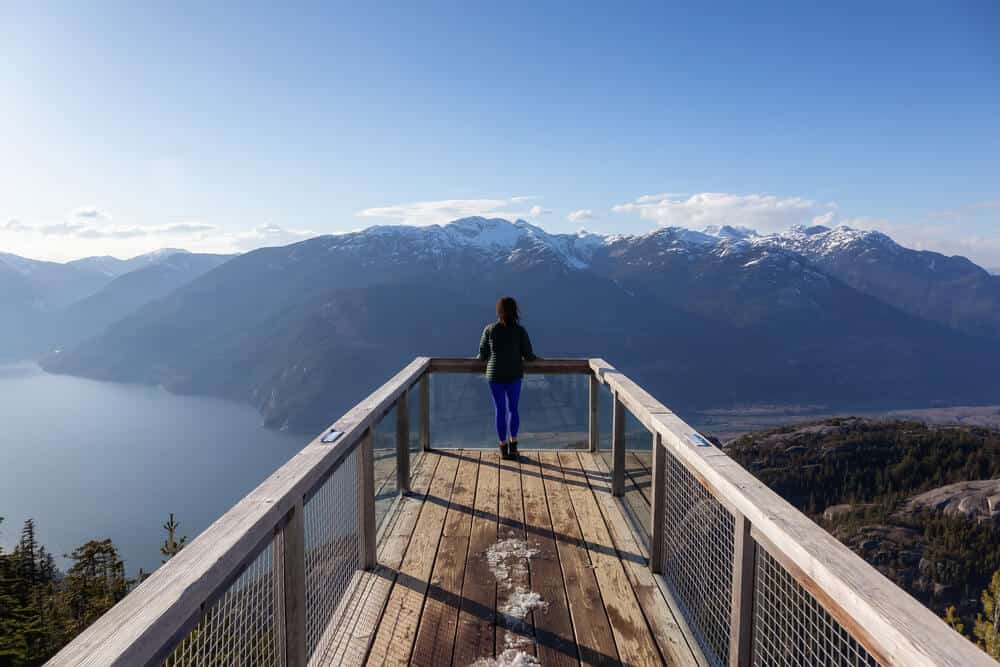
After visiting Shannon Falls, hop back onto Highway 99 and make your way to the Sea to Sky Gondola. This is definitely a must-do on any Vancouver to Banff road trip itinerary. The gondola takes you up more than 885 metres above sea level, where you’ll experience the most breathtaking views of Howe Sound.
Once you reach the top there is plenty to do! Make sure you walk across the suspension bridge and check out one of the main hikes. There are easy and challenging hikes depending on what you’re in the mood for. So don’t worry, if hiking isn’t your thing there are lots of easy walks with amazing views.
Once you’re done exploring, grab a drink or some food while enjoying the sights. The gondola costs $69.95 CAD per adult for a day admission. You can also hike to the top of the Chief for similar views, but the gondola is great for saving time – plus the suspension bridge and lookouts are so cool!
Squamish
Located just an hour outside of Vancouver, Squamish is a coastal town known as the “Outdoor Recreation Capital of Canada”. It’s the perfect place to stretch your legs and take a break from driving. You can go for a hike, mountain bike ride, or even try rock climbing!
To get to Squamish you’ll be driving on the breathtaking Sea-to-Sky Highway (officially known as BC Highway 99). There is much to see along this highway, so be prepared to make many stops.
While many of the main attractions in Squamish can be done in a day, I do recommend an overnight stay so you can spend a full day here. There are so many hidden gems, and the sunsets here are insane!
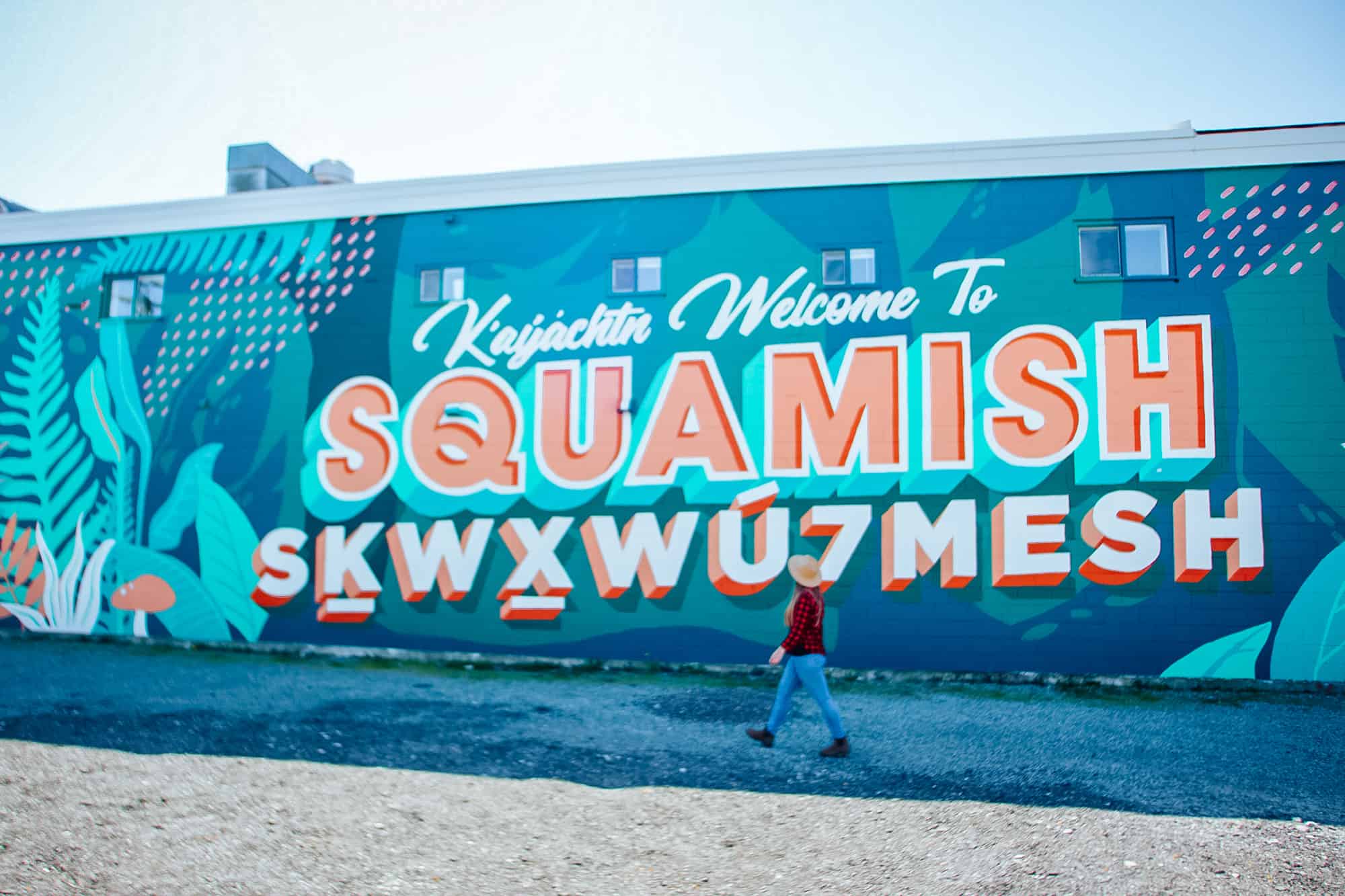
Downtown Squamish is the heart of this vibrant mountain town, with a unique blend of outdoor adventure meets small-town charm. Lined with a variety of locally-owned boutiques, cafes, and restaurants. For coffee head to Sunflower Bakery where you’ll the best donuts in town! Don’t forget to appreciate the intricate murals and public art pieces that add a splash of colour and creativity to the town (my personal favourite is the Squamish Wings mural)
The Stawamus Chief is one of the top hikes in Squamish and is considered moderate to hard. There are 3 peaks that you can choose to hike to, the most popular being the first and second peaks. It’s a 3.7-mile loop trail that requires a decent amount of effort, especially towards the end when the scrambling begins. You’ll gain a total of 654 meters (2,145 feet) in elevation, but the views of Howe Sound are absolutely mind-blowing!
If you want to experience the the outdoors but not big on difficult hikes, walking the Squamish Estuary is really beautiful around sunset and the trailhead is in the middle of Downtown. For something a bit more magical, my favourite easy hike in Squamish is Mamquam Falls, a hidden gem that leads to a bright glacial blue waterfall in a dense forest. To get here will require a 20-30 minute drive along a forest service road.
If you’re into awesome water adventures, you gotta give whitewater rafting in Squamish a shot! Don’t worry if you’ve never rafted before – there are trips for all levels of experience, and Squamish has got some of the best spots for it.
The Cheakamus and Elaho rivers are the most popular spots for rafting, and they offer stunning views of the surrounding mountains. Plus, it’s a great way to cool off on a hot summer day. This tour includes return transportation and provides all the necessary equipment.
The best way to end an eventful and adventurous day in Squamish is by visiting one of it’s craft breweries. My personal favourite is Backcountry Brewing. They have a unique selection of brews, plus an outdoor patio with stunning views. You can also check out A Frame Brewing and Howe Sound Brewing.
Where to stay in Squamish
- Sandman Hotel & Suites Squamish: This comfortable hotel provides a great base for your adventures in the Squamish region, offering cozy room, a well-equipped fitness centre, hot tub and waterslide! Plus they even include a delicious breakfast.
- Squamish Adventure Inn: Ideally situated for outdoor enthusiasts, this inn offers a variety of room types and a communal kitchen, making it great for budget travellers and groups. This is a great way to meet others, especially if travelling solo!
- Executive Suites Hotel & Resort: If you’re after something a little fancier, check out Executive Suites Hotel & Resort. They’ve got a range of room styles, from standard queens to one-bedroom family suites. Plus, they’ve got a pool, fitness centre, and an on-site restaurant.
Garibaldi Provincial Park
Next up on this Vancouver to Banff itinerary is Garibaldi Lake, one of the most breathtaking alpine lakes in Canada. You absolutely can’t miss this place on your itinerary! It’s one of the most visually stunning spots you’ll ever see.
Situated with Garibaldi Provincial Park, Garibaldi Lake is a stunning bright turquoise lake surrounded by towering mountains, making it a popular spot for hiking and camping.
Getting to Garibaldi Lake however does require some effort, as a result it’s not as crowded as other Canadian lakes (ahem, Lake Louise…). To reach it you’ll need to hike a 9-kilometre trail (one way) with a 900-metre elevation gain. It’s quite a challenge, but totally worth it. I mean the photos just don’t do it justice!


Panorama Ridge Hike:
If you’re up for an epic hike, you gotta check out Panorama Ridge. It’s a 28.3km (18 mile) loop trail that’s pretty popular (so expect some traffic). Panorama Ridge is undoubtedly one of the best hikes in Whistler and as a result it does get pretty busy. The viewpoint features a panorama of the Coast Mountains and Garibaldi Lake below. It is one of the most stunning views near Whistler!
While you can hike Panorama Ridge in a day, it does makes for a really long day of hiking, taking approximately 12 hours (I did it in 8.5 and regretted it). I have done this as a day hike and it’s intense. I personally recommend making it an overnight night hike, this way you get to really soak in the views. But I think those stunning views of Garibaldi Lake make every bit of effort totally worth it.
Black Tusk:
Black Tusk is another must-see in Garibaldi Provincial Park. This distinctive, volcanic rock formation is a sight to behold and can be seen from various points within the park. If you’re up for a challenge, take on the Black Tusk hike, which offers stunning views of this unique landmark at the top.
The hike is steep but relatively moderate until you get to the base of Black Tusk, this is where you’ll encounter a steep section of shale, which is loose volcanic rock. This short section was challenging but showcases some incredible views of Garibaldi Lake.
The last part of the Black Tusk hike is called the chimney – this is for experienced climbers only and requires a fair bit of scrambling. I chose not to complete this last part as it can be dangerous.
It’s important to note that this trail is entirely exposed with little shelter from the sun so be prepared with water and sunscreen.
Whistler
As you make your way towards Banff, you’ll pass through Whistler – home to one of North America’s top ski resorts. But don’t let that fool you, there’s plenty to do in Whistler in the summer months as well. You should spend a night or two here before continuing your Vancouver to Banff trip, as there are countless activities to choose from.
If visiting Whistler in winter, skiing or snowboarding is a must. There are over 200 runs and over 8,000 acres of terrain to explore. And if you prefer a slower pace, there’s also and abundance of Whistler snowshoeing trails. If visiting Whistler as a non-skier, there is still plenty of exciting activities, including dog sledding tours, iceskating and snowmobile tours.
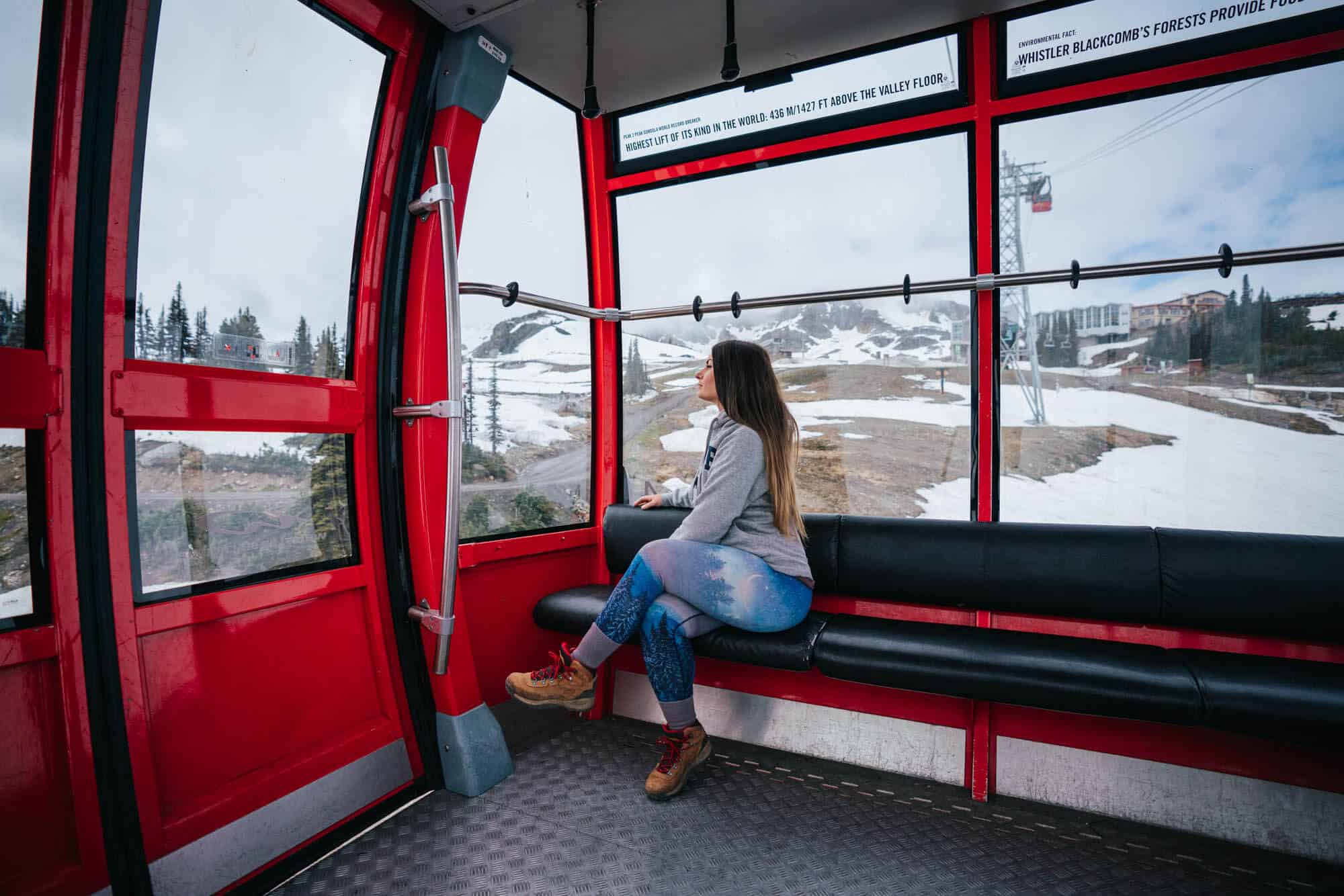
If there’s one thing you need to do when visiting Whistler on this Vancouver to Banff drive, it’s the Peak 2 Peak Gondola. I’ve experienced this gondola in different seasons and it never fails to take my breath away.
The gondola showcases fantastic vistas of the Coast Mountain range. It runs between the mountains of Blackcomb and Whistler, and is the longest and highest gondola of its kind in the world. If you have the patience to wait, the glass-bottom gondolas allow you to get a unique perspective of the valley below.
After your ride on the Peak 2 Peak Gondola, make sure to take advantage of all the activities available at both Whistler and Blackcomb Mountains. The High Note trail is one my favourites in the area, where you can see beautiful views of Cheakamus Lake from above. In the early summer season you can also hike Pika’s Traverse, where you’ll walk between two HUGE walls of snow.


The Whistler Train Wreck is an intriguing and unconventional attraction tucked away in the forest near the Cheakamus River. It’s a favourite activity of mine since it can be accessed year-round.
This unique trail leads you to a cluster of colourful, graffiti-adorned train cars scattered haphazardly about the landscape, a result of a derailment that occurred back in 1956. The 5km round-trip hike is fairly easy, making it a suitable trail for all ages.
There are many beautiful waterfalls in Whistler, and most only require a short walk. Brandywine Falls is located a short 15-minute drive outside of Whistler along the Sea to Sky Highway. It’s a great option if you’re short on time or not up for a long hike. Alexander Falls is another stunning waterfall located just 20 minutes north of Whistler in the Callaghan Valley, the viewing platform is located at the parking lot.
Nairn Falls Provincial Park is about a 25-minute drive from Whistler, and there is a 1.5 km hike to the falls. While all 3 can be accessed year-round, the parking lot for Brandywine Falls does close in winter, and if you park on the highway you may get towed.
You can also experience the valley between these two mountains on a zipline tour. The Sasquatch is a must-try for adrenaline junkies, as it’s the longest zipline in North America.

But if you’re looking for more adrenaline-fuelled activities, try ATVing in Whistler. This tour lasts three hours and you’ll experience the backcountry on a side-by-side which is similar to an ATV but you get to sit next to each other!
And when you’re exploring Whistler’s outdoor playground, don’t forget to stop at one of Whistler’s many lakes for a refreshing swim or paddle boarding session. Green Lake is a popular spot with crystal clear water and gorgeous mountain views but it’s also the coldest. I recommend Lost Lake, which is closest to Whistler Village, or Alta Lake which has 3 main beaches.
Lastly, you can’t leave Whistler without trying its delectable cuisine. The town is famous for its fine-dining scene, but also has some hidden cheap eats. If you want to know what the best restaurant in Whistler is, it’s the Rim Rock Café (but that’s our secret!) My other favourites include Araxi, Il Caminetto and the Wildflower.
Also don’t forget to try some of the local specialties, such as Poutine, a dish made with French fries, cheese curds, and gravy. Don’t forget to grab a famous Beaver Tail before hitting the road again (The Beavertails Whistler location finally opened as of 2023!)
Where to stay in Whistler
- Fairmont Chateau Whistler: I have yet to stay at this Fairmont property but I do visit often to go to the Mallard Lounge and the Wildflower and this hotel is so beautiful. Offering luxurious rooms and superb service, the Fairmont boasts ski-in, ski-out access, a golf course, and a spa.
- Pan Pacific Whistler Mountainside: With stunning mountain views, this hotel offers well-equipped suites with kitchens, an outdoor heated pool, and two hot tubs. It’s also one of the best location in Whistler being within walking distance to the Whistler Gondola.
- Nita Lake Lodge: Nita Lake Lodge is one of the most beautiful places to stay in Whistler, and the only lakefront hotel in town. I stayed here to celebrate my husbands birthday one year. The suite we booked looked out onto the lake and was so clean and spacious. This hotel also features a full-service spa, and complimentary shuttle service to the ski lifts.
Joffre Lakes
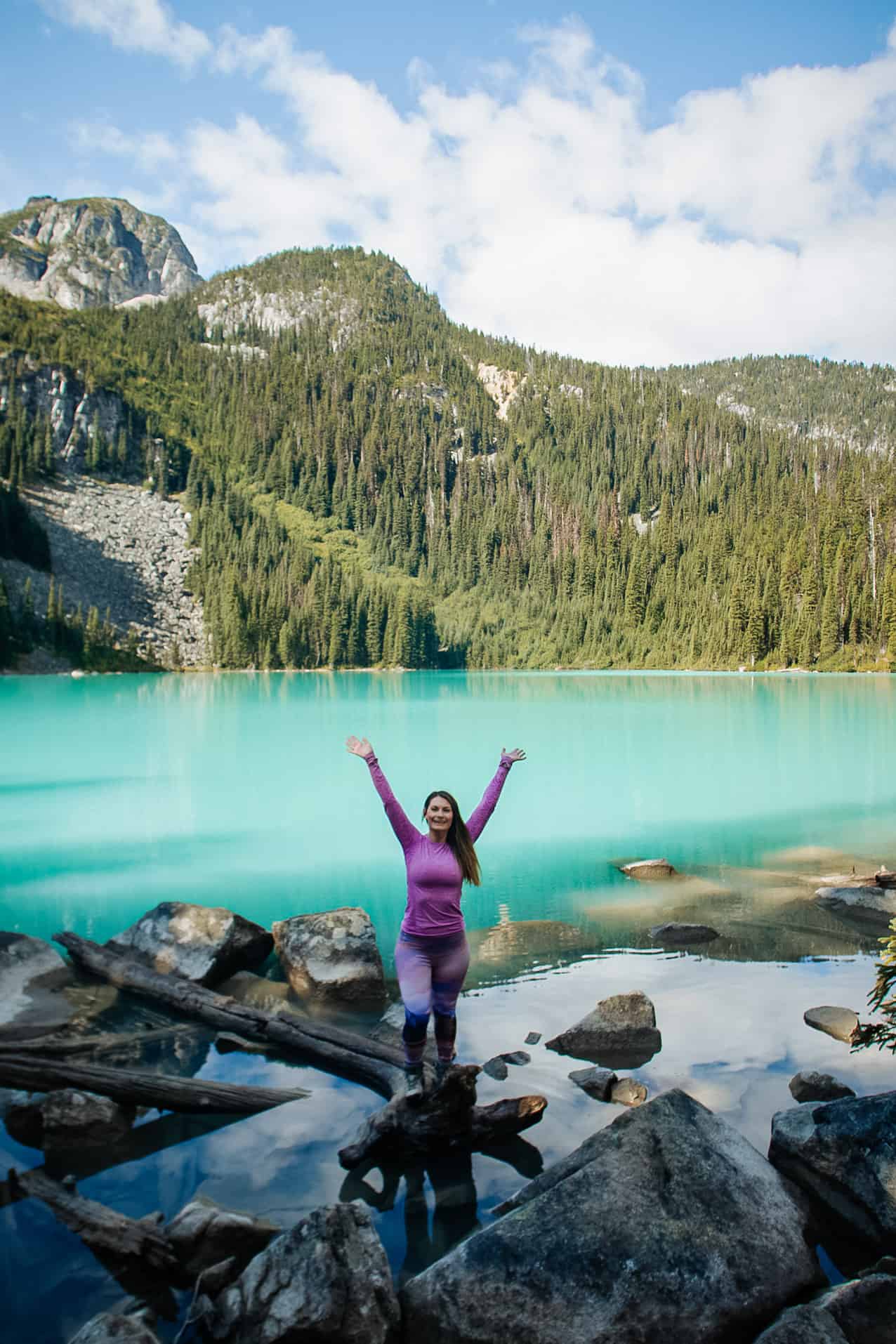
Next on this Vancouver to Banff road trip, we’re heading to the spellbinding Joffre Lakes. Joffre Lakes is made up of three spectacular glacial lakes, each more impressive than the last. And oh boy, their vibrant turquoise colour will leave you astounded!
Now, here’s the skinny about the hike to Joffre Lakes. It’s a 10-kilometre round trip, and there’s about a 400-meter elevation gain. I’m not going to sugar-coat it – the trail is a bit of a workout, especially the challenging climb to the second lake. But trust me when I say, every drop of sweat will be worth it!
Along the trail you’ll pass by breathtaking views of massive glaciers, cascading waterfalls, and majestic mountains. And, if you’ve got the stamina, we recommend pushing on to the third lake. Why, you ask? Well, the view of Matier Glacier that feeds the lake is simply… jaw-dropping!
Don’t forget to pack a picnic – the third lake is a perfect spot to relax, munch on some snacks, and maybe even take a refreshing (albeit chilly!) dip. Just remember to pack out whatever you bring in as this is a protected area.
Lillooet
Next up on the drive is Lillooet, a small town that’s often referred to as the “land of the gold rush”. Known as “Mile 0” on the Gold Rush Trail, this historical town offers stunning views of rugged mountains and winding Fraser river.
Right before you arrive in the town of Lillooet, you’ll pass by the bright blue waters of Seton Lake. On a hot day this lake is pure bliss. There is also a small hike just before you reach the lake called the Seton Lake Lookout which features a stunning view of a bend in the road with the lake and mountains – it’s definitely one of the best views I’ve ever seen!
Take a stroll through its historic downtown area and learn about its rich history. And make sure to stop by Fort Berens Estate Winery for a taste of their award winning wines. You can order a glass of vino and wander the beautiful grapevines. The Vineyard is conveniently located along the highway you’ll be taking to reach your next stop!
But don’t let the town’s historical charm fool you. For the thrill-seekers, Lillooet has a lot to offer. Get your adrenaline pumping with some river rafting or go mountain biking in the rugged terrains.


Kamloops
The drive from Whistler to Kamloops takes around 4 hours without stopping, but as mentioned above there is quite a bit to do in between so expect it to take a bit longer.
(You also have the option of staying in Pemberton or Lillooet to venture to Joffre Lakes and Seton Lake, which would mean driving directly to Kamloops the following day.)
One of the things I love about this part of the drive between Joffre Lakes and Kamloops is how the landscape quickly transforms from a dense evergreen forest to a more dry desert – proving BC is seriously wild!
This drier climate actually makes Kamloops the perfect spot for wine making, and is home to some of the province’s newest vineyards. And trust me, there are plenty of tastings to satisfy your thirst in this charming little city. So wine lovers take note!
If you’re more into outdoor activities, there are plenty of options in Kamloops as well. You can spend the day hiking or mountain biking through Kenna Cartwright Park, or take part in water activities like fishing, boating and swimming in the many lakes and rivers.
Before you hit the road again, make a quick stop at the BC Wildlife Park. This is not just any zoo – it’s a rescue and rehabilitation facility for animals! Get up close and personal with Canadian wildlife including bears, cougars, bison and more.
Kamloops is a great one-night stop to break up the drive, but you can skip it and continue on since there is SO much ahead of you.
Revelstoke
You can’t drive from Vancouver to Banff without stopping in Revelstoke. This town is like Whistler’s little sister – a ski town that still has that local small town charm.
In the summer it gets HOT here, like I mean REALLY hot. When I was last here in July temperatures were hitting 45c degrees plus (on this particular day I spent a lot of time enjoying the AC) so be prepared to head out early before things start heating up.
The main attraction in Revelstoke is the world-class ski resort, with over 3000 acres of skiable terrain and an average snowfall of 40 feet per year. But don’t worry if you’re visiting in the summer as there’s still plenty to do! You can take a ride on the Revelation Gondola for some stunning views, hike or bike on the various trails, or go white water rafting on the Columbia River.
But no matter what season you visit, make sure to take a stroll through the charming downtown area and check out some of the local shops and restaurants. And if you’re a fan of craft beer, don’t miss out on a visit to Mt. Begbie Brewing Co.
One thing I definitely suggest when you visit Revelstoke in the summer is driving the Meadows in the Sky Parkway in Mount Revelstoke National Park. As the name implies, this road takes you to the top of Mount Revelstoke and is surrounded by the most amazing alpine meadows.The wildflowers up here are absolutely stunning, with beautiful shades of purple, red, and yellow.
I highly recommend taking your time and making stops at some of the scenic viewpoints along the way, including Revelstoke viewpoint, Monashee viewpoint and Panorama Point.
When you reach the very top of Mount Revelstoke, there are a multitude of hikes you can do. Many of them are relatively easy which means you can do several within a few hours. While others are more advanced. If you only have time for one, I’d suggest checking out the Fire Tower Trail. It takes you to a fire lookout built way back in 1927, offering an epic 360° view of the Monashee and Selkirk mountain ranges. It’s definitely worth it!
And if you’re visiting on a hot day, a whitewater rafting tour on the Illecillewaet River is a great way to cool off and get an adrenaline rush. Or you can simply relax by one of the many lakes or rivers in the area.
Revelstoke is also home to some amazing hot springs, including Halcyon Hot Springs and Canyon Hot Springs. Both are great to take a break from driving and spend a day soaking in the mineral-rich water while enjoying stunning mountain views.
If you do decide to stay a night or two in Revelstoke, I promise you won’t regret it. This town is often overlooked by tourists, making it the perfect place to get a taste of local life and escape the crowds.
Where To Stay In Revelstoke
- Coast Hillcrest Hotel: This comfortable hotel offers spacious rooms, a wellness area, and two on-site restaurants. It’s located just a short drive from downtown Revelstoke and local ski lifts.
- Stoke Hotel: Offering stylish and modern rooms, the Stoke Hotel is located along the Columbia River, offering guests beautiful views and easy access to outdoor activities.
Glacier National Park Of Canada
After leaving Revelstoke, you’ll be heading straight into Glacier National Park of Canada, it’s on the Highway 1 so you really can’t miss it!
The road through Glacier National Park, known as “Rogers Pass,” is hard to miss. This mountain pass always catches me off guard with it’s out-of-this-world beauty. The mountains soar so high I can’t help but continuously say “wow!”. Trust me when I say, you will know Roger’s Pass when you get there!
You don’t have to hike to enjoy these views either. If you want a quick pit stop to stretch your legs you can stop at the Roger’s Pass Discovery Centre. This centre has some great information on the park’s history, environment and wildlife. Plus, there is a short trail that leads to an old train snow shed.
But if you are feeling adventurous, one of the best hikes in Glacier National Park is the Great Glacier Trail. It’s a 10 km (round trip) hike with about 300 meters of elevation gain. The trail takes you through beautiful forests and eventually opens up to a stunning view of the Great Glacier. Definitely worth the effort!
For an easier hike, check out the Hemlock Grove boardwalk trail. It’s a short and easy 1 km loop through an old-growth hemlock forest, perfect for all ages and abilities. You can also spot some amazing waterfalls along this hike.
And if you’re lucky, you may spot some wildlife in the park. Bears, moose, mountain goats and more call this park home, so keep an eye out while driving or hiking through the area.
After you’ve taken in the amazing scenery and hiked to your heart’s content, it’s time to continue on your journey towards Banff. But don’t worry, there are still plenty of stops along the way!
Golden


Golden is a small town that is often just considered a pit stop to get gas – well I can tell you it is so much more than that! Golden is often considered the “Heart of the Parks” because it borders 6 of Canada’s most spectacular National Parks (Banff, Kootenay, Glacier, Mount Revelstoke, Yoho & Jasper)
One of Golden’s highlights is the Kicking Horse Mountain Resort. It’s perfect if you’re into skiing and snowboarding, especially right after some fresh powder. In the summer it transforms into a world-class bike park with some opportunities for hiking in the alpine.
If you’re up for some adrenaline-pumping fun, you can try white water rafting tour on the Kicking Horse River. With grade 3-4 rapids, it’s one of the best rivers in Canada for rafting. You can join a full-day tour that includes all the equipment, and an expert guide.
I opted instead to cool off at one of Golden’s local lakes, Cedar Lake. This hidden gem is surrounded by lush forest and offers a beach area to sit with a picnic. There is also a campground attached to the lake a boat launch.
The newest and most unique attraction in Golden is the Golden Skybridge which opened in 2021. At 426 feet high, it’s the highest suspension bridge in Canada and crosses over a rugged canyon in the Columbia Valley. There are other activities in the park for an additional charge, including the zipline across the canyon and the Railrider Mountain Coaster. They also have live bands play on select evenings.
I would not recommend this activity if you have a fear of heights – I held up a long line of people because I had to “shuffle” along along slowly. If you have experienced other suspension bridges you may be okay, but this was by far the scariest I’ve walked on.
Golden has surprisingly some of the best restaurants for a small town. I recommend both Reposados for great Mexican food, or Turning Point Restaurant (which had the freshest food and amazing service!)
And after you’re done, walk off your food by wandering around Golden Town. The Kicking Horse Pedestrian Bridge (Canada’s longest freestanding timber frame bridge) is a beautiful spot to explore on foot, starting from 8th Avenue North in Golden and stretching 46 meters (151 feet) across the Kicking Horse River.
Before you leave town, don’t miss out on visiting the Whitetooth Brewing Company for some delicious Belgian-inspired craft beer. My favourites were the Whitetooth Session Ale and Backyard Bivouac Pilsner.
Yoho National Park
Just when you thought this road trip couldn’t get any better, you’ll reach Yoho National Park. This park is known for its stunning waterfalls, turquoise lakes and incredible hiking trails. Yoho National Park is one of the most underrated in my opinion, you could explore this place for days and not even step foot in Lake Louise.
On the drive from Golden to Yoho, you’ll pass one of the most iconic railroads in Canada, the Spiral Tunnels. These tunnels were built back in 1909 to help trains climb up and down the steep mountain slopes. It’s definitely worth stopping for a photo-op and to witness the engineering marvel.
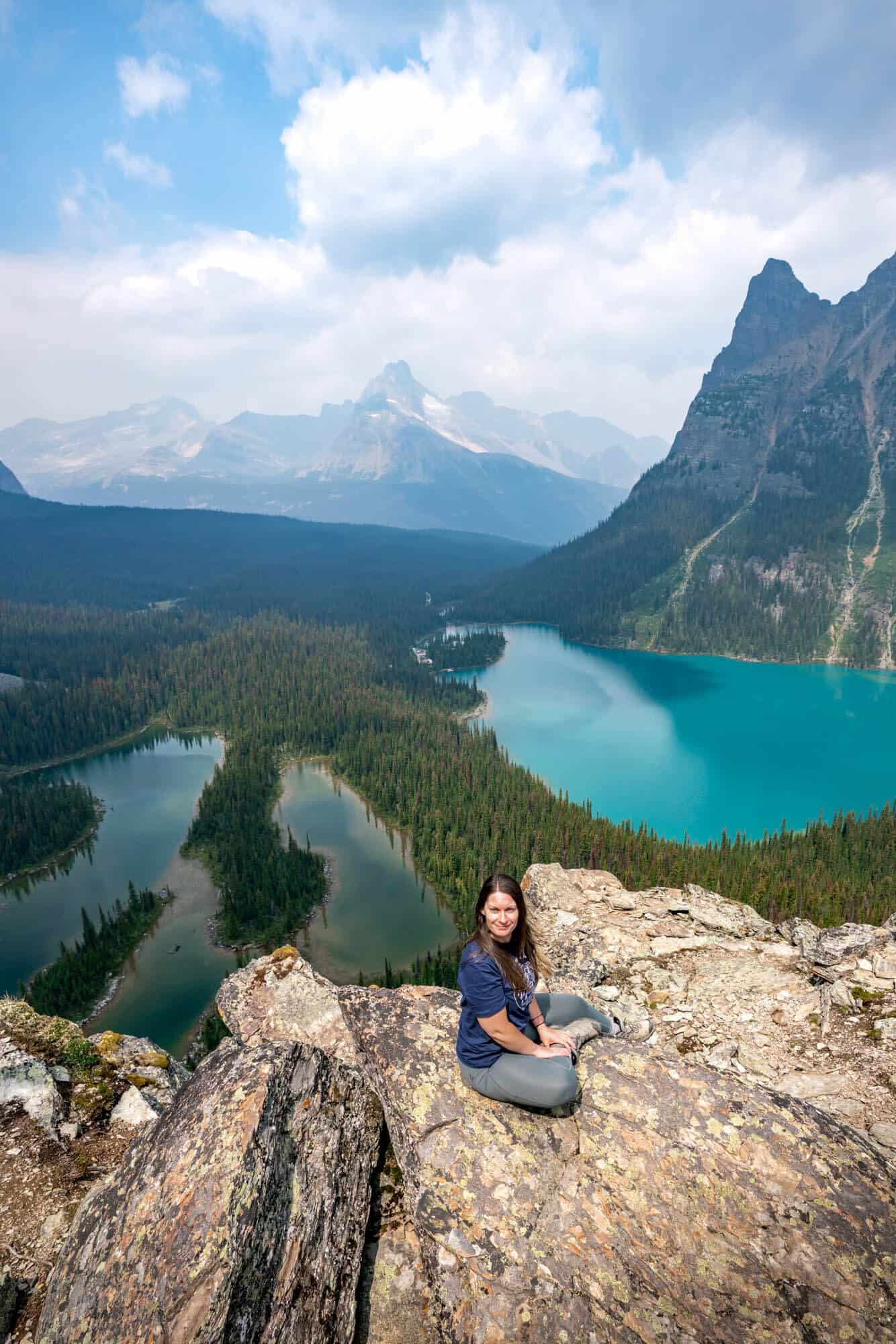
If you want to experience what I would consider the most beautiful part of Yoho National Park, consider a visit to Lake O’Hara, a hidden gem that is only accessible by shuttle bus.
Visiting Lake O’Hara however isn’t as easy as pulling up and walking to the lake shore, like you can do in Lake Louise. It does require a reservation for access, and these are like golden tickets. Of course, you always have the option of hiking the 2km access road also (which I don’t recommend if low on time!)
Bus and camping reservations are highly sought after. I spent 3 wonderful nights in this area to celebrate becoming a Canadian citizen and I already can’t wait to go back. Check out my full guide to visiting Lake O’Hara to find out everything you need to know.
If you weren’t able to get a reservation to Lake O’Hara, don’t fret, there are many other things to do in Yoho National Park that do not require pre-booking.

Emerald Lake is probably the most famous landmark in Yoho National Park. This vibrant lake is surrounded by beautiful mountains and its easy access makes it a popular spot for visitors (expect crowds!).
Emerald Lake gets busy, in fact it’s getting busier every year now that Moraine Lake is closed to personal vehicles. I would recommend getting here as early as possible, it’s also stunning first thing in the morning. You can also rent canoes here and it’s much cheaper than Lake Louise. If you want to splurge, you can’t beat a night at the Emerald Lake Lodge – check out my full review here.
If you want to explore Yoho National Park away of Emerald Lake, Takakkaw Falls is another must-see. This is BC’s second tallest waterfall at 373 metres (1,224 feet) tall. It’s important to note that the road up is steep with narrow roads and dramatic cliffs so come prepared (it’s paved the whole way) Don’t forget to grab a photo with the iconic Parks Canada red chairs before you leave!
If you’re up for a challenging but rewarding hike, check out the Iceline Trail. This 20 km trek takes you through stunning alpine scenery and offers incredible views of glaciers and mountains along the way. It’s definitely one of the best hikes in the Canadian Rockies.
After a full day of exploring Yoho National Park, you can spend the night at one of the campgrounds or head to the town of Field just outside the park for some cozy accommodations and delicious food – I highly recommend the Truffle Pig! (it’s located in a super cute alpine chalet)
As you continue towards Banff, keep an eye out for wildlife along the way. Yoho National Park is home to grizzly bears, black bears, elk and moose, so make sure to drive carefully.
Lake Louise & Moraine Lake
After exploring Yoho National Park, it’s time to continue on your journey towards Banff. The drive from Field to Banff is approximately an hour and a half, but I highly recommend taking your time and making some stops along the way – such as Lake Louise! My favourite place in the Canadian Rockies.
Lake Louise is possibly the most famous landmark in Banff, and one of the famous in all of Canada, but there is good reason for this. I have visited many places where the hype does not live up to the place – Lake Louise is not one of them.
This place really does take your breath away, and seeing it in person is the only way to really believe. But until then, please enjoy my photos from my many trips here!
As you may have guessed already, Lake Louise is busy. But there are some tricks to enjoying this place even with the crowds. One of them is coming for sunrise. Sunrise at Lake Louise is really special, it’s so quiet and you can relax and watch the mountain peaks turn pink in such a serene setting – truly bucket list-worthy.
Now depending on the time of year you are visiting will naturally depend on the amount of people. Sunrise in July and August will bring a lot of people – but substantially less than say… 12pm when it is bonkers! And my biggest tip, no matter the season or time of day, is to keep walking the lakeshore to your right. For some reason everyone congregates at the small boardwalk right in front of the parking lot when there is in fact – a HUGE lake to explore. You’ll get the same view but with less people around you.
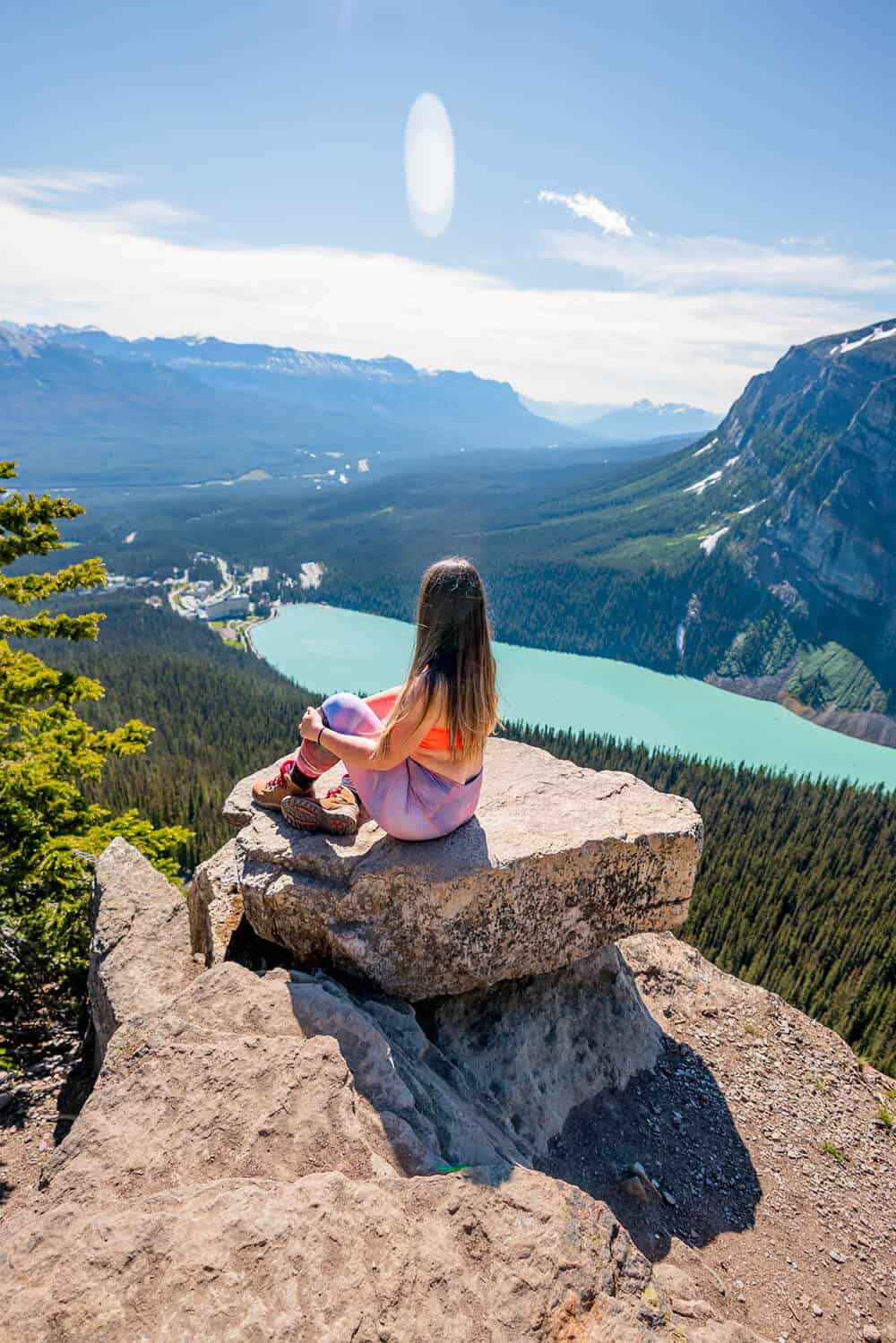
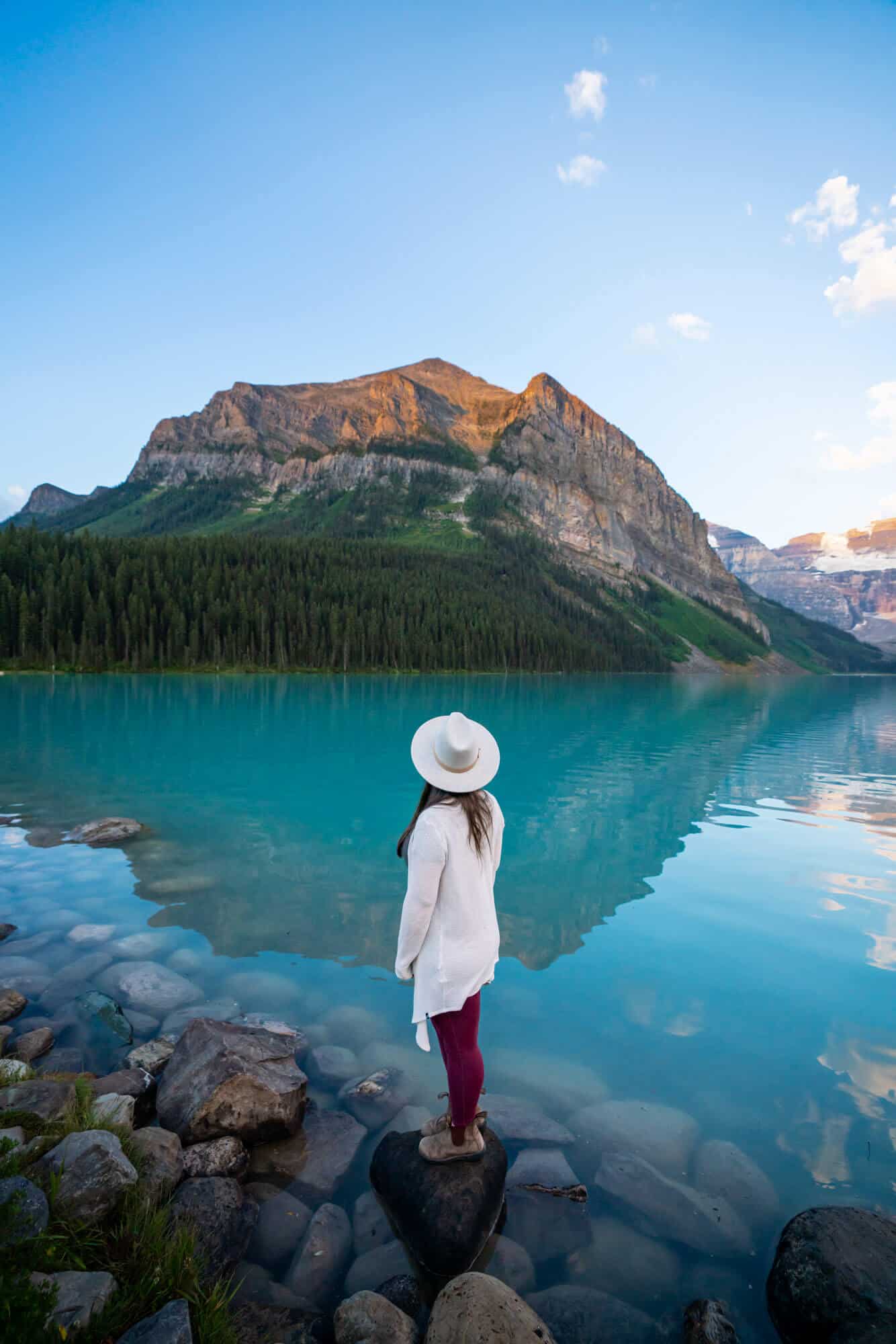
After watching the sunrise, take off hiking on one of the many stunning trails in the area. My personal favourites are the Big Beehive and Little Beehive – both give similar panoramic views of Lake Louise from above, but the Little Beehive is ever so slightly easier. For something more challenging, try the Devil’s Thumb, and when you’re on your way back down stop for tea and cakes at the famous Lake Agnes Tea House.
If you want to try out canoeing on Lake Louise (which you’ve most likely seen photos of on Instagram) the best time to do so is in the morning when the Boathouse opens (there is a long line for the rest of the day). The Boathouse typically opens at 8am but can vary depending on the time of year.

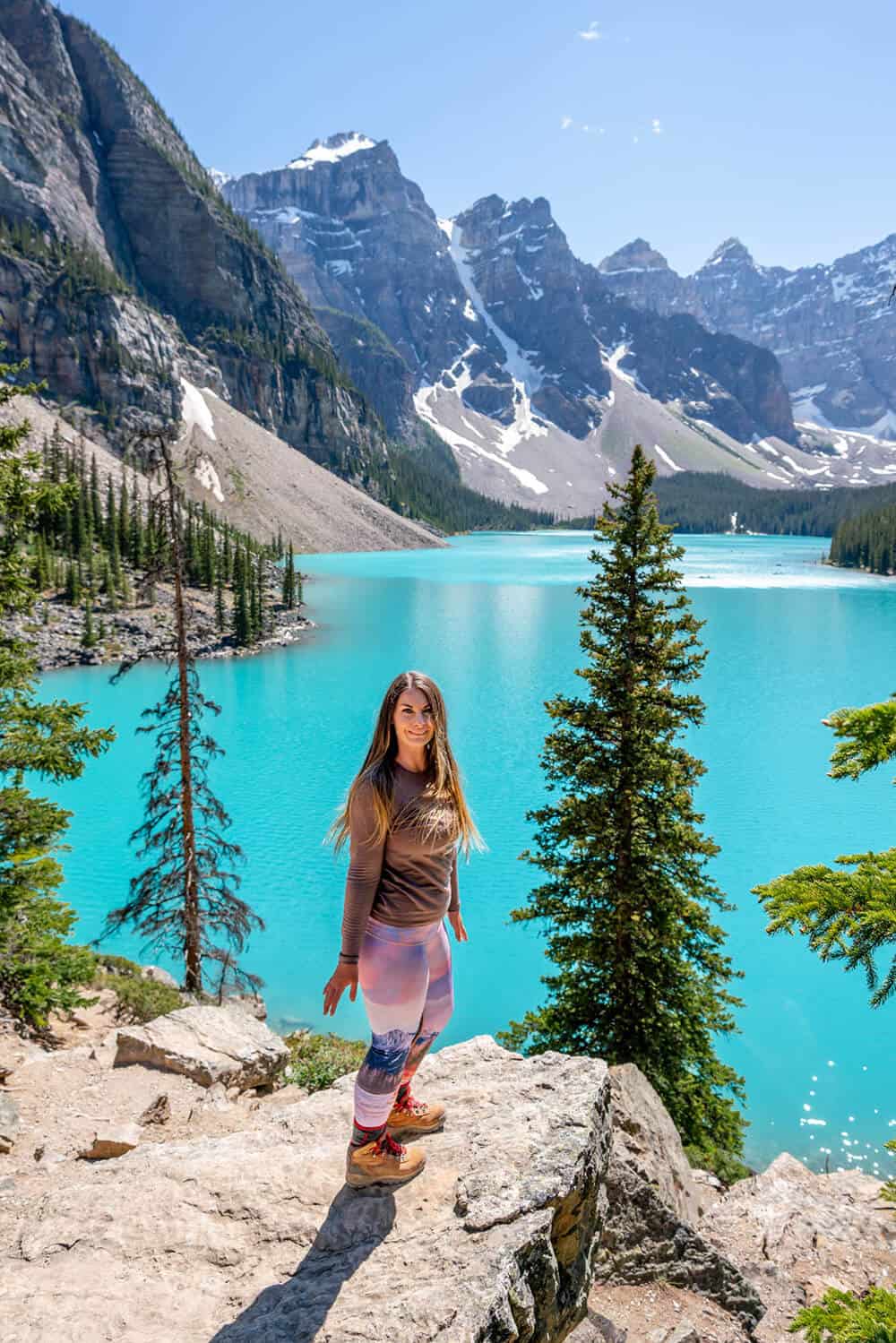
After experiencing the beauty of Lake Louise, it’s time to go to the other “famous Canadian lake” – Moraine Lake! I love Lake Louise because I find it can handle crowds well, but if it were purely based on beauty – Moraine would top my list of favourite lakes in Banff.
Visiting Moraine Lake as of 2023 is quite the ordeal however – but certainly not impossible! (and on a better note, easier to visit than Lake O’Hara) Parks Canada has now restricted access to all personal vehicles visiting Moraine Lake.
The good news however, is that it may come with less crowds (which is always a good thing in my book) You will now have to book the park n ride shuttle through Parks Canada and park at the Lake Louise Ski Resort (see? really not that bad!)
Or you can opt to take a tour – the Hop On Hop Off bus still stops here, as do the Roam Transit busses, which are great if visiting Banff without a car. If you hoped to catch a sunrise at Moraine Lake, you’ll also need to book a tour. At present there is only one tour company operating sunrise tours to Moraine Lake which is Moraine Lake Sunrise Shuttle (does what it says on the tin…)
The perks of doing so means less crowds. When I visited Moraine Lake at sunrise back in 2021, the crowds were bigger than I’d seen at Lake Louise, so I personally would say the price is worth it.
It’s important to note that due to its high elevation (1,883 metres/6,178 feet) Moraine Lake is only accessible during the summer months.
Where to stay in Lake Louise
- Fairmont Chateau Lake Louise: I stayed at the Fairmont Chateau Lake Louise in a lake view room in 2022, and this hotel absolutely blew me away. Getting to wake up to the breathtaking views of Lake Louise every morning was an experience like no other. Besides the amazing view, the rooms were spectacular and the Fairmont offers a world-class service throughout. You can check out my full review of the Fairmont Lake Louise for more information.
- Deer Lodge: On my most recent stay in Lake Louise I booked the Deer Lodge. This hotel is a historical lodge so while it is full of character it does come with some old-time amenities (the showers are outdated and there’s no A/C). The hotel does come with a rooftop hot tub for soaking in the stunning surroundings however! And if you want cheaper accommodation walking distance to Lake Louise, this hotel is a 10-minute walk.
- Mountaineer Lodge: I absolutely loved my stay at the Mountaineer Lodge, the rooms are sooo comfortable and really spacious. This hotel is conveniently located within a short drive to the lake, and offers a free continental breakfast, and an indoor heated pool with a hot tub.
Bow Valley Parkway
After taking in the stunning views at Moraine Lake, it’s time to hit the road again and head towards Banff. There are two ways to get to Banff from Lake Louise. You can either continue on the Trans-Canada Highway 1, or take my recommendation and drive the Bow Valley Parkway.
There is quite a bit to see along the Bow Valley Parkway, the first stop you will come to is Morant’s Curve – a popular viewpoint of a bend in the railway with a stunning mountain backdrop made famous by Nicholas Morant. If you’re there are the right time you may even spot a train driving through.
A little further down you’ll start to see the view of Castle Mountain appearing above the tree line. Castle Mountain is my favourite mountain in the area and one of the best photography spots in Banff. If you want in a little secret, you can access a secret spot on the shores of the Bow River at Castle Junction that showcases this mountain in all its glory.


The last must-see spot on the Bow Valley Parkway is Johnston Canyon, one of the best hikes in Banff. This popular hiking trail takes you through a series of catwalks and tunnels, leading you to two beautiful waterfalls, the Lower and Upper Falls (add an extra hour or two for this stop). If low on time you can just hike to the Lower Falls which are the most popular.
Keep in mind there are seasonal closures on the Bow Valley Parkway from May to June and September – check ahead to see current closures.
In winter, the trail is usually packed snow and ice so make sure to bring crampons or rent them out in Banff. You can even explore an ice cave!
Banff
And finally, you’ve made it to your final destination – Banff! Although you would have entered Banff National Park back in Lake Louise, the town of Banff is the heart of it all. There is a lot to do in Banff, and I highly recommend spending around 3 to 4 days in Banff, but if you are low on time, you can still do a lot in Banff in just one day.
There are so many things to do in Banff in summer, below are just some of my favourite activities:
Banff Avenue: Banff Avenue is famous for its breathtaking view of Cascade Mountain that towers over the town. You’ve no doubt seen photos of this on social media. But besides these fantastic views, you need to experience the liveliness of Banff Avenue for yourself. Take a stroll to browse the many shops, restaurants, and galleries. You can also stop by the historic Banff Park Museum or visit the Whyte Museum of the Canadian Rockies to learn more about the area’s history and culture. Grab a bite to eat at one of the many delicious restaurants. My personal favourites are Tooloulou’s for brunch and The Grizzly House for a unique fondue experience.
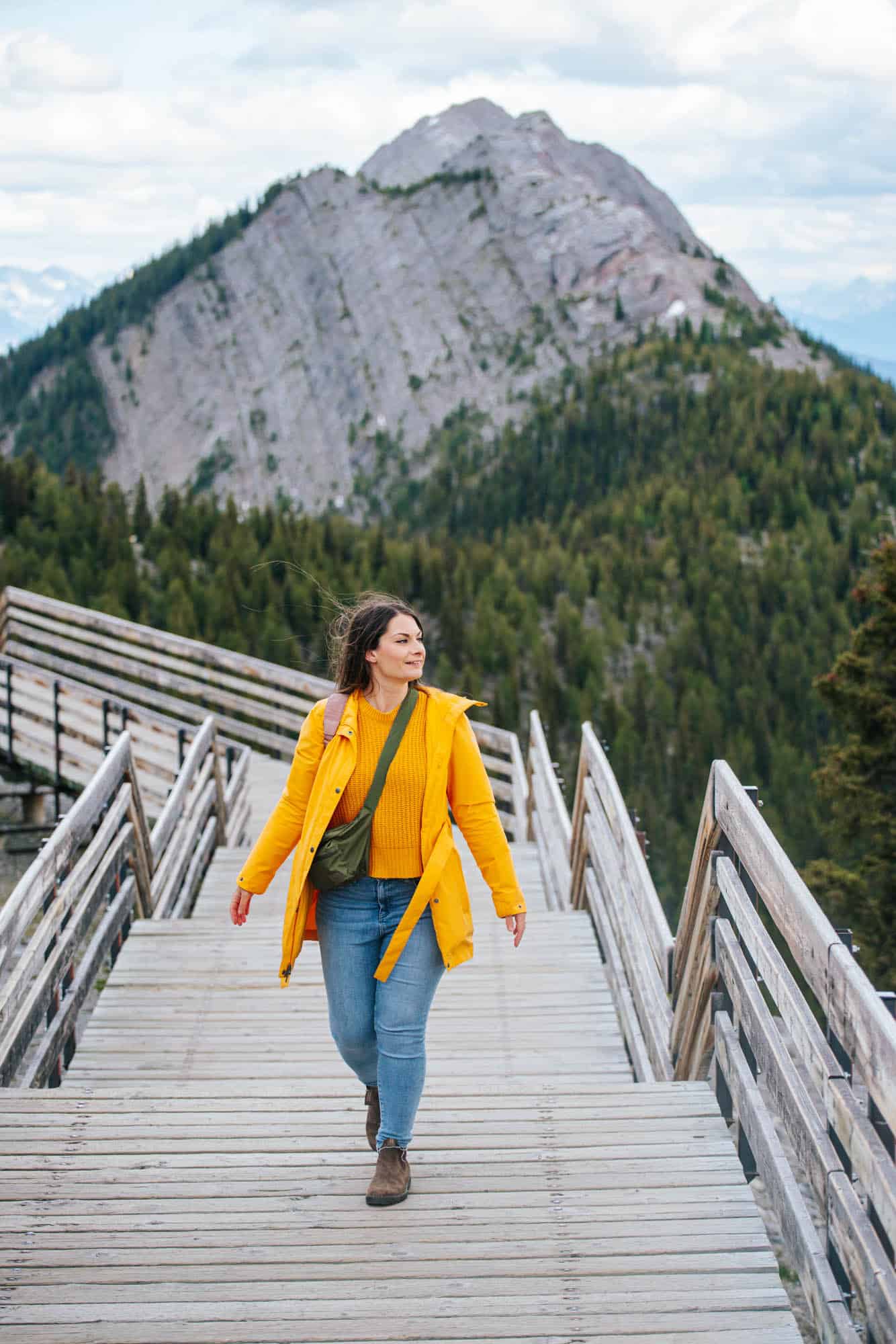
Banff Gondola: One of the biggest attractions in Banff is the famed Banff (or Sulphur Mountain) Gondola. Although the price tag isn’t the cheapest, I think you need to experience it at least once! The ride up the gondola is pretty special, featuring panoramic views of the Bow Valley. But the real treat is when you reach the top and can take in the 360-degree views of Banff and 6 different mountain ranges. The best part is the boardwalk to Sanson’s Peak which takes you up to the Cosmic Ray Station.
Lake Minnewanka: Just a short drive from Banff is Lake Minnewanka, the largest lake in Banff National Park. You can take a boat tour or rent a canoe to explore this beautiful lake while taking in the stunning mountain scenery. If you’re feeling more adventurous, you can also hike along the shoreline and discover hidden spots along the way.
Banff Upper Hot Springs: After a long day of exploring, relax and unwind at the Banff Upper Hot Springs. These natural hot springs are located just outside of town and offer a relaxing soak with breathtaking views. It’s the perfect way to end your trip to Banff.
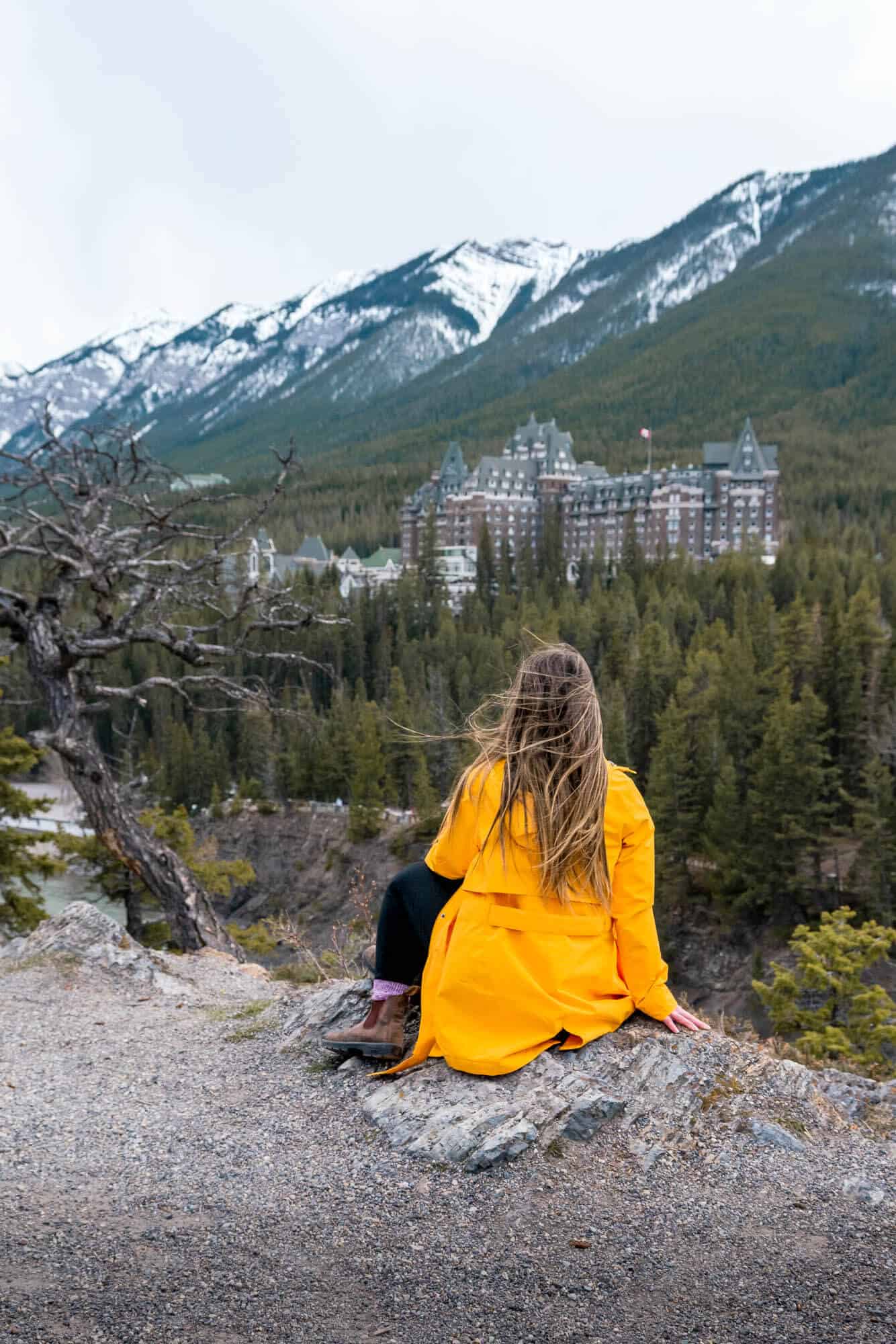
Surprise Corner Viewpoint: There are many viewpoints in Banff, but one of the most scenic is the Surprise Corner viewpoint. This is a quick 20-minute spot that offers a stunning view of the Banff Springs Hotel and the Bow River. It’s a popular spot for photos, so make sure to bring your camera!
Where to stay in Banff
- Fairmont Banff Springs: If you want to really splurge, the Fairmont Banff Springs is in my opinion the best hotel in Banff. Known as Canada’s “Castle in the Rockies”, this world-class resort offers luxury accommodations, a championship golf course, and a world-renowned spa.
- Banff Park Lodge: I stayed at Banff Park Lodge recently and scored probably the best hotel deal I’ve ever had in Canada ($350cad for 3 nights!) and the hotel was one of the best I’ve stayed at in Banff. The hotel has one of the best locations in Banff, it’s super close to the main area of Banff Avenue and the free Banff Gondola shuttle picks up from outside. The rooms themselves are really spacious and very clean – I definitely recommend staying here!
- Samesun Banff: For budget travellers, Samesun Banff offers affordable dorm-style accommodations with communal kitchens and social areas, perfect for meeting other travellers.
Route #2: Vancouver to Banff Via Kelowna & Highway 5
- Stop 1: Vancouver (same as route 1)
- Stop 2: Chilliwack
- Stop 3: Hope
- Stop 4: Peachland
- Stop 5: Kelowna
- Stop 6: Revelstoke (same as route 1)
- Stop 7: Glacier National Park (same as route 1)
- Stop 8: Golden (same as route 1)
- Stop 9: Yoho National Park (same as route 1)
- Stop 10: Lake Louise (same as roite 1)
- Stop 11: Banff (same as route 1)
Although the most scenic drive from Vancouver to Banff is through the Duffey Lake Road and up through Cache Creek, there are other options you can choose from.
The route through Kelowna also starts in Vancouver and heads east towards Hope along the Trans Canada Highway 1. You can then take Highway 5 before driving the 97C through to Peachland and Kelowna. This route takes around 9-10 hours and is a great option if you want to explore more of the Okanagan region in British Columbia. But before you get to Kelowna, there are (naturally) an abundance of places to stop!
Chilliwack is a great place to stop for some delicious farm-fresh produce or locally sourced honey. Bridal Veil Falls is a beautiful cascading waterfall that’s an easy stop just off the highway, with a short walk to the base of the falls.
After Chilliwack, you can stop in the town of Hope for a bite to eat or check out some local shops. The Othello Tunnels are a series of old railway tunnels that have since been turned into a scenic hiking trail through the mountain. This is a great spot to check out on this itinerary as they are located along this very route so no detour required!
As you continue towards Kelowna, make sure to stop in Peachland for some stunning lake views and maybe even a dip in the water. You can also take a scenic drive along Okanagan Lake and stop at wineries or orchards for some local treats.
Keep heading east towards Kelowna, but don’t miss out on stopping at Kalamalka Lake Provincial Park for some breathtaking views of the turquoise lake.
Once you reach Kelowna, there are plenty of wineries to explore in the Okanagan region, including Mission Hill Winery which offers tours and tastings. You can also take a stroll along the waterfront or enjoy some delicious food at one of Kelowna’s many restaurants.
After spending time in Kelowna, continue your journey to Banff by continuing north on the Highway 97 before joining Highway 1 again. From here the route from Revelstoke to Banff is the same.
Route #3: Vancouver to Banff Via Jasper & Icefields Parkway
- Stop1: Vancouver (same as route 1)
- Stop2: Squamish (same as route 1)
- Stop 3: Whistler (same as route 1)
- Stop 4: Lillooet ( same as route 1)
- Stop 5: Kamloops (same as route 1)
- Stop 6: Wells Grey Provincial Park
- Stop 7: Clearwater
- Stop 8: Mount Robson Provincial Park
- Stop 9: Jasper National Park
- Stop 10: Icefields Parkway
- Stop 11: Lake Louise (same as route 1)
- Stop 12: Banff (same as route 1)
The third itinerary option is to go north of Kamloops via Highway 5 and then onto Jasper before heading south to Banff through the Icefields Parkway. The route starts in Vancouver and follows the first itinerary through Squamish, Whistler and then to Kamloops.
From Kamloops you’ll drive north along Highway 5. This is a popular route as it takes you through the beautiful Wells Gray Provincial Park where you’ll find stunning waterfalls such as Helmcken Falls and Spahats Creek Falls.
You can also stop in Clearwater for some delicious local food. From here, continue your journey north towards Jasper National Park. Before you arrive in Jasper however, make sure to stop at Mount Robson Provincial Park to catch a glimpse of the iconic Mount Robson, the highest peak in the Canadian Rockies.
Once you reach Jasper, take some time to explore this charming mountain town. Jasper is an incredible place that really deserves more than a day. I recommend spending 3 to 4 days in Jasper so you can really soak in the atmosphere and explore all it has to offer.
If you only have time for a few things in Jasper, I highly recommend the Maligne Lake boat tour to Spirit Island, a visit to Pyramid Lake and the Valley of the Five Lakes hike.
When you’re ready, make your way down the Icefields Parkway towards Banff. This scenic drive is often referred to as one of the most beautiful drives in the world, and for good reason! You’ll pass by glaciers, turquoise lakes, and towering mountains on your way to Banff.
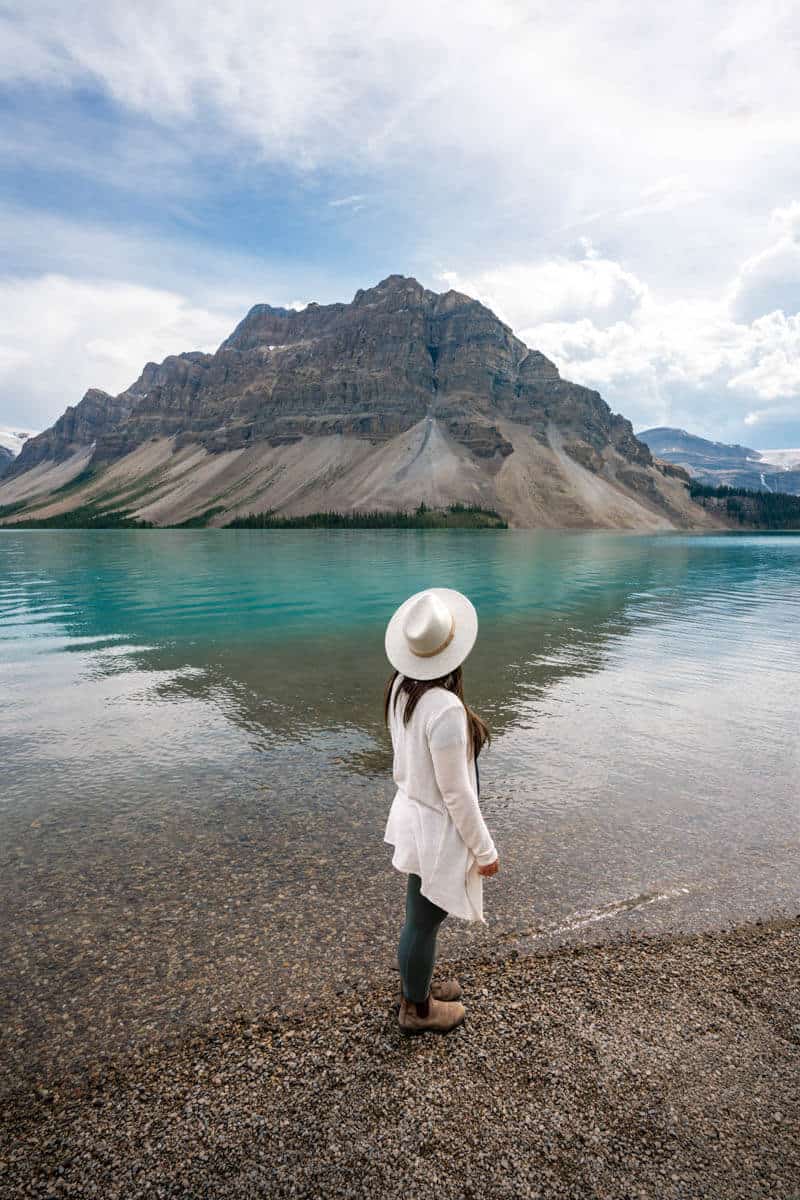
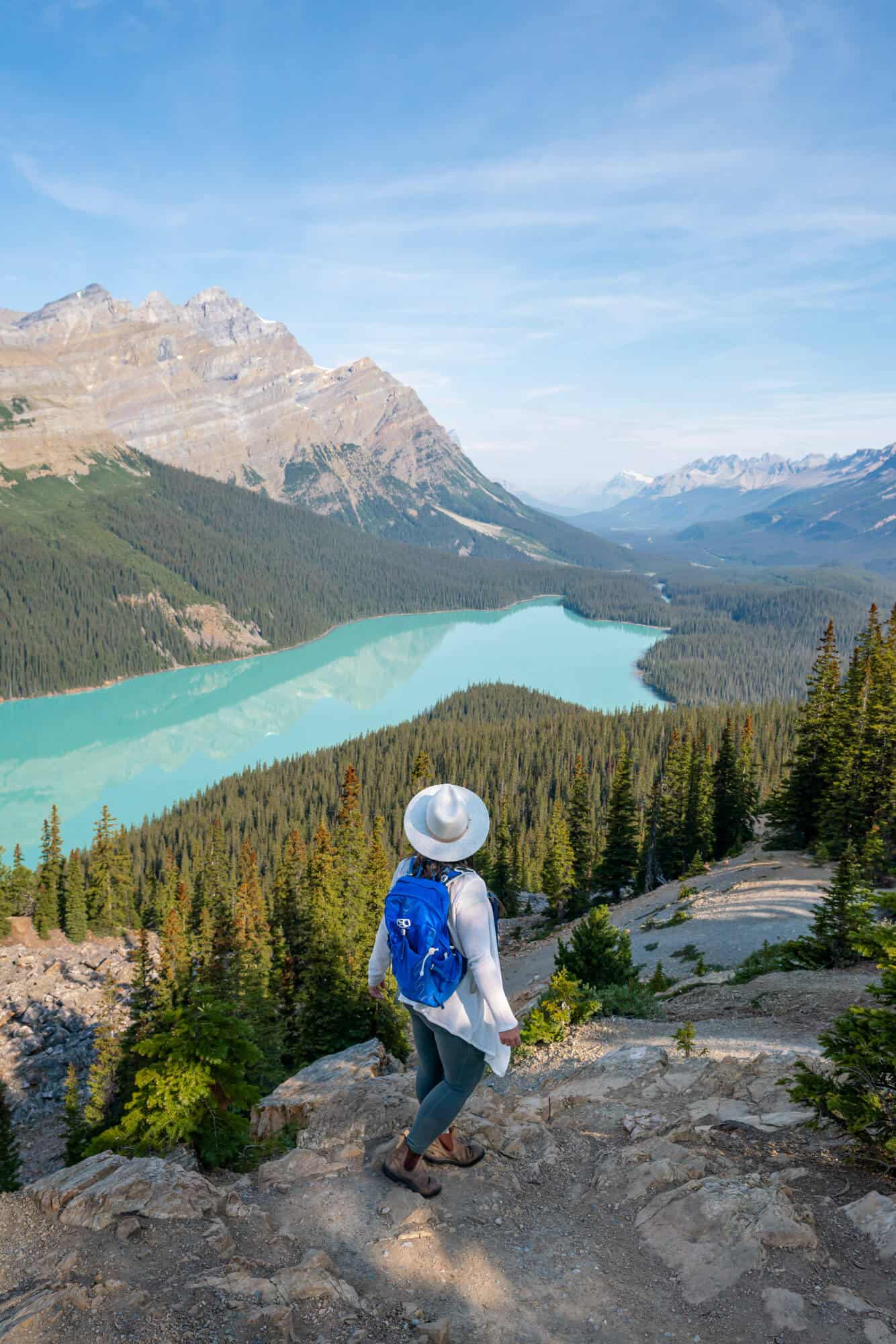
Some absolute must-do stops on the Icefields Parkway include Athabasca Falls, Sunwapta Falls, the Columbia Icefields, Peyto Lake and Bow Lake.
When you finally reach Banff, congratulations! You’ve completed one of the most stunning road trips in North America.
All three of these routes will require a Parks Pass as they all pass through several National Parks. To really appreciate all three routes you’ll most likely need at least 10 days to two weeks to do everything, so I recommend purchasing a Discovery Pass as it will work out cheaper.
Parks Canada National Parks Pass Info
If you are visiting or planning a trip to any of Canada’s National Parks (Including Banff, Jasper and, Yoho), you will need to purchase a parks pass. There are a number of options available.
Single Day Admission:
This option is great if you only plan to spend a day or two in a National Park. Valid for one person per day. See the Parks Canada website for current rates. Children 17 or younger are free.
Group Daily Admission:
This is a great option if you have up to 7 people per one vehicle. It is cheaper than purchasing a pass for each person. See the Parks Canada website for current rates.
Parks Canada Discovery Pass:
A discovery Pass is, in my opinion, the best option for people visiting in groups for a week or more. This is an annual pass and is valid from the day you buy it. It will give you 365 days of entry to all of Canada’s National Parks. I purchased this for my 12 day trip to the Banff and Jasper in 2021 and used it 3 more times in Banff in 2022 and another for Pacific Rim in Tofino. If you are planning on traveling around Canada for an extended period of time, this is worth the money!
The Discovery Pass will cover up to 7 people per vehicle. You can purchase the Discovery pass online or in person when you arrive. See the Parks Canada website for current rates.
When To Take This Vancouver to Banff Road Trip
The beauty of the Vancouver to Banff drive is that it’s stunning year-round. However, each season offers unique experiences and views. Here’s a breakdown of what to expect during each season.
Spring
Spring in Canada, which spans from March to May, brings blooming wildflowers and a refreshing green landscape, making it a great time for your Vancouver to Banff road trip. Wildlife spotting is particularly exciting during this season as animals emerge after a long winter. However, be prepared for unpredictable weather; pack clothing suitable for both warm and chilly weather, and expect rain.
Summer
Summer, from June to August, is the busiest season for tourism in Canada. The weather is typically warm, and all the attractions are open. This is the best time for hiking, camping, and other outdoor activities. Be aware that popular spots might be crowded, so plan to start your days early.
Fall
The fall season, from September to November, is arguably the most beautiful time for the Vancouver to Banff drive. The foliage turns radiant shades of orange, red, and gold, creating a dramatic backdrop for your road trip. It’s also a more peaceful time to travel as the summer crowds have dissipated.
Winter
Winter in Canada, from December to February, is a magical time. The route from Vancouver to Banff is transformed into a winter wonderland, with snow-capped mountains and frozen lakes. It’s the perfect season for winter sports like skiing and snowboarding. However, driving in winter requires preparation and caution, as road conditions can be challenging due to snow and ice. Ensure your vehicle is equipped for winter driving, and check the weather forecast regularly.
Regardless of when you decide to embark on your Vancouver to Banff itinerary, you’re bound to have an unforgettable experience. Just remember to pack accordingly and always drive to the road conditions.
Renting A Car
Now that you have a solid itinerary planned, let’s talk about transportation. While there are many ways to get from Vancouver to Banff, I highly recommend renting a car. Not only does it give you the freedom and flexibility to stop at all these amazing spots along the way, but it also allows you to explore the beautiful Canadian landscape at your own pace.
Consider renting from a company that you can drop the car off at your final destination in Banff, this way you won’t have to backtrack and drive back to Vancouver after completing the road trip.
Some popular rental car companies in Vancouver include Enterprise, Hertz, and Avis. Be sure to compare prices and read reviews before booking to ensure the best deal.
Before you start with the car rental process, keep the following tips in mind to ensure a smooth ride:
- Compare several companies: Rates can vary significantly from one company to another. Take some time to compare prices and offerings. Check if any promotions or discounts are available during your travel period.
- Insurance: Most car rental agencies offer their own insurance, though it can be quite expensive. As an alternative, check if your credit card includes car rental insurance coverage. Remember, you’ll need to provide proof of insurance when renting a vehicle.
- Roadside Assistance: This can be a lifesaver in the event of a breakdown or emergency. Ensure your rental company provides this service.
- Pick-up and Drop-off: Consider the location and timings of your pick-up and drop-off. Since you’re planning a one-way trip from Vancouver to Banff, there might be additional charges for dropping off at a different location.
- Check the car thoroughly: Before you head off, inspect the rental car for any existing damage and make sure all the features are working correctly.
And if you’re not comfortable driving or don’t want to worry about navigating unfamiliar roads, there are also organized tours available that take you from Vancouver to Banff. These tours often include stops at popular attractions and provide the added convenience of transportation, making it a stress-free option for those not wanting to drive.
Thanks For Reading!
So, have you picked which route you want to take on your Vancouver to Banff road trip? Whichever one you choose, I guarantee you’ll be in for a breathtaking journey through some of the most stunning landscapes in the world. And don’t forget to make stops along the way – there’s so much to see and do in this beautiful region of Canada.
I hope this itinerary helps you plan your Vancouver to Banff drive and discover the beauty of Western Canada. Although I have experienced so much of this region, there is always more to see!
Explore More Of The Canadian Rockies
Click A Pin Below To Save For Later!
About Rachael
Welcome to A City Girl Outside! I’m Rachael, a Londoner who traded the hustle and bustle of city life for the breathtaking beauty of Whistler, Canada. With no prior experience, I dove headfirst into an outdoor lifestyle that now includes hiking, canoeing, and snowshoeing.
What started as a leap into the unknown has become my greatest passion. These days, you’ll find me spending my weekends adventuring in the Canadian wilderness—chasing alpine views, paddling serene lakes, and embracing all that nature has to offer.
A City Girl Outside aims to inspire readers to step beyond their comfort zones, explore the great outdoors, and embrace the wild. Whether you’re a seasoned explorer or a complete beginner like I once was, there’s always room to reconnect with nature and discover the adventurer within.
![Best Banff Hotels With Waterslides [2025]](https://acitygirloutside.com/wp-content/uploads/2023/04/pocaterra-inn-canmore-768x432.jpeg)
![19 Best Stops On The Icefields Parkway! [2025 Guide]](https://acitygirloutside.com/wp-content/uploads/2022/06/Best-Icefields-Parkway-Stops-1-Day-Itinerary-Road-Trip-768x512.jpg)

![Best Lakes in Whistler [2024 Guide]](https://acitygirloutside.com/wp-content/uploads/2022/06/Lost-Lake-in-Whistler-A-City-Girl-Outside-768x512.jpg)

