
A Local’s Guide To The Best Hikes In Whistler In 2025!
Looking for the best hikes in Whistler? You’re in the right place!
Undoubtedly, some of the most remarkable hikes in British Columbia can be found in Whistler.The great thing about hiking in Whistler is that there are trails suited to almost every fitness-level, from flat easy hikes, to moderate day hikes and multi-day backpacking trips.
Having made Whistler my home, I have explored almost every hike on this list, the rest is on my bucket-list! Some of these trails I make sure to hike every summer, and sometimes multiple times a year. Many of these trails can also be hiked in winter, as long as you have the correct equipment and knowledge.
While there are an abundance of hiking trails in Whistler, this post lists the absolute best hikes near Whistler. Some of these trails are truly remarkable and should be on any hiker’s bucket list. However, rest assured that there is a hike suitable for everyone on this list, and regardless of the trail you choose, you are bound to be amazed.
Read on to discover my top hikes in Whistler and some of personal favourites!
A City Girl Outside contains affiliate links. If you decide to make a purchase through these links, I will earn a commission at no extra cost to you. Thanks for reading!
How To Get To Whistler
The best way to get to Whistler is via the Sea to Sky Highway. The Sea to Sky is a beautiful drive and many of the hikes on this list are located along this highway. Spending several days to take in this stretch of road is highly recommended since there is so much to see and do.
If you don’t have access to a car there are many transport options to get you here. My personal favourites that I have used on multiple occasions are Whistler Connection and Epic Rides.
When To Hike in Whistler
- Summer (June to September): This is the peak hiking season in Whistler when the weather is generally pleasant, and the trails are accessible. The temperatures are mild, ranging from 15°C to 25°C (59°F to 77°F), making it ideal for hiking. However, popular trails can be crowded during weekends and holidays.
- Fall (September to November): Fall in Whistler offers beautiful foliage colours as the leaves change, creating a picturesque hiking experience. The temperatures begin to cool down, ranging from 5°C to 15°C (41°F to 59°F). Trails are less crowded compared to the summer months, and you may find discounted rates for accommodations.
- Winter (December to March): Whistler is renowned for its winter sports, but hiking is still possible. However, it’s important to be prepared for snowy and icy conditions. Winter hiking requires proper equipment, including traction devices for your boots and layers of warm clothing. Some lower-elevation trails may be accessible, but higher-elevation trails may be covered in snow and more suitable for snowshoeing.
- Spring (April to May): Springtime in Whistler is the transition period from winter to summer. The weather can be variable, with melting snow and potential rainfall. Lower-elevation trails may become accessible as the snow melts, but higher-elevation trails may still have lingering snow. It’s recommended to check trail conditions and be prepared for changing weather.
Before heading out, it’s essential to research trail conditions, check weather forecasts, and be adequately prepared with appropriate clothing, footwear, and gear. Additionally, it’s a good idea to consult local trail guides or visitor centers for up-to-date information on trail conditions and closures.
What To Bring Hiking in Whistler
When hiking in Whistler, it’s crucial to be prepared and bring the right gear and essentials. To ensure your safety and the safety of others while hiking, it is essential to have the necessary 10 essentials with you on the trail.
If you are planning a day hike, I recommend referring to my checklist specifically designed for day hiking. Alternatively, if you are planning a multi-day trek, check out my gear guides such as best backpacking sleeping bags, best hiking backpacks and what to wear hiking in summer.
Bear Safety in Whistler
It’s important to remember that Whistler is Bear Country (I should know, I’ve ran into one at the bus stop!) and being Bear Aware is important on any hike.
In Whistler, you can encounter both black bears and grizzly bears. It is important to take precautions to minimize the risk of a negative bear encounter. I always carry bear spray, which can serve as a deterrent in case of an encounter.
Making noise while hiking can alert bears to your presence and reduce the likelihood of surprising them. Always remember to keep your distance with any wildlife.
Leave No Trace
Adhering to the principles of “Leave No Trace” entails leaving the natural environment in the same or improved condition as when you arrived. If you brought an item with you on your hike, it is important to carry it back down with you.
The basic principle is to pack in what you pack out, that means everything. All trash including toilet paper (unless there are designated toilets where you can dispose of it) need to be packed out.
Avoid taking anything from the surroundings, except for any trash you may have generated, and stay on designated trails instead of attempting to bypass mud or creating your own paths. By doing so, you help safeguard the ecosystems surround environment.
Best Whistler Hiking Trails Map

I have created a map detailing where all the hikes in this post are – you can click here or the image above to access it.
Hikes in Whistler Village
Lost Lake
Nestled in the heart of Whistler, BC, the trails of Lost Lake are some of the best walks in Whistler. Lost Lake offers convenient access and is just a short walk or bike ride away along the Valley Trail.
The path itself is relatively flat and smooth, making it suitable for strollers and accommodating a wide range of fitness levels.The trails are well-maintained and meander through a pristine old-growth forest.
As you follow the trail, you’ll soon arrive at the namesake Lost Lake. For those seeking a longer and more immersive experience, Lost Lake’s interconnected trails offer a variety of loops and extensions to explore.
The Lost Lake Loop Trail takes you on a journey around the entire lake, offering ever-changing vistas and opportunities for wildlife sightings. Lost Lake also offers a variety of Mountain Biking trails.
Lost Lake’s hiking trails are also popular during the winter months when they transform into a snowy wonderland, making it an ideal location for cross-country skiing and snowshoeing in Whistler.
- Distance: 5km
- Elevation Gain: Minimal
- Duration: 1 – 2 Hours
- Dog Friendly: Yes
- Difficulty: Easy
High Note Trail
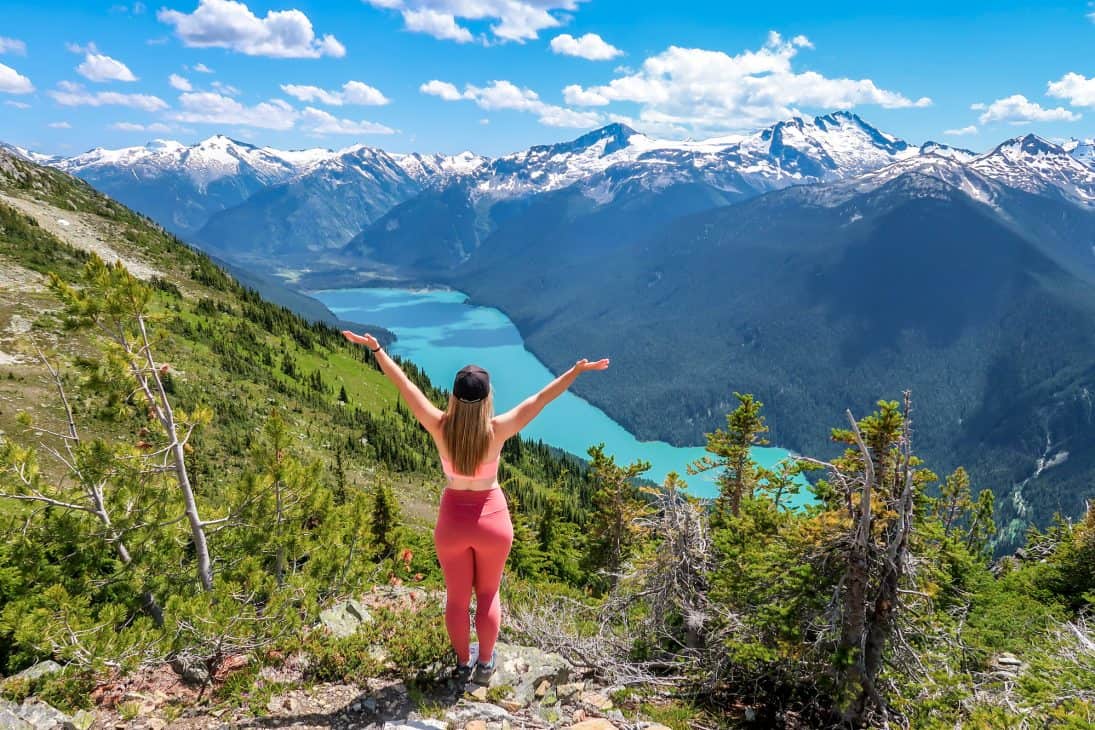
Of all the Whistler trails, the High Note Trail is one of my personal favourites, and one of the first hikes I ever did here in Canada. I was completely hooked on hiking after completing this trail!
The High-Note trail is one of the alpine hiking trails on Whistler Mountain. This is a really popular hike in Whistler since it is included in the 360 Sightseeing Pass offered by Whistler Blackcomb.
This is a really stunning hike, from the moment you reach the trailhead you’re greeted with views of endless mountain ranges in the distance. If you’re like me and love to take photos and soak in the scenery this hike will take longer than the average time. Make sure you allocate yourself enough time for this hike because I promise you will stop every 5 minutes!
To access the High-Note trail, take the Whistler Gondola to the Roundhouse then make your way to the peak chair – which is an experience in itself! Once you reach the peak of Whistler Mountain, you can opt to walk the Cloudraker Bridge. The trailhead to the High-Note trail is located at the very end of this suspension bridge.
The main attraction along this trail are the spectacular views of Cheakamus Lake from above. With the sun shining brightly over this lake, it’s bright blue turquoise colours really stand out. Most people often stop here on the trail for a break and/or lunch. I can’t think of a better viewpoint for a lunch break, can you?
Once you’ve reached the Cheakamus Lake lookout, you can either opt to take the Musical Bumps trail or you can take the half-note trail and pick up Pika’s Traverse to see the Whistler snow walls. Both will bring you back to the Roundhouse Lodge.
- Distance: 9.5km
- Elevation Gain: 400 metres
- Duration: 3 – 5 Hours
- Dog Friendly: No
- Difficulty: Intermediate
Musical Bumps
The Musical Bumps hike is one of the most well-known hikes from Whistler Village that has earned its place among the most beloved trails in Whistler.
This trail takes you along the ridge from Whistler Peak, and encounters with several picturesque lakes, including Harmony Lake and Symphony Lake. Along the way, you’ll also conquer several noteworthy summits, including Piccolo Summit, Flute Summit, and Oboe. (I wonder where the Name Musical Bumps comes from?)
You’ll start this hike by taking the gondola up to the summit of Whistler Mountain. From there, follow the designated route that leads you towards Russet Lake. For a complete loop experience, you can return via the High Note Trail, which offers its own share of stunning vistas.
Alternatively, you can opt for the Singing Pass route, which takes you all the way back to the village.
- Distance: 19km
- Elevation Gain: 300 metres
- Duration: 7 – 9 Hours
- Dog Friendly: No
- Difficulty: Intermediate – Hard
Singing Pass to Russet Lake
The Singing Pass Hike offers a unique opportunity to access the stunning alpine region nestled between Whistler and Blackcomb Peaks. It also allows you to experience the alpine without purchasing a pass (as you’ll be hiking and not taking the gondola!)
This hike begins with a gradual ascent, transitioning to a trail that winds its way up the picturesque Fitzsimmons Creek valley. It’s important to note that the trail is rugged, with unbridged creeks, making it more suitable for experienced hikers seeking a challenge.
Emerging from the forest, you’ll find yourself in the pristine alpine region, reaching the endpoint of the Musical Bumps Trail.
At this juncture, you have a couple of options to consider. If you prefer a shorter route, you can choose to ascend The Musical Bumps Trail, enjoying the picturesque vistas along the way, and then take the convenient gondola ride back down.
On the other hand, if you’re up for a more adventurous experience, you can continue onwards to Russet Lake. This involves one final climb up Cowboy Ridge, before descending towards the lake, where you’ll find a campground and the Kees and Claire hut. This route makes for a great Whistler backpacking trip.
It’s crucial to approach this trail with caution and ensure you possess the necessary experience and skills to navigate its rugged terrain. Proper planning, adequate preparation, and familiarity with backcountry hiking techniques are recommended.
- Distance: 31km
- Elevation Gain: 1,300 metres
- Duration: 10 – 12 Hours
- Dog Friendly: No
- Difficulty: Intermediate – Hard
Blackcomb Ascent Trail
The Blackcomb Ascent trail is renowned as one of the most challenging hikes in Whistler, offering a steep and direct ascent up the side of Blackcomb Mountain. If you’re seeking a true test of endurance, this hike will push your limits. However, there’s no need to worry about your knees on the descent, as you can conveniently take the gondola back down.
The trail consists of three main sections: Little Burn, Big Burn, and Heartburn if you choose to reach the top of the gondola. You’ll first encounter Little Burn, setting the tone for the challenging ascent that lies ahead.
From there, you’ll transition to Big Burn, where the intensity increases as you navigate the steep terrain. For those who are determined to reach the very top, the option to continue on Heartburn is available, leading you closer to the summit of the gondola.
Alternatively, if you’re unsure about proceeding all the way to the top, you can opt to download from the Blackcomb mid-station, saving yourself some additional effort.
Prepare yourself for a challenging adventure on this steep trail, and remember to pace yourself as you make your way towards the summit. Before embarking on the Blackcomb Ascent trail, it’s essential to check the gondola schedule to ensure a smooth and well-timed hiking experience.
- Distance: 6km
- Elevation Gain: 1,175 metres
- Duration: 4 – 5 Hours
- Dog Friendly: No
- Difficulty: Very Hard
Overlord, Lakeside and Decker Loop Trail

While most visitors to Whistler opt to stick to Whistler Mountain’s alpine trails, Blackcomb Mountain has just as many stunning hikes.
One of my favourites is the Overlord Trail, which I think is really underrated and an absolute must. This iconic trail takes you through rugged alpine terrain, past glacier-fed lakes, and offers breathtaking views.
The Overlord Trail begins near the Rendezvous Lodge on Blackcomb Mountain, accessible by the Blackcomb Gondola. The trail starts with a gradual descent, leading you through alpine meadows adorned with vibrant wildflowers.
Highlights of the Overlord Trail include the Decker Tarn, Overlord Glacier and Blackcomb Lake. While the trail is considered moderate in difficulty, it does require a good level of physical fitness and hiking experience due to the challenging terrain.
This hike is ideally suited for intermediate to advanced hikers who are comfortable navigating steep sections, uneven surfaces, and potential exposure to alpine elements.
If you want to extend your hikes you can add on the loop around Blackcomb Lake, or if you are looking for a shorter hike on Blackcomb Mountain the Blackcomb Lake loop is great for beginners and intermediate hikers.
- Distance: 9.5km
- Elevation Gain: 545 metres
- Duration: 5 Hours
- Dog Friendly: No
- Difficulty: Intermediate
Cheakamus Crossing Hikes
Cheakamus Lake

The Cheakamus Lake trail is one of the best easy hikes in Whistler. And let me tell you, the lake itself is a true gem, just like many others in this stunning area!
This trail meanders through ancient old-growth forests, leading you to the serene shores of Cheakamus Lake. The glacial runoff gives the lake its mesmerizing turquoise blue colour.
You have the option to embark on a shorter 7-kilometre round trip hike to the west end of the lake, or continue along the trail until it reaches Singing Creek, extending your journey to a 14-kilometre round trip hike. I usually head back to the parking lot after spending some time at the lake.
What sets this trail apart from similar hikes in the region is the unique opportunity it offers for biking. Whether you have a mountain bike or a sturdy gravel bike, you can pedal your way along the mostly flat trail.
I have hiked this trail in early December and there has been no snow on the trail, however conditions do change year on year and it’s important to always check trail conditions before you start your hike.
The trailhead to Cheakamus Lake is located at the end of the Cheakamus Forest Service Road and is a dirt road that most cars should be able to drive up. However I always recommend checking conditions ahead of time.
- Distance: 3km (if turning back at the lake)
- Elevation Gain: Minimal
- Duration: 2 Hours
- Dog Friendly: No
- Difficulty: Easy
Helm Creek
From the same trailhead as Cheakamus Lake, this trail takes you deeper into the heart of Garibaldi Provincial Park. This is a great option if you want to experience backpacking in Whistler. Helm Pass presents an alternative route to popular destinations like Garibaldi Lake, Panorama Ridge, and Black Tusk.
You’ll first cross over the picturesque Cheakamus River before ascending through the lush forest. The path leads you past the Helm Creek campground and onward towards the surreal volcanic landscape at Helm Pass.
Here, you’ll discover several stunning alpine lakes, as well as the intriguing flat expanse known as the Cinder Flats, adorned with lava rocks.
Please note that Helm Pass presents a more demanding trek compared to the nearby Cheakamus Lake hike. It requires proper preparation and navigational skills. Ensure you have appropriate gear, sufficient supplies, and a solid understanding of the trail before embarking on this rewarding but challenging journey.
- Distance: 25km
- Elevation Gain: 930 metres
- Duration: 7 – 10 Hours
- Dog Friendly: No
- Difficulty: Hard
Whistler Train Wreck

The Train Wreck Hike was my very first hiking experience in Whistler back in 2016, when I lived in staff housing and didn’t know I loved hiking yet!
Train Wreck Trail offers a year-round adventure for outdoor enthusiasts of all levels. This popular route attracts casual hikers and runners alike, thanks to its unique scenery and easy accessibility.
What sets this trail apart is its intriguing history as the site of a train derailment in the 1950s. The scattered boxcars, now adorned with captivating graffiti, serve as striking backdrops for memorable photo opportunities.
This trail is an easy and flat path that leads you to the train wreck, complete with a thrilling suspension bridge crossing over the picturesque Cheakamus River.
The Whistler Train Wreck Trail not only provides a fascinating hiking experience but also serves as an excellent destination for snowshoeing in Whistler during the winter months.
I take a trip to the Whistler Train Wreck at least once a year and it is accessible year-round. I most recently did the trail when it was covered in a sheet of ice so would recommend microspikes in the Fall and Spring months!
If you want to explore further you can take the Trash Trail to “Train Wreck Falls” which is one of Whistler’s best waterfalls! I would recommend GPS for this if you are not familiar with the area.
- Distance: 3km
- Elevation Gain: minimal
- Duration: 1 -2 Hours
- Dog Friendly: Yes
- Difficulty: Easy
Crater Rim & Loggers Lake
The Crater Rim trail offers a scenic loop trail in the Whistler Interpretive Forest, situated high above the mesmerizing Loggers Lake. The lake itself is a fascinating sight, formed within an extinct volcanic crater.
For those seeking a lengthier hiking experience, the Crater Rim trail can be seamlessly combined with the Riverside Trail or other trails within the Interpretive Forest. By extending your journey, you can further explore the captivating beauty of Loggers Lake from above or embark on a multi-hour Whistler hike that combines the Crater Rim and Riverside Trails.
Loggers Lake makes for a great snowshoeing in Whistler adventure in the winter months too. Interestingly, I have only snowshoed this trail. But hiking it in the summer is on my list!
- Distance: 4.5km
- Elevation Gain: 230 metres
- Duration: 2 – 4 Hours
- Dog Friendly: Yes
- Difficulty: Intermediate
Riverside & Farside Trails
If you love suspension bridges like I do, then the Riverside and Farside loops offer a great opportunity to experience once that crosses the mighty Cheakamus River.
Located in the picturesque Cheakamus Crossing neighbourhood, which served as the site of the Whistler Olympic Village, these trails provide an ideal escape just south of Whistler.
As part of the loop, you’ll have the opportunity to cross the iconic Cheakamus suspension bridge. This bridge marks a halfway point in the journey, where you’ll transition to the opposite bank of the river and continue your leisurely stroll back towards the trailhead.
The nice thing about this trail is that it receives far less traffic than neighbouring hikes such as the Train Wreck, so on weekends you’ll find less people here. This trail can also be hiked in winter, however keep in mind it does get slippery and you need microspikes.
- Distance: 6km
- Elevation Gain: 90 metres
- Duration: 2 – 3 Hours
- Dog Friendly: Yes
- Difficulty: Easy
Callaghan Valley Trails
Cirque Lake

Cirque Lake makes it into my top ten hikes in Whistler. This hike is unique in that it requires paddling (in a boat of course) 23km across Callaghan Lake to reach the trailhead.
The trail to Cirque Lake receives significantly less traffic than other hikes commonly found in the Whistler region. This hidden gem offers a serene escape into the wilderness, far away from the crowds.
This blend of paddling and hiking adds an exciting twist to the adventure, making it a truly memorable destination. Once you’ve reached the other side, the physical trail to the lake is relatively short but steep, encompassing a challenging ascent of approximately 400 meters over a kilometre stretch.
Although the boulder field is the hardest part of climb, it has to be one of the easiest I’ve encountered on a hiking trail. In terms of difficulty, I’d rate this as intermediate. The trail itself is really enjoyable, with panoramic views of Callaghan Lake from the top.
Cirque Lake itself is stunning with clear blue turquoise waters. It’s definitely one of my favourite lakes in BC.
- Distance: 3.2km
- Elevation Gain: 344 metres
- Duration: 4 – 5 Hours
- Dog Friendly: Yes
- Difficulty: Intermediate
Ring Lake & Conflict Lake
Ring Lake, offers a serene hiking experience, often overlooked by the majority of hikers. The trail to Ring Lake encompasses a diverse range of terrain.
The trail meanders through picturesque alpine meadows adorned with glistening ponds. The final ascent includes a steep slope that leads hikers to the shimmering beauty of the glacier-fed Ring Lake.
The Callaghan Conservancy is an ecologically sensitive area with abundant wildlife. In order to preserve the integrity of this delicate ecosystem, camping is strictly prohibited, and pets are not allowed.
These trails receive less traffic and maintenance compared to other popular hikes in Whistler, resulting in muddy sections. However, it is not particularly technical, making it accessible to hikers with a range of experience levels.
The renowned Journeyman Lodge lies just a few kilometres from Conflict Lake and is widely acclaimed as a popular destination for backcountry skiing enthusiasts.
To access the trailhead, you’ll need to navigate Callaghan Lake Forest Service Road, which can be described as a rugged road. While a medium clearance vehicle should be sufficient for traversing this road, it is advised to avoid attempting the journey with a 2WD vehicle.
- Distance: 19.2km
- Elevation Gain: 760 metres
- Duration: 5 – 7 Hours
- Dog Friendly: Yes
- Difficulty: Hard
Madeley Lake
Madeley Lake is a lesser-known gem nestled in the picturesque Callaghan Valley area. Unlike some other hidden lakes, you can reach Madeley Lake by car, saving you the need for a hike.
The lake has a beautiful, secluded campsite surrounded by a peaceful forest. Swimming in the lake is enjoyable, although the water is quite cold. The area around the campsite is filled with freshwater streams, and the forest is fun and easy to explore.
The parking area serves as the starting point for both Madeley Lake and Hanging Lake. However, please note that a new gate was installed in 2022, blocking access
- Distance: 10km
- Elevation Gain: 590 metres
- Duration: 3 – 5 Hours
- Dog Friendly: Yes
- Difficulty: Hard
Hikes West of Whistler Village
Iceberg Lake via 19 Mile Creek Trail
Iceberg Lake is a hidden gem and one of my favourite hikes near Whistler because it isn’t as demanding as Panorama Ridge but the views are just as breathtaking.
As the name suggests, this trail leads you to a bright blue alpine lake that features small icebergs on the early summer months.To reach Iceberg Lake, you can take the 19 Mile Creek Trail, starting at the end of Mountain View Drive.
The great thing about this hike is that it is accessible by public transit, which is exactly how I reached this trail last year. You’ll have a bit of a walk from the bus stop but it does mean avoiding searching for somewhere to park!
There is parking available along the road, but make sure to follow parking signs to avoid being towed. If you can’t find a spot, you can try searching along Valley Drive. There is no designated parking lot for the Iceberg Lake hike, and it gets quite busy in the summer, so it’s best to arrive early.
- Distance: 19.5km
- Elevation Gain: 1008 metres
- Duration: 6 – 8 Hours
- Dog Friendly: Yes
- Difficulty: Hard
Skywalk Trail
Iceberg Lake is part of a bigger network of trails known as the Skywalk trails. These are some of the newest trails in Whistler and explore some of the lesser-known areas, which is really nice on busy weekends.
The three trails the the Skywalk incorporates are 19 Mile Creek, Skywalk South and Skywalk North. The Skywalk North Loop passes by Screaming Cat Lake, which is (no surprise) yet another of my favourite lakes in Whistler. Screaming Cat Lake is where Matt used to bring me when we owned a Snowmobile and would watch the sunset over the mountains in winter.
- Distance: 20km
- Elevation Gain: 1025 metres
- Duration: 9 Hours
- Dog Friendly: Yes
- Difficulty: Hard
Brandywine Meadows
Brandywine Meadows in Whistler, BC, is a stunning alpine meadow located beneath Brandywine Mountain. It’s a popular spot for camping, especially during the summer when the meadows are adorned with colourful alpine wildflowers.
If you’re up for a challenge, you can also attempt to summit Brandywine Mountain, which offers even more breathtaking views. Many hikers choose to camp at the meadows and then tackle the mountain the next day.
The peak time to visit is when the wildflowers are in full bloom, which is typically in late July and throughout August.
One great thing about this hike is that it’s dog-friendly, and if you can drive to the upper parking lot, it can be suitable for families as well. It’s a fantastic option for people who may not be avid hikers but still appreciate the beauty of the mountains.
- Distance: 11km
- Elevation Gain: 815 metres
- Duration: 5- 7 Hours
- Dog Friendly: Yes
- Difficulty: Intermediate – Hard
Rainbow Lake
The hike to Rainbow Lake in Whistler, BC is a longer and more challenging adventure for experienced hikers. The trail is approximately 16 kilometres round trip, making it a full-day hike. It’s best suited for hikers who are experienced in the backcountry.
The terrain of the trail includes forested sections, rocky paths, and steep inclines. The trail follows the scenic valley of 21 Mile Creek and offers beautiful views of the surrounding mountains and wilderness.
This hike is best suited for hikers who have a good level of fitness and are comfortable with long-distance hikes and significant elevation gains.
It’s important to note that the entire hike is within the Whistler watershed, which provides drinking water to the town. Therefore, swimming is not allowed to protect the water quality.
- Distance: 16km
- Elevation Gain: 850 metres
- Duration: 6- 8 Hours
- Dog Friendly: Yes
- Difficulty: Hard
Rainbow Falls

If the hike to Rainbow Lake feels too far, you can simply walk a short distance on the trail to reach Rainbow Falls.
Rainbow Falls is particularly impressive during the spring when the snow melts and the water cascades down in full force. However, it is still a beautiful sight to behold throughout the year. In the winter, the falls transform into a frozen wonderland, creating a unique and magical experience.
The trail is not too long, making it suitable for hikers of various levels. The trailhead is easily accessible, and the hike itself is about a 3-kilometres round trip.
- Distance: 2.1km
- Elevation Gain: 140 metres
- Duration: 2 Hours
- Dog Friendly: Yes
- Difficulty: Easy
Hikes North of Whistler
Joffre Lakes

Joffre Lakes is known for its stunning turquoise lakes and breathtaking mountain scenery. It is a moderate hike that is approximately 11 kilometres round trip, with an elevation gain of about 400 metres.
The trail starts at the parking lot and follows a well-maintained path through a beautiful forest. Along the way, hikers will encounter wooden bridges, stairs, and rocky sections.
The hike consists of three main lakes: Lower Joffre Lake, Middle Joffre Lake, and Upper Joffre Lake. Each lake offers its own unique beauty, with the vibrant turquoise colour becoming more intense as you ascend. The final stretch to Upper Joffre Lake involves a steeper climb, but the view at the top is absolutely worth it.
This hike is best suited for those with a moderate level of fitness and hiking experience. It can be challenging at times, especially for beginners, but the effort is rewarded with stunning views.
You will now need a BC Parks Day Pass if hiking Joffre Lakes – these are free and can be reserved up to two days prior.
- Distance: 10km
- Elevation Gain: 370 metres
- Duration: 3 – 5 Hours
- Dog Friendly: No
- Difficulty: Intermediate
- NOTE: A BC Parks Day Pass or camping reservation is needed to access this hike
Nairn Falls
Nairn Falls is a popular easy hike near Whistler. The trail is relatively easy and suitable for hikers of all skill levels. It is approximately 3 kilometres round trip, with a minimal elevation gain.
The trail starts at the parking lot and follows a well-marked path that follows the Green River. The terrain is mostly flat, with some slight inclines and uneven sections. It is a wide and well-maintained trail.
The highlight of the hike is Nairn Falls, a powerful waterfall that cascades down a rocky gorge. There are viewing platforms along the trail that provide excellent vantage points to admire the falls. Be cautious near the edges as the water flow can be strong.
During wet seasons, the trail may become muddy and slippery, so proper footwear with good traction is recommended. This hike is best suited for those looking for a shorter and easier outdoor experience. It is ideal for families with children, casual hikers, or those who want to enjoy a scenic walk in nature.
- Distance: 2.6km
- Elevation Gain: 108 metres
- Duration: 2 Hours
- Dog Friendly: Yes
- Difficulty: Easy
Wedgemount Lake
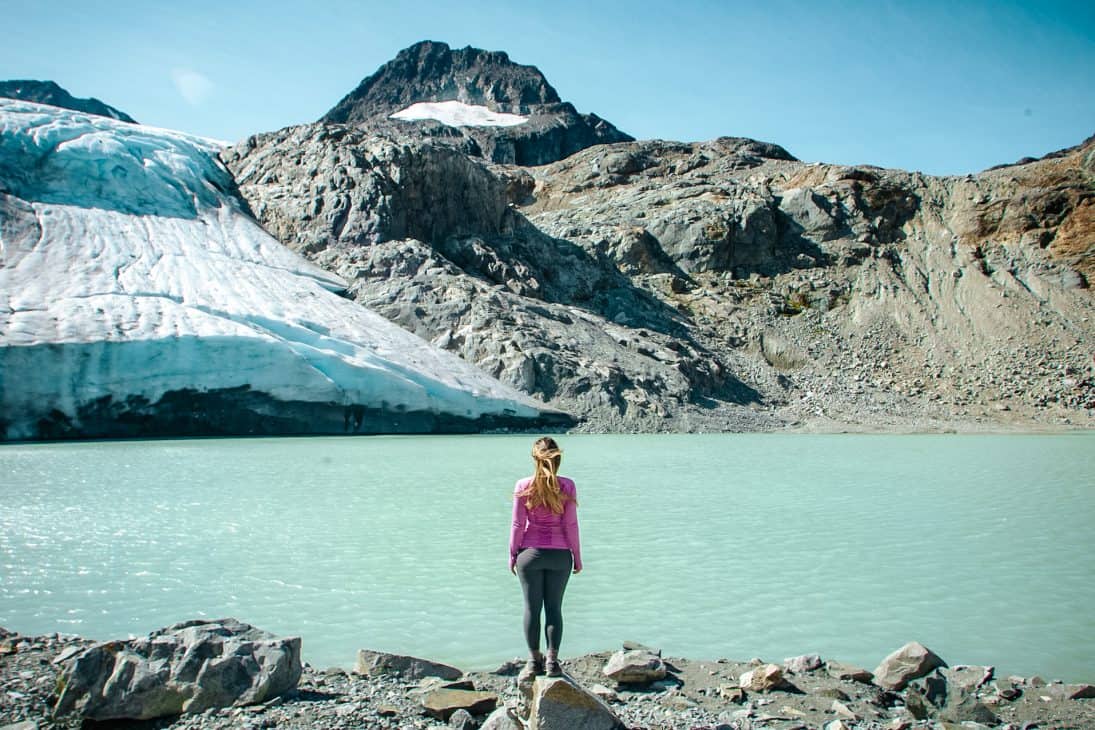
The Wedgemount Lake hike is a challenging trail located near Whistler, British Columbia. It is best suited for experienced hikers who are prepared for a steep and strenuous trek. The trail is approximately 7 kilometre s in length one way, with an elevation gain of around 1,200 meters.
The trail starts off with a steady incline through a dense forest, with roots and rocks along the path. As you ascend, the trail becomes steeper and more challenging.
Once you reach Wedgemount Lake, you’ll be rewarded with breathtaking views of the glacier-fed lake surrounded by towering peaks. It’s a great spot to take a break, have a snack, and soak in the alpine scenery.
It’s important to note that the Wedgemount Lake hike is considered a difficult trail and should only be attempted by experienced hikers who are physically fit and well-prepared.
The trail conditions can vary depending on the season. In summer, the trail may be dry and dusty, while in spring or early summer, there may be snow patches or muddy sections. It’s advisable to check trail conditions and weather forecasts before embarking on the hike.
- Distance: 14km
- Elevation Gain: 1,375 metres
- Duration: 7 – 9 Hours
- Dog Friendly: No
- Difficulty: Hard
Parkhurst Ghost Town
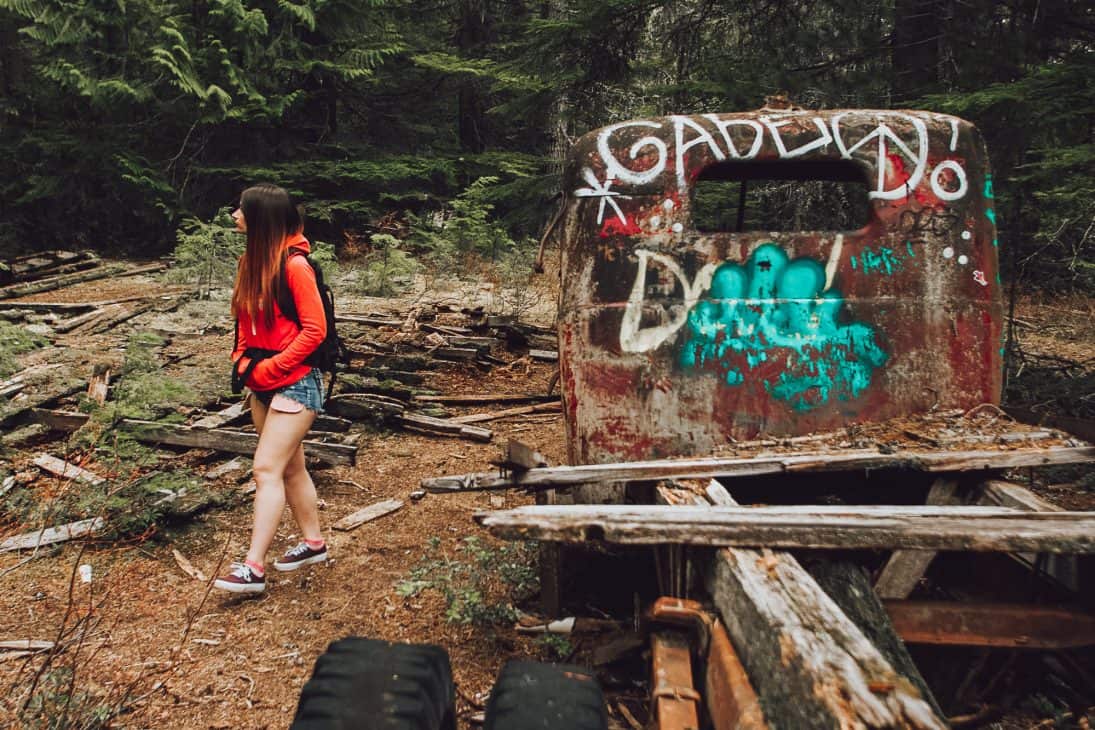
Parkhurst is one of the most unique hikes in Whistler on this list. As the name suggests, this trail leads to a ghost town of what used to be a logging community but was abandoned in the 1960’s.
There are several routes to reach this town. The main trail is from the Wedge Creek FSR, however the more direct route is via the train tracks that follow Green Lake, although this is not recommended.
Today, you can explore the remains of the old machinery and buildings that were once part of this settlement. It’s a fascinating glimpse into the past and a great option for an out-of-the-ordinary hiking experience.
- Distance: 5km
- Elevation Gain: minimal
- Duration: 2 Hours
- Dog Friendly: Yes
- Difficulty: Easy
Ancient Cedars Trail
The Ancient Cedars Trail is an out-and-back hike that falls somewhere between easy and moderate difficulty.
While some may argue that the hike itself is not particularly remarkable, it holds a special allure for those who appreciate majestic trees. This trail leads to the oldest cedar trees in Whistler, and that I think they are incredible to see up close.
Along the way, you’ll encounter other sights, including a charming small waterfall and sweeping vistas of the surrounding mountains and the Shoah lakes.
This trail is notorious for mosquitoes and the chances of being bitten are high. Bring plenty of insect repellent and wear long sleeves and pants if you can. When I first hiked this trail I wore a sundress and it was not the greatest experience.
If you have a fondness for trees and desire to embrace the serene beauty of the forest, the Ancient Cedars Trail is an excellent choice among the best hikes near Whistler.
- Distance: 5km
- Elevation Gain: 175 metres
- Duration: 2 Hours
- Dog Friendly: Yes
- Difficulty: Easy to Intermediate
Hikes South of Whistler
Garibaldi Lake

Garibaldi Lake is one of the top hikes near Vancouver and should be on your bucket-list when visiting Whistler. This scenic trail is accessible from April to November.
Although it’s grown in popularity, I actually find the hike to Garibaldi Lake quite boring. There is little to see and many switchbacks. Once you’ve completed the switchbacks you’ll reach a fork in the trail leading to either Taylor Meadows or Garibaldi Lake, take the trail on the right.
Once you reach the lake you’ll be greeted by the most pristine glacier-fed blue lake. Garibaldi Lake is definitely something you need to witness for yourself. If you’re seeking an extended adventure, consider adding another 2-2.5 hours to your hike and venture towards Panorama Ridge.
If you plan to extend your hike to Panorama Ridge or Black Tusk, an overnight stay is recommended, providing ample time to explore and savour the breathtaking surroundings.
Please note that during the summer months, particularly between June and October, the area tends to be busy, and a BC Parks Day Pass is required for access.
- Distance: 18km
- Elevation Gain: 820 metres
- Duration: 6 – 8 Hours
- Dog Friendly: No
- Difficulty: Hard
- NOTE: A BC Parks Day Pass or camping reservation is needed to access this hike
Panorama Ridge

Ranked among the best hiking trails in BC, Panorama Ridge offers an array of reasons why it is a must-do for avid hikers and outdoor enthusiasts. Its crowning glory lies in the remarkable alpine views it offers.
The Panorama Ridge trail is challenging yet rewarding. With a total distance of approximately 30 kilometres (18.6 miles) round trip, this full-day hike demands stamina and determination. The elevation gain means you’ll need to be prepared for some uphill climbs, but trust me, the rewards are more than worth it.
The trail is typically accessible from July through September, when the snow has melted and the wildflowers are in full bloom. The trailhead for Panorama Ridge is Rubble Creek, the same as Garibaldi Lake.
There are two routes you can take to Panorama ridge. The most direct route is through Taylor Meadows but you can also get to Panorama Ridge via Garibaldi Lake if you want to do both in one day. Going the Garibaldi Lake route does add extra time onto the hike and you do have to go back on yourself.
While Panorama Ridge offers an unforgettable experience, it is best suited for intermediate to advanced hikers who are physically fit and up for a challenge.
- Distance: 30km
- Elevation Gain: 1,520 metres
- Duration: 11 – 12 Hours
- Dog Friendly: No
- Difficulty: Very Hard
- NOTE: A BC Parks Day Pass or camping reservation is needed to access this hike
Black Tusk

The majestic Black Tusk stands prominently, its black peak visible from various vantage points in the Whistler region. Its distinctive presence can be admired from various locations in the Vancouver region, including occasional glimpses from the Sea to Sky highway.
This distinctive geological formation is composed of hardened lava remnants from an ancient volcano. While the hike to the base of the Tusk is accessible to all, reaching the summit requires advanced rock climbing skills and is recommended only for experienced climbers.
Considered one of the best hikes in Garibaldi Provincial Park, this hike takes the same initial trail as Garibaldi Lake and Panorama Ridge, starting at Rubble Creek. At the junction, turn left towards Taylor Meadows.
The final stretch entails maneuvering through a narrow and exposed passage known as the ‘chimney,’ which poses additional challenges. It is essential to approach the climb with the necessary skills, experience, and respect for the mountain’s demands.
Alternatively, if you lack experience in scaling crumbly surfaces, you may opt to observe the stunning views from a safe vantage point, bypassing the chimney climb.
- Distance: 29km
- Elevation Gain: 1,7400 metres
- Duration: 11 – 12 Hours
- Dog Friendly: No
- Difficulty: Very Hard
- NOTE: A BC Parks Day Pass or camping reservation is needed to access this hike
Brandywine Falls
Brandywine Falls is one of the most spectacular waterfalls in the Whistler area just a quick stop along the Sea to Sky Highway.
This short and easy Whistler hike promises a rewarding experience as you marvel at the waterfall plunging an impressive 70 meters down volcanic basalt cliffs into the depths of the canyon below.
For those seeking a quick escape, the Brandywine Falls trek offers a conveniently short out-and-back hike, taking less than an hour to complete. Its accessibility and family-friendly nature make it a popular choice for all visitors to Whistler.
To beat the crowds, visit Brandywine Falls early in the morning. The path is stroller-friendly, making it an excellent option for families with young children.
There are several viewing platforms here as well as a picnic area and restroom (pit toilets) facilities.
- Distance: 1km
- Elevation Gain: Minimal
- Duration: 30 minutes
- Dog Friendly: Yes
- Difficulty: Easy
FAQ: Best Hikes In Whistler
What is the most beautiful trail in Whistler?
There are so many beautiful trails in Whistler each with their own unique appeal that it is hard to choose just one. My personal favourites based on views alone are Panorama Ridge, Joffre Lakes and High Note Trail.
Is Whistler good for hiking?
Whistler is great for hiking! There are an abundance of trails here. Having moved here in 2016 I have only just scratched the surface of hikes. The other great thing about Whistler is the range of hikes meaning that no matter your fitness level, they is a trail suitable.
Can you hike up Whistler Mountain for free?
Yes you can, via the Singing Pass Trail. Although I would only recommend this for experienced hikers.
What is the hardest hikes in Whistler?
There are a few difficult trails in Whistler, some of the hardest include Wedgemount Lake, Panorama Ridge, Black Tusk and the Skyline Trail.
Are there grizzly bears on Whistler Mountain?
Whistler is home to both Black bears and Grizzly bears. Although it is rare to encounter a Grizzly bear in Whistler it is still possible. Always carry bear spray and be Bear Aware when hiking in Whistler.
Do you need hiking boots for Whistler?
Unless you are embarking on one of Whistler’s easy hikes, I would absolutely recommend hiking boots. They offer ankle support and ample grip for rocky or loose terrain. If you are just starting out head over to my guide of hiking boots under $100 for recommendations.
What is the easiest trail at Whistler?
The easiest hiking trail in Whistler is the Valley Trail, which is more of a walking trail than anything. If you are looking for something a bit more interesting however, I recommend the Whistler Train Wreck trail.
Do you need bear spray in Whistler?
Yes! Although you are unlikely to come face to face with a bear, an encounter is always likely. I have ran into bears here in Whistler at the bus stop and more recently my garage and backyard.
Best Hikes In Whistler: Final Thoughts
If you’re on the hunt for the best hikes near Whistler, I’ve got you covered with this list. While you might have already conquered some of the well-known ones, there are hidden gems waiting to be explored.
While trails like Garibaldi Lake and Joffre Lakes are well-known popular hikes, there are many on this list that are worth exploring also. The trails around Sproatt are lesser visited and therefore more rugged but they offer a sense of remoteness and stunning scenery that will leave you in awe.
Looking for something more easygoing? Lost Lake and the Whistler Train Wreck are your go-to options. They’re perfect for family adventures or when you’re in the mood for a relaxed stroll.
Now, if you’re up for a challenge, take on the epic hikes of Black Tusk Lake or Panorama Ridge in Garibaldi Provincial Park. These trails will push you to your limits, but the reward at the summit is beyond words. Trust me, the effort it takes to reach those breathtaking summits is absolutely worth it.
If you are visiting Whistler I have plenty more detailed Whistler travel guides available here as well as gear guides and hiking guides to prepare for your trip.
So, grab your boots, pack your sense of adventure, and get ready to conquer the best hikes that Whistler has to offer!
Want To Explore More Of British Columbia?
Check out these detailed travel guides to help you explore British Columbia further!
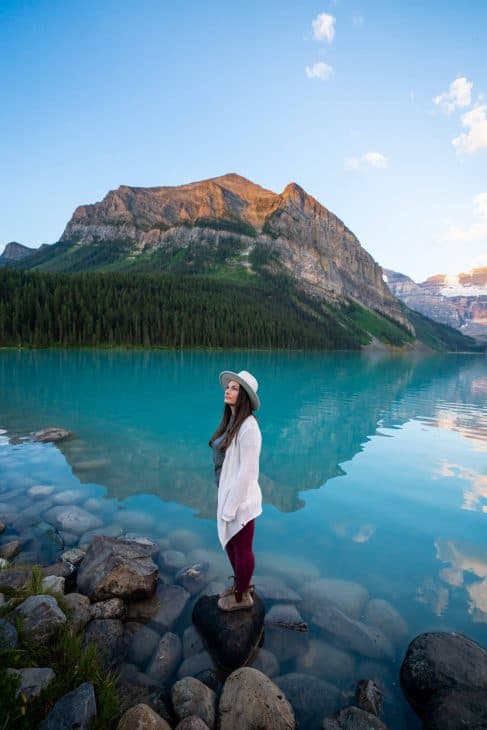
About Rachael
Welcome to A City Girl Outside! I’m Rachael, a Londoner who traded the hustle and bustle of city life for the breathtaking beauty of Whistler, Canada. With no prior experience, I dove headfirst into an outdoor lifestyle that now includes hiking, canoeing, and snowshoeing.
What started as a leap into the unknown has become my greatest passion. These days, you’ll find me spending my weekends adventuring in the Canadian wilderness—chasing alpine views, paddling serene lakes, and embracing all that nature has to offer.
A City Girl Outside aims to inspire readers to step beyond their comfort zones, explore the great outdoors, and embrace the wild. Whether you’re a seasoned explorer or a complete beginner like I once was, there’s always room to reconnect with nature and discover the adventurer within.
Click A Pin Below To Save For Later!
![Mamquam Falls Hike In Squamish [2025 Guide]](https://acitygirloutside.com/wp-content/uploads/2023/09/Mamquam-Falls-near-Squamish-BC-A-City-Girl-Outside-768x512.jpg)
![Best Dog Sledding Whistler Tours [2025 Guide]](https://acitygirloutside.com/wp-content/uploads/2023/11/Dog-sledding-768x512.jpg)
![What To Wear Hiking In Summer [2025 Guide]](https://acitygirloutside.com/wp-content/uploads/2023/04/summer-hiking-hot-weather-A-City-Girl-Outside-768x512.jpg)


![19 Best Stops On The Icefields Parkway! [2025 Guide]](https://acitygirloutside.com/wp-content/uploads/2022/06/Best-Icefields-Parkway-Stops-1-Day-Itinerary-Road-Trip-768x512.jpg)