
How To Tell If Hiking Boots Are Too Big? + Solutions!
How can you tell if your hiking boots are too big for you?
Are your hiking boots too big? Not sure how to tell? This post will help you determine if your boots are the right size for your feet.
Having room for your feet to move around a little is great for hiking boots – especially on a steep downhill! But sometimes they can be too big – and this isn’t good because it can lead to problems and pain. And the last thing you need is your hike being ruined by uncomfortable feet.
As an avid hiker, having a good pair of comfortable hiking boots makes all the difference. Not only do they provide much-needed support and protection for your feet, but they can also make or break your hiking experience.
That’s why I’ve put together this guide to help you figure out if your hiking boots are too big, and what to do about it. Because no one wants blisters or sore feet on an outdoor adventure.

Sizing Matters in Hiking Boots
Before we dive into how to tell if your hiking boots are too big, let’s talk a little bit about sizing.
Hiking boot sizes can vary between brands and even within the same brand. This is because each company has their own unique sizing chart and they may also use different materials and construction methods.
For this reason, it’s important to always try on hiking boots before purchasing them and not rely solely on your usual shoe size. You may need a half or full size bigger or smaller depending on the brand and style of boot.
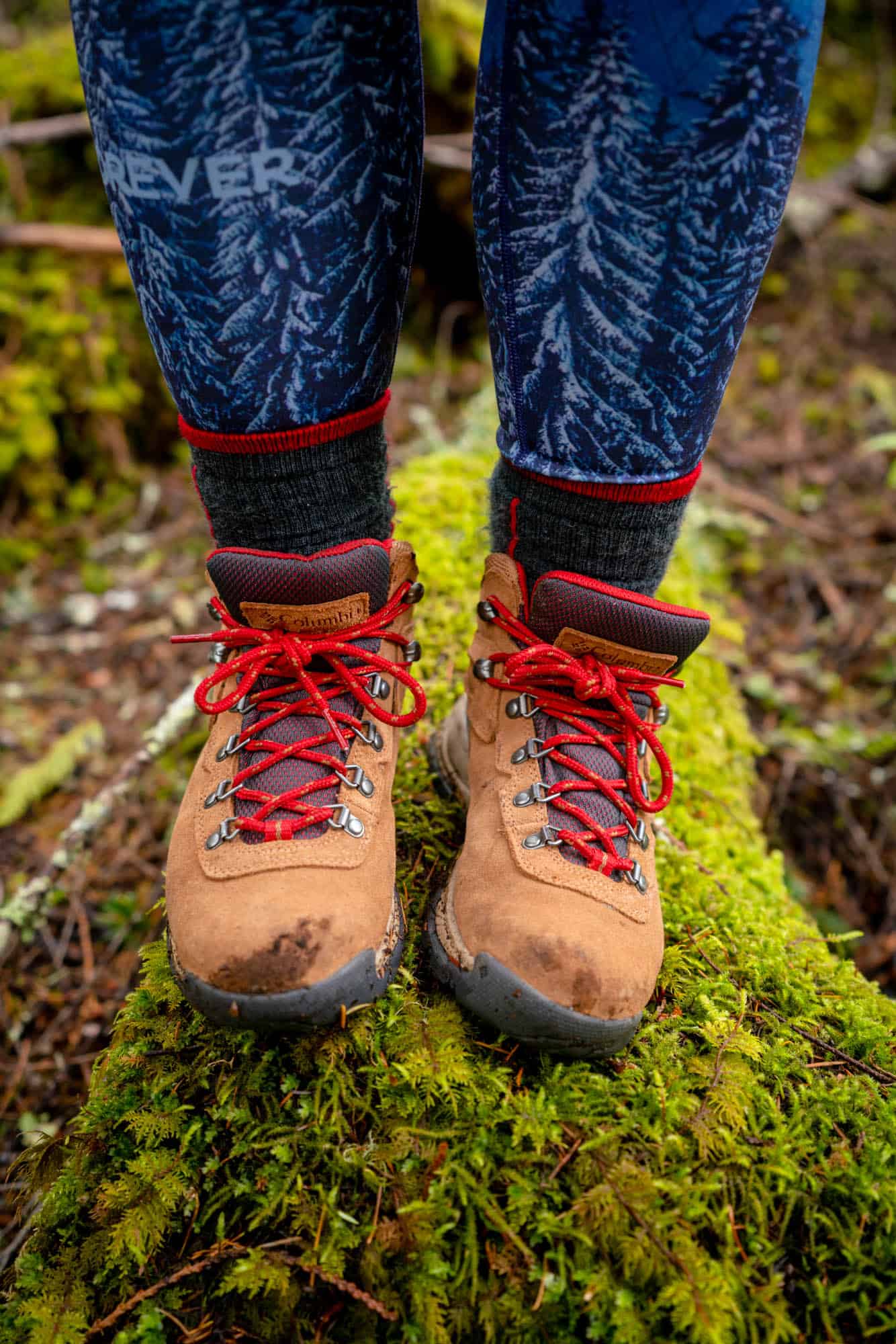
A great example of this is my Columbia Newton Ridge boots and Danner Mountain 600 boots – both run small (in my experience). I am a size 7 US but need a half size for these brands. The Danner’s fit SO well with a size 7.5. Meanwhile my Salomon X Ultra’s are a 7 and perfect fit. It’s also worth looking at the reviews – most of the time other customers will experience the same sizing issues.
It’s also important to consider the type of hiking you will be doing and the terrain you will be facing. For example, if you’ll be hiking in colder weather, you may need thicker socks which could require a larger size boot.

6 Signs To Tell If Your Hiking Boots Are Too Big
When trying on hiking boots, it’s important to keep in mind that your feet will naturally swell throughout the day. So when you’re testing them out, try them on later in the day or after a long walk to get a more accurate fit.
While everyone has their own unique foot shape, there are a few general indicators that can help you determine if your hiking boots are too big or not. There are several tell-tale signs that can indicate whether or not your hiking boots are too big. These include:
Heel Slippage
If your heel is constantly slipping out of the back of your boot while walking, it’s a sign that the boot is too big. This can cause rubbing and blisters, and potentially even lead to ankle injuries.
You don’t want your feet sliding around in the boot – if they are you may need to size down or look for a half size.
Too Much Room in the Toe Box
The toe box is the area at the front of your hiking boot where your toes rest. If there’s a lot of extra space in this area, it means that your boots are too big.
Your toes should have some wiggle room, but if there’s too much space between your toes and the front of the boot, it can cause your feet to slide around and potentially lead to blisters or other foot injuries. Your toes should be able to move and flex, but not slip around too much.
Blisters
Blisters are a common sign that your hiking boots are too big. If you’re experiencing blisters on your heels or toes, it could be because your boots are too big and causing friction as your feet move around inside.
Blisters can also be caused by wearing the wrong type of socks or not properly breaking in your hiking boots, so make sure to rule out those factors before concluding that your boots are too big.
Loose Laces
If your laces are constantly coming undone or you have to tie them extremely tight to keep the boot on, it’s a sign that the boot is too big.
This can also lead to discomfort and blisters from the pressure of tight laces. Laces should be snug and secure but not overly tight or constantly coming undone.
You can also try lacing the boots differently. I lace my boots to relieve pressure on the instep as this makes my feet go numb, but they can be laced in different ways to help with fit too.
No Ankle Support
Hiking boots are designed to provide support and stability for your ankles, especially on uneven or rocky terrain.
If you feel like your ankles are not supported by the boot, it may be because they are too big. If there is too much space between or gaps between your boot and ankle, then there is not enough support.
Your ankle should feel snug and secure in the boot, but not restricted or uncomfortable. Good ankle support is important when hiking difficult terrain or longer/overnight hikes.
Difficulty Maintaining Balance
If you feel like you’re constantly struggling to maintain your balance while wearing your boots, it could be a sign that they are too big.
This is because your feet aren’t securely fitted into the boots, making it harder to navigate uneven terrain. If you are tripping up or having trouble staying steady, it could be time to consider sizing down.
If you’re experiencing any of these signs, it’s likely that your hiking boots are too big and you should consider getting a smaller size or trying a different brand or style. It’s always better to have a snug and secure fit, rather than risking discomfort or injury on your hikes.
How To Choose The Right Boots
Since everyone’s feet are unique, it can be a challenge to find the perfect hiking boots. Here are some tips on how to choose the right boots for your feet:
- Try on different brands and styles: As mentioned earlier, sizing can vary between brands and styles, so don’t limit yourself to just one brand or type of boot. Trying on multiple options can help you find the best fit for your feet.
- Consider the type of hiking you’ll be doing: Different types of hikes require different types of boots. For example, if you’re planning on doing mostly day hikes on well-maintained trails, a lighter and more flexible boot may be suitable. However, if you’re planning on tackling rugged terrain or carrying heavy loads, a sturdier and more supportive boot may be necessary.
- Get a proper measurement: Don’t solely rely on your usual shoe size when choosing hiking boots. Go to a store where you can get measured properly by an expert or use a sizing chart provided by the brand. Remember that your feet will swell throughout the day, so it’s important to account for that when choosing a size.
- Consider the type of socks you’ll be wearing: Socks can also impact the fit of your hiking boots. If you plan on wearing thicker socks for colder weather, make sure to try on boots with those socks to ensure a proper fit.
- Walk around and test them out: Don’t just stand in one spot when trying on hiking boots – walk around and test them out on different surfaces to get a better feel for how they will perform on the trails.
- Ensure you heel is tight: While a little bit of heel slippage is normal, your heel shouldn’t be constantly slipping in and out of the boot. Make sure to secure your laces properly and adjust them accordingly.
- Don’t ignore discomfort: If you’re experiencing discomfort while trying on hiking boots, it’s likely that they are not the right fit for you. Don’t try to convince yourself that the discomfort will go away once you break them in – it’s important to have a comfortable fit from the start.
- Don’t rush the decision: Take your time when choosing hiking boots. It’s an investment in your comfort and safety while on the trails, so it’s important to find the right fit for your feet. Overall, finding the right hiking boots may take
What to Do if Your Hiking Boots are Too Big
If you’ve determined that your hiking boots are indeed too big, don’t worry – there are some things you can do to fix the issue.
- Replace Insoles: Sometimes simply replacing the insole of your boot can make a big difference in fit and comfort. Insoles come in different shapes and thicknesses, so you can choose one that best fits your foot and fills up any extra space in the boot.
- Wear Thicker Socks: If your boots are only slightly too big, wearing thicker socks can help fill up some of the extra space. Just make sure they don’t make your boots too tight or cause discomfort.
- Adjust Lacing: As mentioned earlier, lacing your boots differently can also help with fit. Experiment with different lacing techniques to relieve pressure points or provide a more secure fit for your foot shape.
- Try Inserts: If you have wide feet or high arches, adding inserts to your hiking boots can help fill up extra space and provide additional comfort and support.
- Get a Shoe Stretching Kit: If your boots are just a little too snug in certain areas, you can try using a shoe stretching kit to stretch out those specific spots for a better fit.
- Consider Different Brands or Styles: Every brand and style of hiking boot is different, so if one doesn’t fit well, consider trying another. It’s always a good idea to research and read reviews before purchasing hiking boots to find the best fit for your feet.
Remember, a proper fitting hiking boot is crucial for staying comfortable and safe on the trails. So take the time to properly test out and measure your feet, and don’t be afraid to make adjustments or try different options.

How Should Hiking Boots Fit?
Hiking boots should fit snugly around the ball of your foot while your heel sits in place without sliding or moving too much.
The right fit allows for some wiggle room for your toes in the toe box, though your toes shouldn’t push into the front of the boot.
When laced up, the boot should hold your foot securely in place, ensuring it doesn’t move side-to-side or back-and-forth.
Moreover, while a new boot might feel a bit stiff, it shouldn’t cause any discomfort or pain. Always remember to test your hiking boots with the same socks you plan to wear on the trails.
A well-fitted boot improves both performance and comfort, reducing the risk of blisters or foot injuries.
Commonly Asked Questions:
Should hiking boots be a size bigger?
Typically, it’s recommended that hiking boots should not be a full size bigger than your normal shoe size. However, you might consider going a half size larger to accommodate hiking socks or foot swelling, which can occur during long hikes.
This extra space can also help to prevent your toes from hitting the front of the boot when walking downhill, reducing the risk of toenail problems. Nevertheless, the boots should still fit snugly around your foot to provide adequate support and prevent blisters. It is essential to try on boots and walk around in them before making a purchase to ensure a proper fit.
Is it okay to wear hiking boots that are too big?
While it may be tempting to wear hiking boots that are a bit too large, especially if they were a gift or an irresistible sale find, it’s not recommended.
Oversized boots can lead to a lack of support and stability, increased friction, and subsequently, painful blisters. Your foot sliding inside the boot could cause your toes to hit the front of the boot during downhill hikes, leading to bruising or even damage to the toenails.
It’s crucial to prioritize a proper fit over other considerations such as style or price for your safety and comfort on the trails. If your boots are too large, consider some of the solutions mentioned earlier like wearing thicker socks, replacing insoles, or adjusting the lacing for a better fit.
How much room should you have in hiking boots?
In hiking boots, you should have enough room to move your toes freely without them touching the front of the boot, typically equal to a thumb’s width between your longest toe and the end of the boot. This space is crucial for preventing your toes from hitting the front of the boot when walking downhill.
However, too much space could lead to instability and increased friction, potentially causing blisters. Besides toe room, your heel should be firmly held in place with minimal slippage, and the boot should feel snug but not tight around the ball of your foot. Always remember to try on boots with the same socks you plan to wear on the trails to ensure a proper fit.
Final Thoughts: How To Tell If Hiking Boots Are Too Big
Before I bought a real pair of hiking shoes, I hiked in Vans (terrible idea!) and then I eventually upgraded to a decent pair of hiking boots that fit perfectly (and are still going strong!) and it changed my hiking experience completely! A good pair of hiking boots really does make all the difference.
Finding the right hiking boots may take some time and effort, but it’s worth it for a comfortable and safe hiking experience. Remember to properly measure your feet, try on different brands and styles, and make adjustments as needed. Don’t settle for uncomfortable hiking boots – choose ones that fit snugly and provide proper support for your unique foot shape.

About Rachael
Welcome to A City Girl Outside! I’m Rachael, a Londoner who traded the hustle and bustle of city life for the breathtaking beauty of Whistler, Canada. With no prior experience, I dove headfirst into an outdoor lifestyle that now includes hiking, canoeing, and snowshoeing.
What started as a leap into the unknown has become my greatest passion. These days, you’ll find me spending my weekends adventuring in the Canadian wilderness—chasing alpine views, paddling serene lakes, and embracing all that nature has to offer.
A City Girl Outside aims to inspire readers to step beyond their comfort zones, explore the great outdoors, and embrace the wild. Whether you’re a seasoned explorer or a complete beginner like I once was, there’s always room to reconnect with nature and discover the adventurer within.


