
How To Spend 4 Days In Banff – 2025 Itinerary
Filled with stunning snowcapped mountains, glimmering lakes and an abundance of wildlife, Banff is one of the most visited paces in Canada. Covering a total of 6641 square kilometres Banff National Park is home to some of the world’s most breathtaking landscapes. This 4 day Banff itinerary hits all the top attractions and more!
Banff was Canada’s first National Park and many visitors flock here every year to witness its natural beauty for themselves. And with so many incredible things to do, you’ll want to plan your trip ahead of time to ensure you see the best of Banff.
A City Girl Outside contains affiliate links. If you decide to make a purchase through these links, I will earn a commission at no extra cost to you. Thanks for reading!
Essential Links For Booking Your Banff Trip!
Transport: Book your rental car here.
Top rated tours and experiences in Banff
My accommodation recommendations for Banff:
Parks Canada National Parks Pass Info
If you are visiting or planning a trip to any of Canada’s National Parks (Including Banff, Jasper and, Yoho), you will need to purchase a parks pass. There are a number of options available.
Single Day Admission:
This option is great if you only plan to spend a day or two in a National Park. Valid for one person per day. See the Parks Canada website for current rates. Children 17 or younger are free.
Group Daily Admission:
This is a great option if you have up to 7 people per one vehicle. It is cheaper than purchasing a pass for each person. See the Parks Canada website for current rates.
Parks Canada Discovery Pass:
A discovery Pass is, in my opinion, the best option for people visiting in groups for a week or more. This is an annual pass and is valid from the day you buy it. It will give you 365 days of entry to all of Canada’s National Parks. I purchased this for my 12 day trip to the Banff and Jasper in 2021 and used it 3 more times in Banff in 2022 and another for Pacific Rim in Tofino. If you are planning on traveling around Canada for an extended period of time, this is worth the money!
The Discovery Pass will cover up to 7 people per vehicle. You can purchase the Discovery pass online or in person when you arrive. See the Parks Canada website for current rates.
→ Check out my Canada packing list for all seasons for all the essential items you’ll need when visiting Canada year-round, from hot to cold! (Don’t come unprepared like I did!)
Day 1: Bow Falls, Banff Gondola
Day 1 of this 4 days in Banff itinerary is a slower-paced day to allow you to adjust to the time difference and ease into your surroundings. Today you’ll explore around Banff town and see some of the top sights close to town.
Breakfast
Start your day with a hearty breakfast at one of Banff’s many cafes or restaurants. I absolutely love Toulouou’s – I have had breakfast here on many occasions and it never fails to satisfy. They have pancakes as big as your head and some of the best French Toast I’ve ever tried.
Banff Avenue
After breakfast, take a stroll through the charming streets of downtown Banff and explore some local shops and boutiques. Banff has a great range of shops, my favourite Banff souvenir shop is by far the Big Bear Trading, it’s really hard not to drop a pretty penny here.
Not gonna lie, Banff Avenue is tourist central but you definitely need to walk down the middle to see those incredible views of Cascade Mountain dominating the town.
I also recommend trying a Beavertail at some point during your trip, think freshly fried dough with whatever toppings you like – It’s a Canadian staple!

Bow Falls
After walking off your breakfast and wandering Banff Avenue, it’s time to see one of the park’s most famous waterfalls, Bow Falls. Bow Falls is a short walk from downtown Banff but you can drive here and there is a small parking lot.
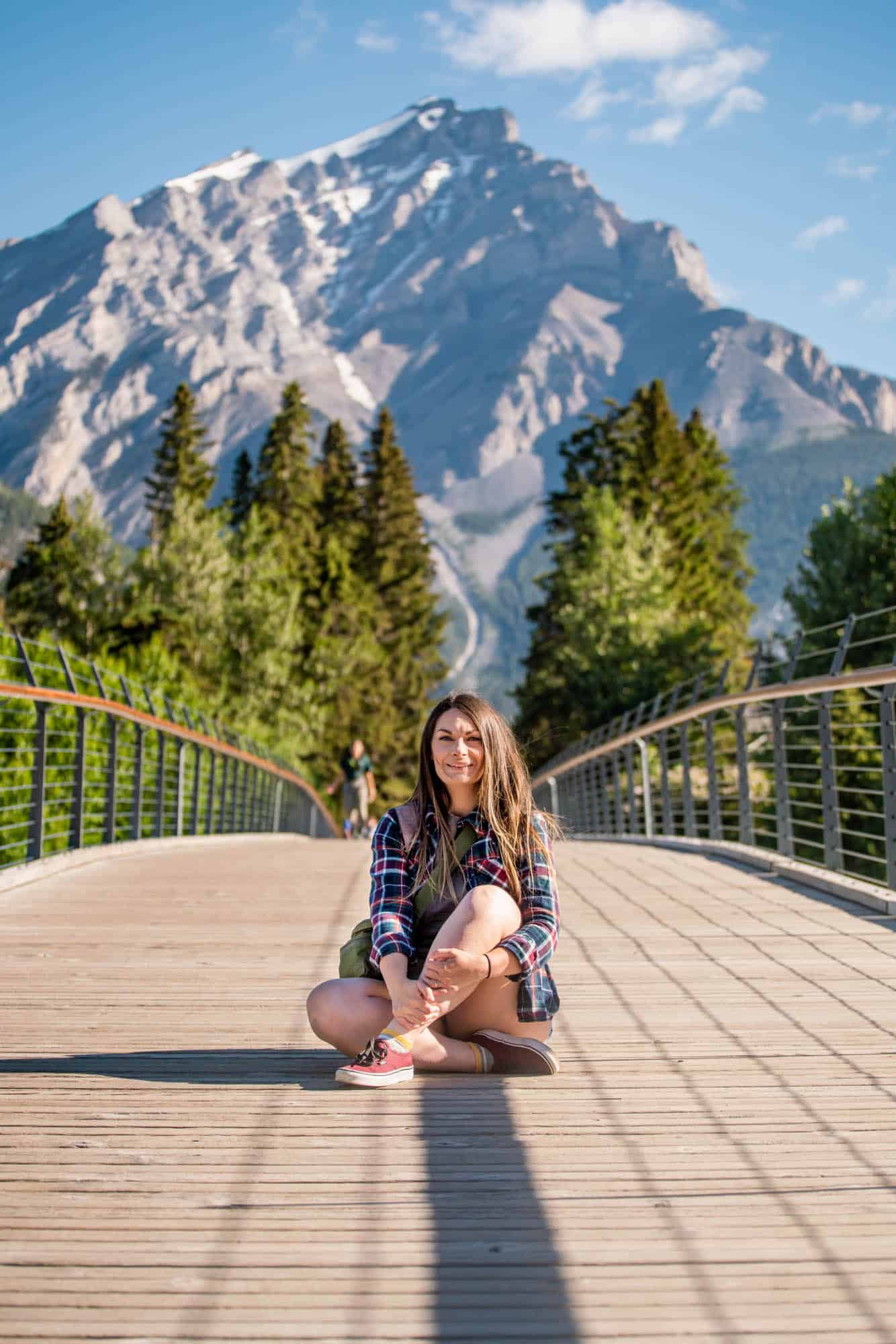
If you are walking from Banff Avenue to Bow Falls, don’t forget to stop by the Banff Pedestrian Bridge. This is one of the best places to see sights of Cascade Mountain – that big mountain that you see when walking down the middle of Banff Avenue.
Right next to Bow Falls is the majestic Banff Springs Hotel. This hotel is one of the most famous and iconic hotels in Canada. It has a rich history and stunning architecture, making it worth a visit even if you’re not staying here.
Lunch
After visiting Bow Falls and Banff Springs Hotel, take a break for lunch at one of Banff’s many restaurants. I recommend stopping for lunch at one of Banff’s breweries. The Banff Avenue Brewing Company is a popular choice, with delicious food and a wide selection of craft beers. The 3 Bears Brewery is another great option, with a cozy patio and tasty food.
Cave & Basin National Historic Site
After lunch, head to the Cave & Basin National Historic Site, known as the “Birthplace of Banff National Park.” Discovered in 1883 by three Canadian Pacific Railway workers, this site is home to natural hot springs and a museum that tells the story of how Banff National Park came to be.
The original cave that was discovered by railway workers in 1883 is on display, as well as interactive exhibits and a boardwalk through the wetlands.
Upon entering the area you are immediately hit with the smell of rotting eggs. Don’t be alarmed, it’s not you, it’s the pools! The rotting egg smell is actually that of the sulphur that is present in the hot springs (hence Sulphur Mountain)
Although the swimming pools closed in 1992 for safety reasons, the area is now home to an endangered species, the Banff Springs Snail, which can be spotted near the edge of the basin pool.
Banff Gondola
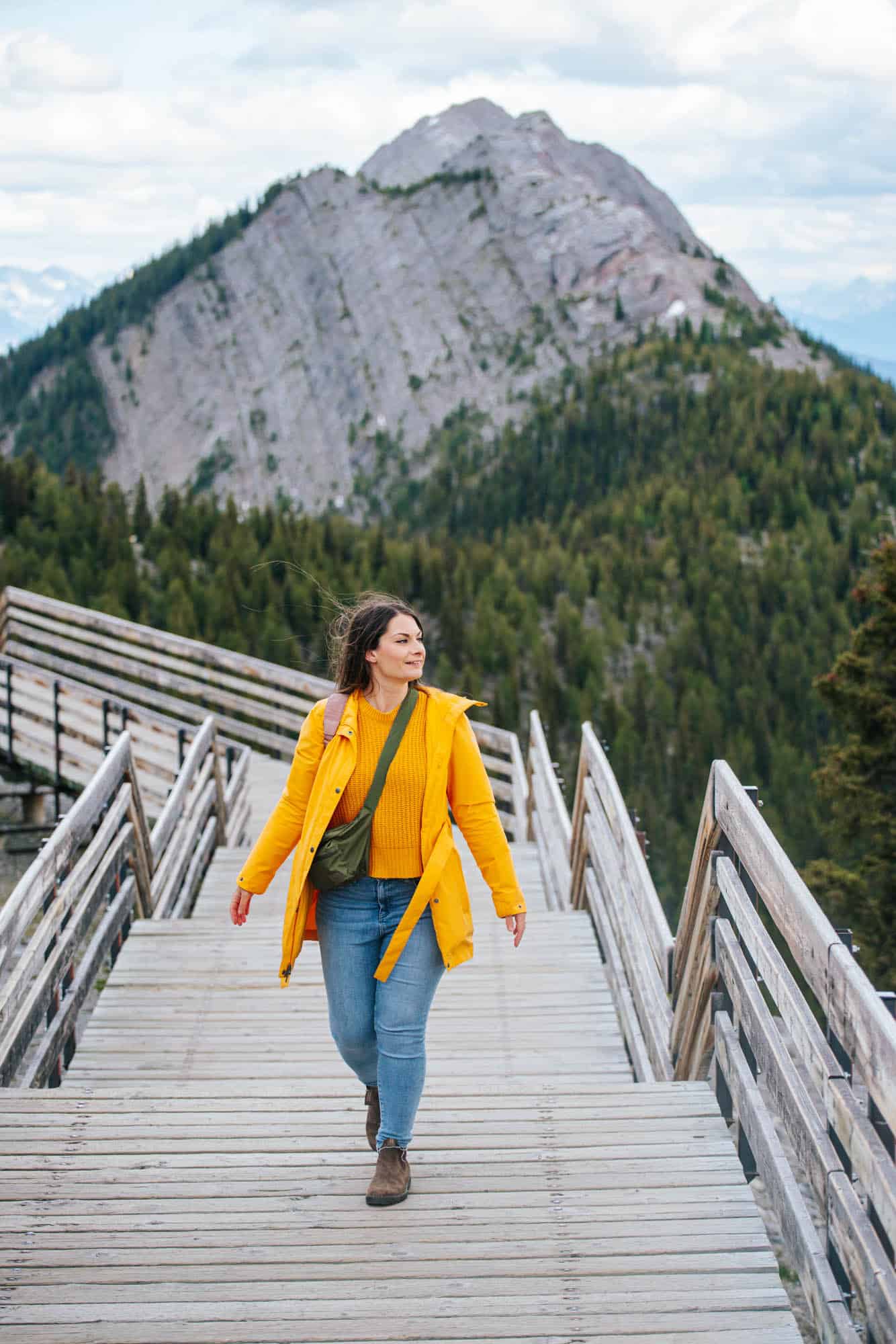
No trip to Banff is complete without a ride on the Banff Gondola. This scenic 8-minute gondola ride takes you up 2,281 metres to the top of Sulphur Mountain, where you can enjoy panoramic views of Banff and the surrounding mountains. There are also several walking trails at the top, so you can stretch your legs and take in the breathtaking scenery.
If you’re feeling adventurous, you can also hike up Sulphur Mountain instead of taking the gondola! It’s a challenging but rewarding hike that takes about 5-6 hours round trip.
After enjoying the views and exploring Sulphur Mountain, take the gondola back down and head back to your accommodation for a well-deserved rest.

Dinner in Banff Town
For dinner, head back into Banff town and try one of the many amazing restaurants. If you’re in the mood for Italian food, I highly recommend The Meatball Pizza & Pasta – their meatballs are to die for. Or Farm and Fire at the Elk + Avenue hotel for a farm to table experience.
After dinner, take a walk around Banff town to enjoy the charming streets at night and grab an ice cream cone or gelato before calling it a day.
Day 2 – Lake Minnewanka, Hoodoos Trail, Tunnel Mountain
Day 2 of this Banff travel itinerary takes you to some of the best attractions in Banff. Today is all about getting out into nature and experiencing the stunning landscapes that Banff National Park has to offer.
Breakfast
This morning isn’t a super early start so you can go and grab breakfast somewehere, or stop by the Wild Flower Bakery for a coffee and pastry to go.
Lake Minnewanka
Start your second day in Banff with a visit to Lake Minnewanka, the largest lake in Banff National Park. This glacial lake is surrounded by stunning mountains and offers plenty of outdoor activities such as boat tours, kayaking, and hiking trails.
I recommend getting to Lake Minnewanka early because it’s just beautiful first thing in the day. This lake is BLUE (like all lakes in Banff!) but it’s a deeper kind of blue than you’ll see at Lake Louise and Moraine Lake.
I think my favourite thing about Lake Minnewanka though, is its history. There is a town under the lake. Yes, really! The area that is now submerged by the lake used to be known as Minnewanka Landing, a resort town that was flooded by the damming of Lake Minnewanka.
And before the dam, the Stoney Nakoda First Nations people lived in this area for thousands of years. There is still evidence of their presence and you can learn more about their history and culture at the interpretive trailhead near the lake.
Lake Minnewanka is one of the few lakes in Banff that allow for motorized boat access. I highly recommend taking a boat cruise here so you can see other parts of the lake not visible from the shore. This was one of the most informative tours I have taken in Banff.
Two Jack Lake
After exploring Lake Minnewanka hop back in the car and drive the Lake Minnewanka Loop to two Jack Lake, a must-see in Banff. This route is known for wildlife spotting, with deer and big horned sheep often seen roaming the area.
Two Jack Lake is often overlooked, but it is one of the most tranquil and picturesque lakes in Banff. The viewpoint at Two Jack Lake offers a beautiful view of Mount Rundle and is also a popular spot for canoeing, picnicking, and fishing.
Lunch
After exploring Lake Minnewanka, stop for lunch at one of the picnic areas or head back to Banff for a meal at one of the many restaurants. If you’re looking for something quick and easy, try Eddie Burger + Bar for delicious burgers and milkshakes.
Surprise Corner
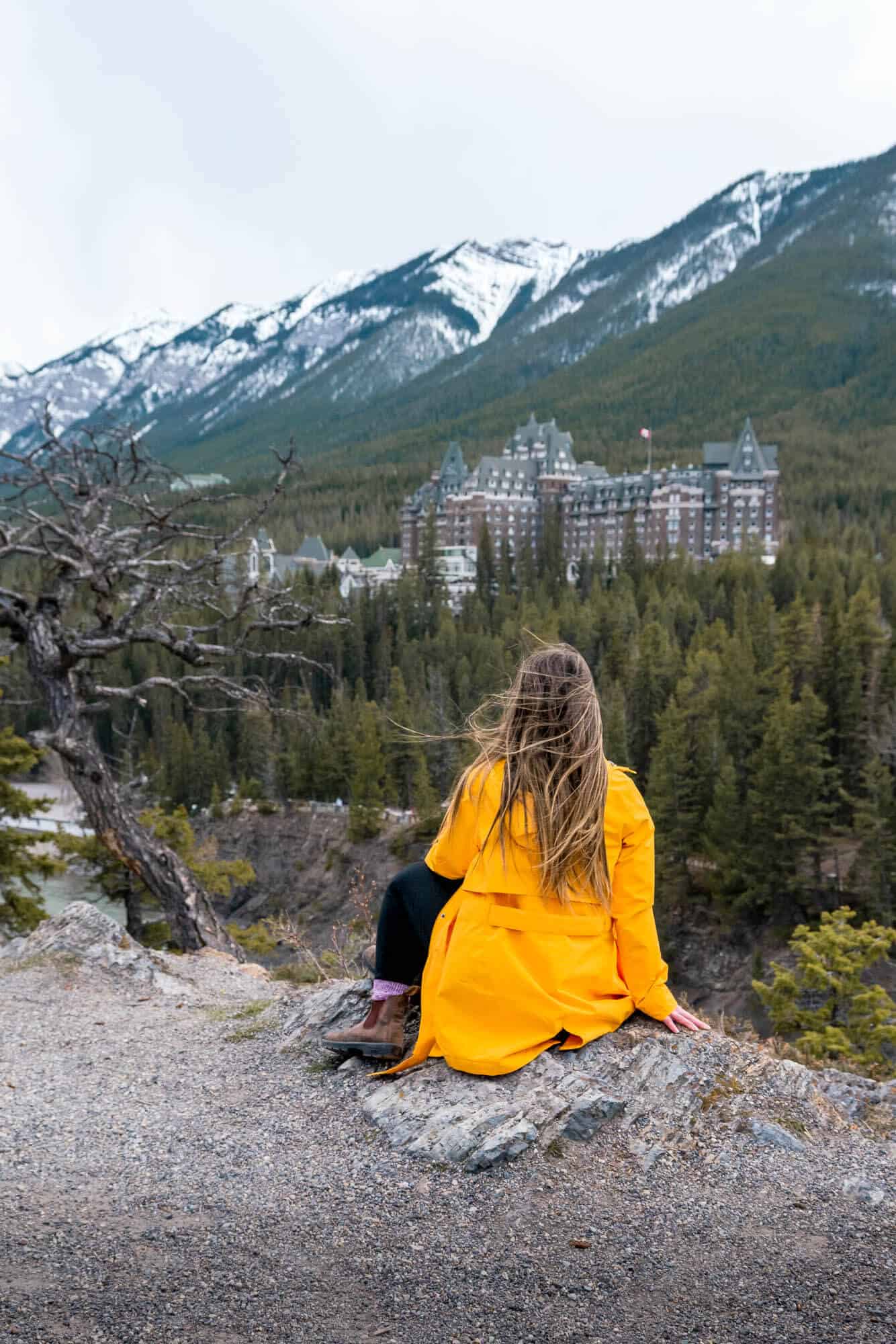
After lunch, head to Surprise Corner for one of the best views of Banff’s iconic Fairmont Banff Springs Hotel. This lookout point offers a stunning vantage point of the hotel with the Bow River and mountains in the background.
There are two small parking lots here, but they are usually both full around mid-day. So if you didn’t manage to find a spot later afternoon may be a better time.

Hoodoos Trail
The Hoodoos Trail is a short easy hike in Banff and one of the more unique things to do in Banff.
Hoodoos are tall, thin spires of rock that have been eroded by wind and water over time. They are a unique geological feature found in Banff and places like Bryce Canyon in Utah.
The trailhead is located just off Tunnel Mountain Road (5 minutes drive from Surprise Corner) and takes about an hour to complete round trip.
You don’t have to complete the entire hike to see the hoodoos however – around 5 minutes into the trail you’ll see a lookout point that shows some pretty good views of them. There are also 2 of the Parks Canada red Adirondack chairs that you can sit in and take photos with.
Hike Tunnel Mountain
For those who are feeling more energetic, I highly recommend hiking up Tunnel Mountain. It’s a short but steep hike that offers gorgeous views of Banff and Mount Rundle (which I think is probably my favourite mountain in Banff!). Plus, it’s a great way to burn off some calories from all the delicious food you’ve been eating!
The roundtrip hike takes about 2-3 hours and is mostly shaded by trees. It’s a popular hike, so expect to see other hikers along the way. At the top, you can relax at one of the viewpoints and enjoy the stunning panoramic views.
The viewpoint at the top also has 2 red Parks Canada chairs with a fantastic panorama of Banff town (can you tell I like these chairs?)

Dinner
After a full day of exploring, head back to Banff for dinner at one of the many delicious restaurants.
Tomorrow you’ll check into your hotel in Lake Louise so I recommend the Grizzly House located on Banff Avenue.
The Grizzly House is one of the best restaurants in Banff and a local favourite, known for its fondue and exotic meats like bison and rattlesnake. I’ve eaten here twice and I honestly wish it were closer because I would be here all the time!
The decor inside the Grizzly House is the quirkiest I’ve ever seen – it kind of reminds me of the Enchanted Tiki Room in Walt Disney World.
The fondue is a must here, they often have specials that are more than worth the price. When I came the first time we tried the beef, bison, elk and venison, with a cheese fondue to start and a Toblerone chocolate fondue to finish – yummm!!
Sunset at Vermilion Lakes
End your second day in Banff with a beautiful sunset at Vermilion Lakes. This series of small lakes offers stunning views of Mount Rundle and is the perfect spot to relax, have a picnic, and watch the colours of the sky change as the sun sets behind the mountains.
The Vermilion Lakes road is also a haven for wildlife, especially right before sunset! I have seen deer here almost every time we’ve visited.

Day 3 – Lake Louise, Bow Valley Parkway, Johnston Canyon
Day 3 of this Banff trip itinerary will start with an early wake-up call. Today you are exploring one of the most iconic places in all of Canada – Lake Louise! There are so many things to do in Lake Louise in summer but this itinerary will focus on a few of the absolute best!
Lake Louise
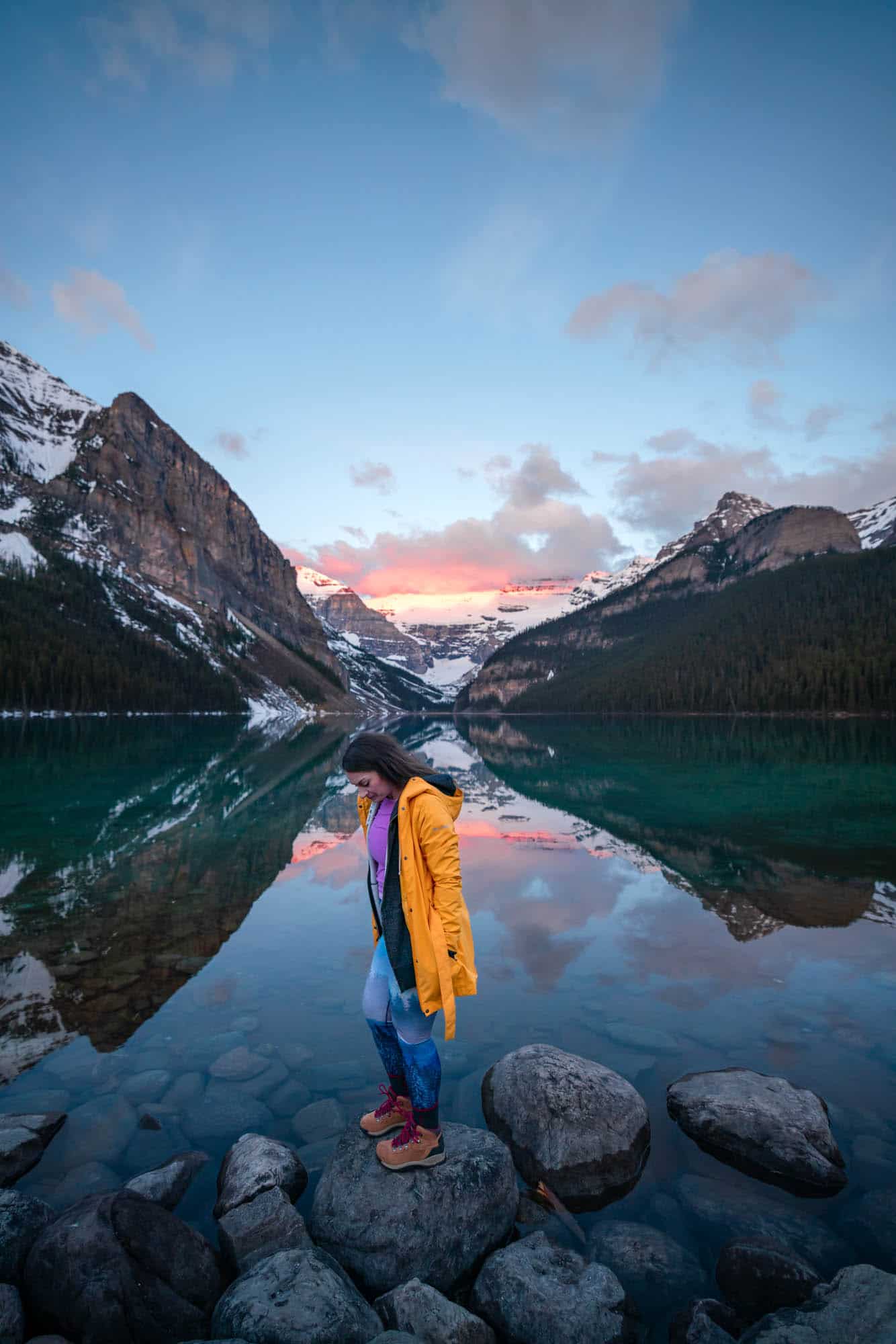
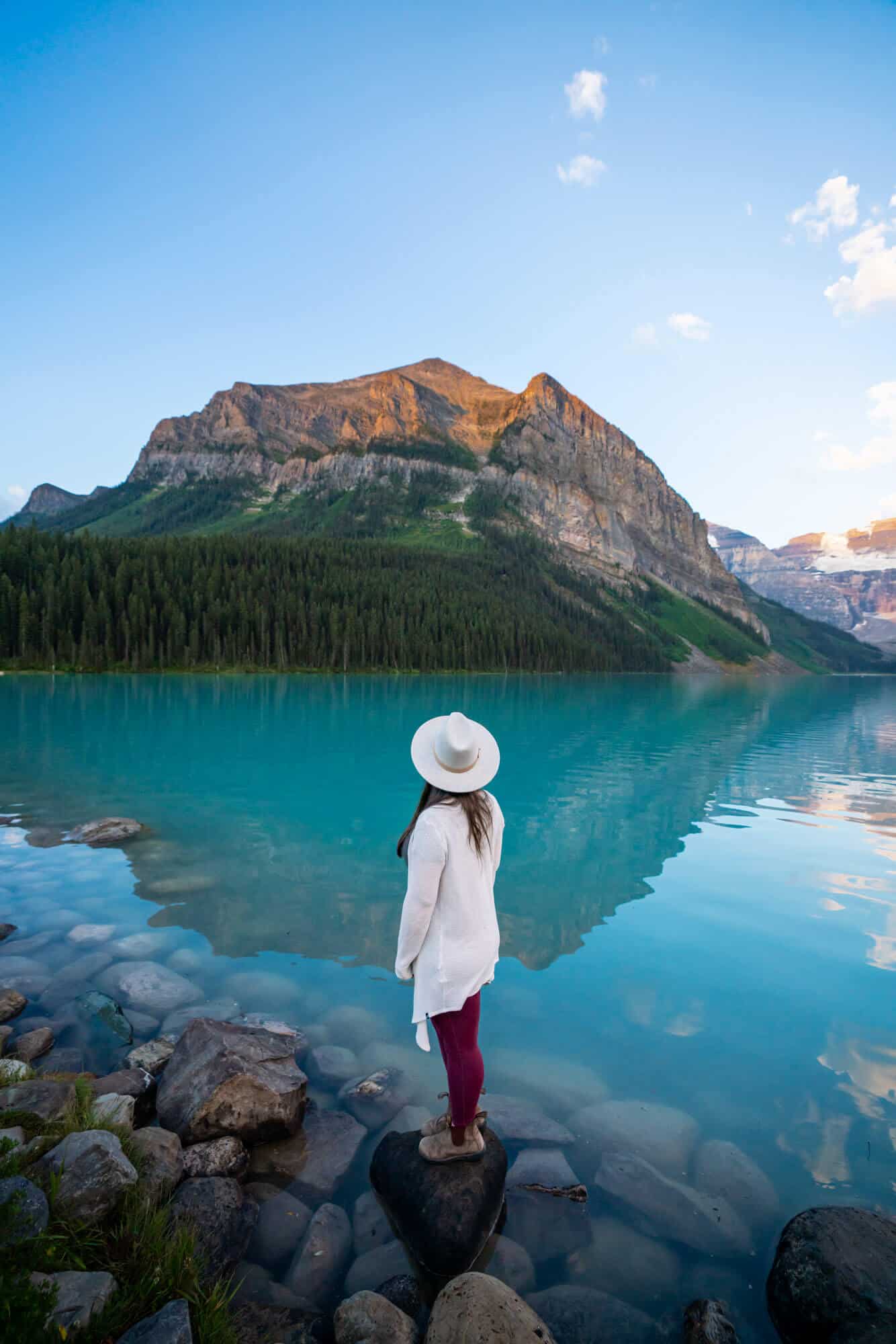
Lake Louise should absolutely be on your list of things to do in Banff! Watching the sunrise at Lake Louise is one of my top experiences in the Canadian Rockies. The 4am start might sound painful, but once you see the Victoria Glacier turn pink you won’t regret it!
Now that Moraine Lake is closed to private vehicles (more on that below) the sunrise at Lake Louise is now busier than ever. The great thing about Lake Louise however, is that is has such a wide lakeshore that you can stand just about anywhere and still get a great view.
My insider tip? Keep walking to the right hand side of the lake. Almost everyone congregates at the boardwalk near the parking lot.
Sunrise is pretty quick once it starts, find your spot, take some photos and get ready to head out on some hiking trails before the crowds start gathering!
Hike Big Beehive Or Little Beehive
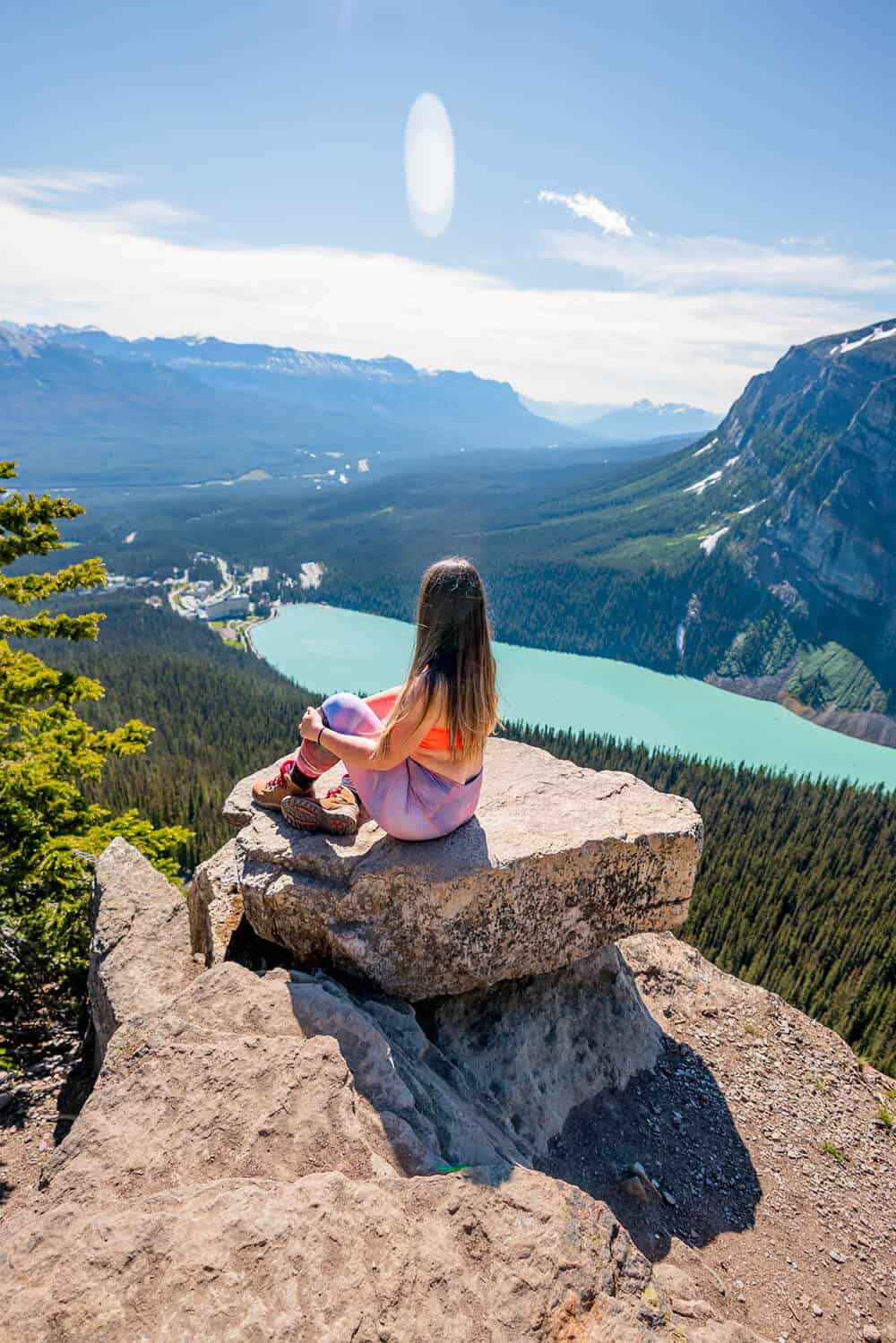
My favourite hikes in Banff and Lake Louise are the Big Beehive and Little Beehive. The views at the top are very similar (and equally stunning!), however Little Beehive is slightly easier. If you’re adventurous, you could hike both.
When hiking to the Big Beehive, you have no choice but to pass Lake Agnes Tea House. But on Little Beehive, there is a route that bypasses it.
I highly recommend stopping by on the way down from your hike for a bite to eat. Yes, the tea house gets busy, but I’ve never waited long to be served. I’ve always managed to find a table to sit and enjoy the views a while.
The teahouse has SO many teas on offer, the vanilla Earl Grey was quite good, as were the homemade tea cakes with Jam. Yum! If you’re not a tea drinker, they have a homemade lemonade that’s really refreshing on a hot day.

Canoe On Lake Louise
Unless you are a very quick hiker (not me!) you probably won’t have time to do a big hike and canoe on Lake Louise. It’s a hard decision for me as to what I would choose because I think canoeing on Lake Louise is THE thing you must-do in Banff. But it also costs $135… sooo if you want to save that $$$ and enjoy hiking I’d say skip the canoe.
But, if you’re not a hiker or have mobility issues (and don’t mind paying the price) go for canoeing! The canoes are rented out by the Fairmont and the boathouse typically opens around 8am, so get in line right after sunset if not hiking.
If you really want to do both, make sure to get a canoe at 8am or just thereafter and canoe for an hour. Then it’s still only 9am – so plenty of time for a hike! If short on time I recommend either the Lake Agnes Tea House only, or the Fairview Lookout.

Fairmont Chateau Lake Louise
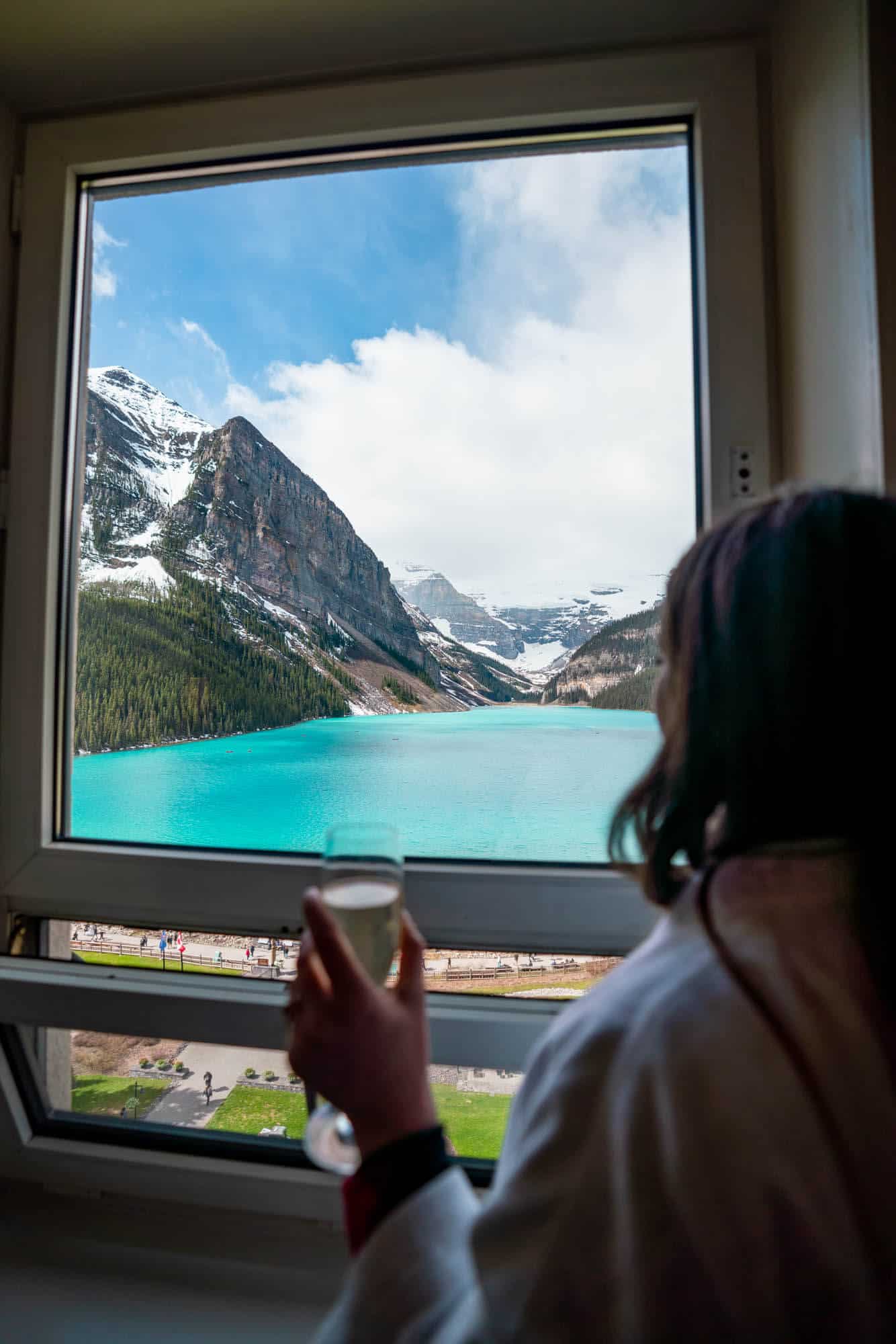
Although you can see the beautiful Fairmont Chateau Lake Louise from the shore, I like to explore its lobby area and gift shops when I’m in Lake Louise. This hotel is a stunner in every aspect.
If you want to splurge, a stay here is truly magical – you can check out my full review of the Fairmont Chateau Lake Louise for more information.
The Guides Pantry is open 24 hours to everyone and although on the pricier side, it is SO GOOD. As much as I dislike spending $8 on a coffee, this place is always the exception (coffee heaven!) and as I always mention – the croissants are to die for. If splurging for a special occasion, consider booking afternoon tea at the Fairmont Lake Louise.
At peak times the hotel will close the restaurants to non-guests and those without reservations (understandably) but sometimes they are open to day visitors too. I would not rely on getting lunch or dinner here though – just in case!
That’s why I recommend stopping at Samson’s Mall just by the entrance to the town of Lake Louise if you want a bite to eat.

Drive The Bow Valley Parkway
After a busy first half of the day, I recommend a quick shower and change of clothes (after having hiked all day!) and head out in the afternoon for a serene drive along the Bow Valley Parkway.
This parkway runs parallel to the highway but is much more scenic with opportunities for wildlife spotting. I often see people speeding along here (which baffles me because seriously just take the highway) but this is a road where you’ll want to slow down. It’s often very quiet in terms of vehicles too which is nice.
There are some stops on the parkway that I highly suggest stopping at. The first one is Morant’s Curve, a popular photography spot in Banff. This is where the Canadian Pacific Railway line runs along with the Bow Valley Parkway. There’s a designated parking area on the left hand side – you can’t miss it.

Johnston Canyon
After that, head to Johnston Canyon for a short hike to some beautiful waterfalls. Johnston Canyon is one of the best activities in Banff and gets relatively busy in the summer. The trail is relatively easy and well-maintained, making it accessible to most people.
There are two main waterfalls at Johnston Canyon – the Lower Falls and Upper Falls. The trail will take you to both, with the option of continuing on to the Ink Pots if you have time and energy.
It’s important to note that at certain times of the year the road to Johnston Canyon gets closed to cars, and only bikes can access it. Check ahead of your trip to see if and when there are any road closures.


Dinner in Banff or Lake Louise
If you did decide to book a hotel in Lake Louise for your last 2 days in Banff then I would have dinner in Lake Louise. My absolute favourite casual dining spot in Lake Louise is the Timberwolf located inside the Lake Louise Inn.
Both their wood fired pizzas and pasta are sooooo good! I have stopped here on every trip to Lake Louise and the quality of food and service is always amazing. In busy times they limit tables to guests only (another reason to stay here!).
Day 4 – Moraine Lake, Icefields Parkway
Day 4 of this Banff summer itinerary visits the iconic “Jewel of the Rockies” Moraine Lake! Today you will get your fill of gatorade coloured lakes, as well as mountain peaks and history.
Moraine Lake
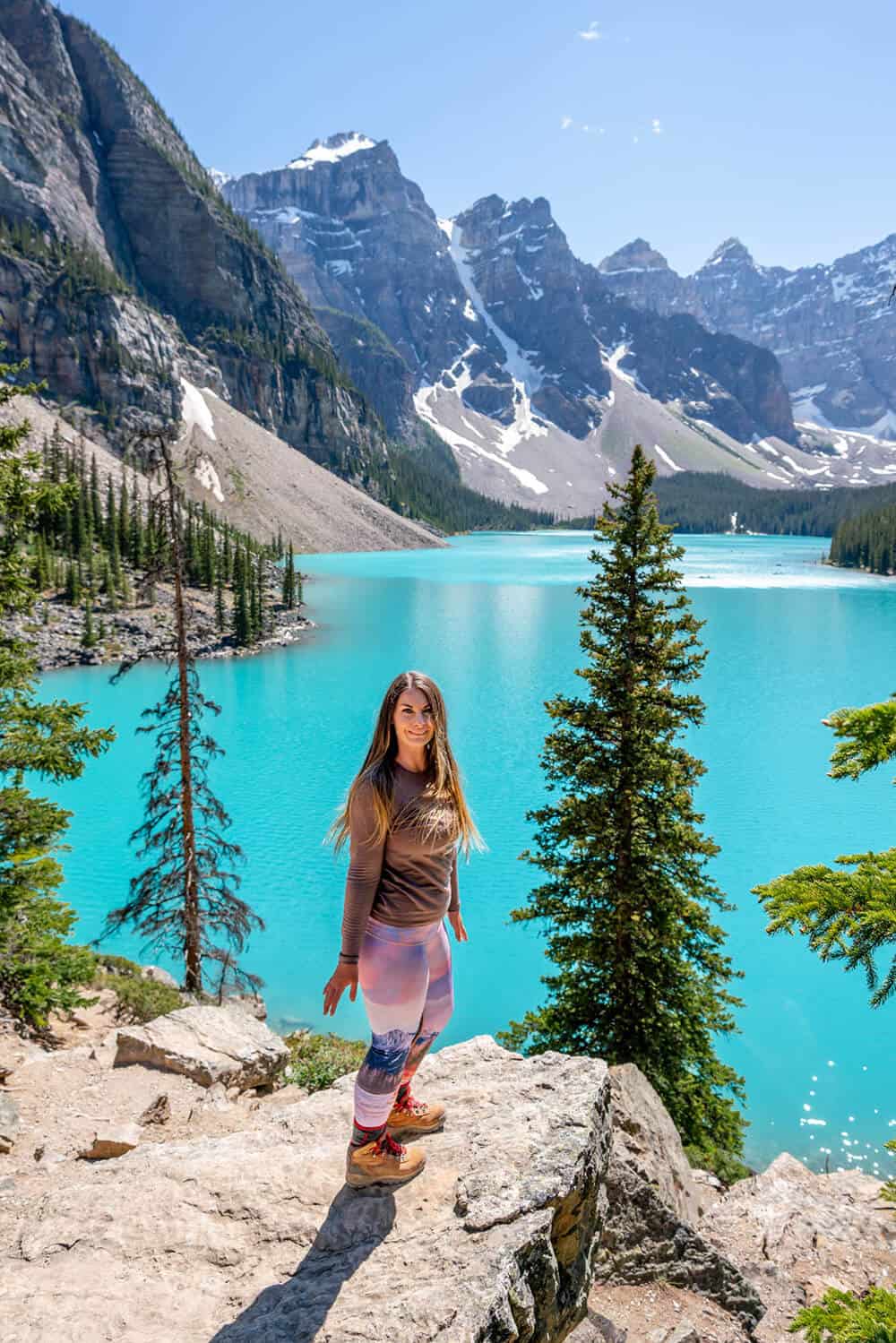

Moraine Lake undoubtedly tops my list of places to see in Banff. If you are planning on visiting Moraine Lake while in Banff (and you really should!) there are some important things you need to know.
First off, there have been recent changes at Moraine Lake as of 2023. Due to overcrowding and environmental concerns, the access road to Moraine Lake (the only access road) is now closed to personal vehicles.
This means if you want to see Moraine Lake you will have to book the Parks Canada shuttle, book a Roam transit bus or book a private tour.
Can you still visit Moraine Lake at sunrise? Yes! you can, but you’ll need to book a private tour through Moraine Lake Sunrise Shuttle. These tours start at $95 per person.
If you do not want to fork out the $$ for the sunrise you can visit by booking the Parks Canada Park ‘n’ ride, where you’ll park at the Lake Louise Ski Resort and then a shuttle will take you to Moraine Lake. These shuttles start running at around 6:30am and you can visit both Moraine Lake and Lake Louise – last shuttle back to the Park ‘n’ Ride is 7:30pm.
There is also the option of using the Roam Public Transit system, which is great if you are visiting Banff without a car.
You will need to purchase a Roam “super pass” which will give you access to the “Lake Connector” shuttle – this shuttle is only available to Super Pass holders and Park ‘n’ Ride reservation holders.
Whatever way you decide, I recommend getting to Moraine Lake as early in the day as you can. This is when the lake is at its prettiest! (and fewer crowds!)
Icefields Parkway
After your morning visit to Moraine Lake, grab breakfast to go (I recommend Trailhead Café), fill up on gas, and some snacks (lots of and lots of snacks trust me) as it’s time to head out onto the Icefields Parkway!
The Icefields Parkway is a total of 232km (144 miles) and goes from Lake Louise to Jasper. It takes around 3 hours one way without stops.
So for this itinerary we will only be going to about the halfway mark at the Columbia Icefields where Banff National Park and Jasper National Park meet.
I recommend taking your time on this drive as it is one of the most scenic drives in Canada (if not the world!). I have a full guide on all the best stops on the Icefields Parkway. The full drive can also be incorporated into a full Canadian Rockies road trip with a stop in Jasper.
Bow Lake
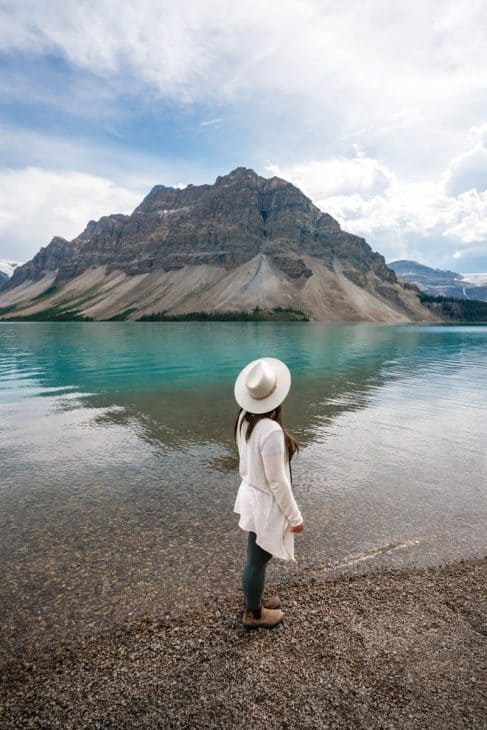
The first stop you should make on the Icefields Parkway is Bow Lake. Bow Lake is a spectacularly blue glacial fed lake. It’s easily accessible from the highway and there’s parking available, making it perfect for a quick stop on your drive.
The walk to the lakeshore is short and the area is relatively quiet early in the morning. The Lodge at Bow Lake (previously Num Ti Jah Lodge) also sits on the lake – if the café is open you can stop in for a coffee and snack.
Mistaya Canyon
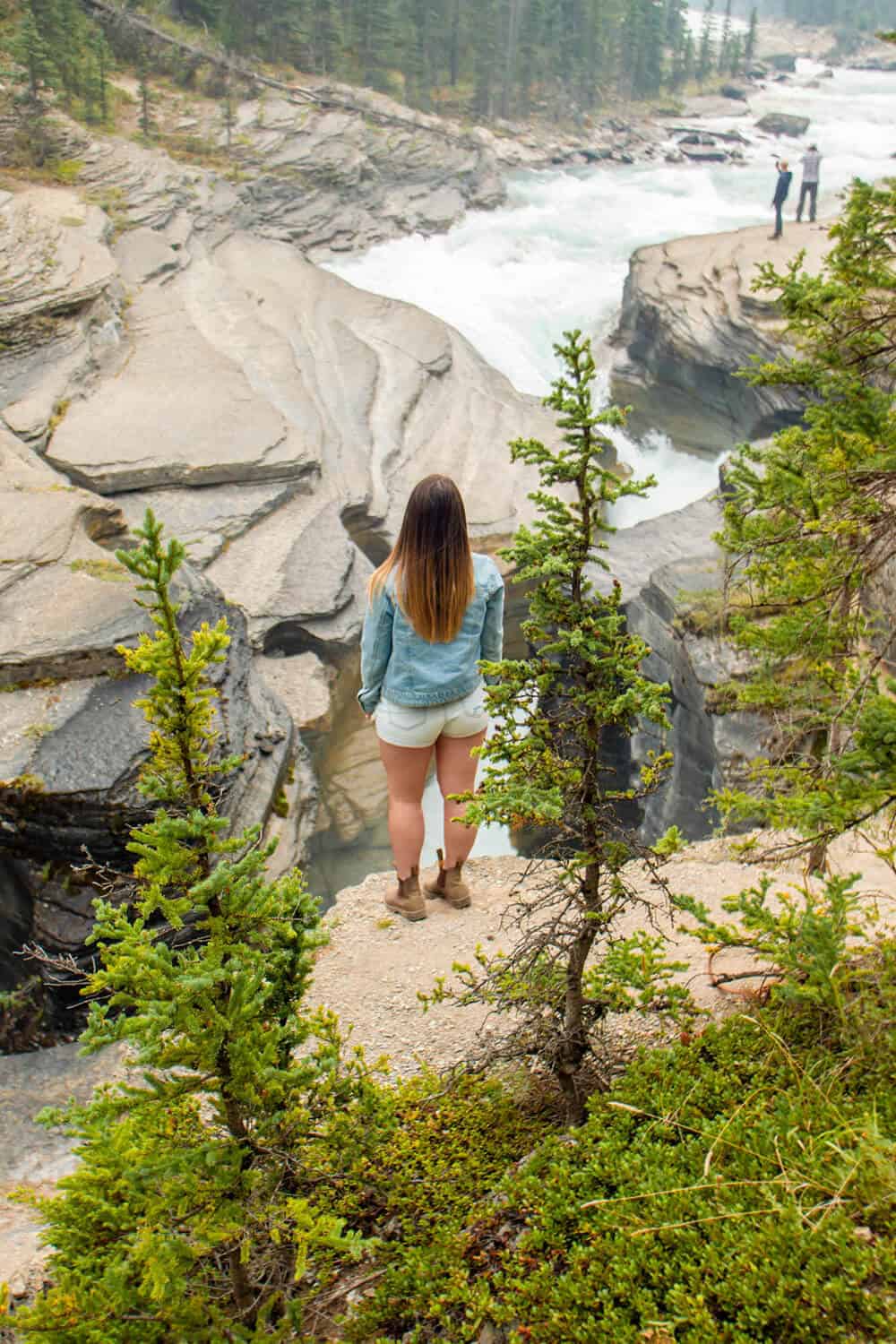
The next stop after Bow Lake is the mesmerizing Mistaya Canyon. This canyon has been carved over a long time by the Mistaya River, which flows from the Peyto Glacier.
The trail to Mistaya Canyon is relatively short, but somewhat steep and rocky. It’s a 0.5 km walk from the parking lot to the canyon’s viewing platform. Before you get to the canyon you will pass over a footbridge that lets you look down into the canyon to see the water rushing through it.
Misty Canyon is underrated stop in my opinion, I don’t see this area posted about as often as others. So definitely add it to your list of places to visit in Banff!

Peyto Lake
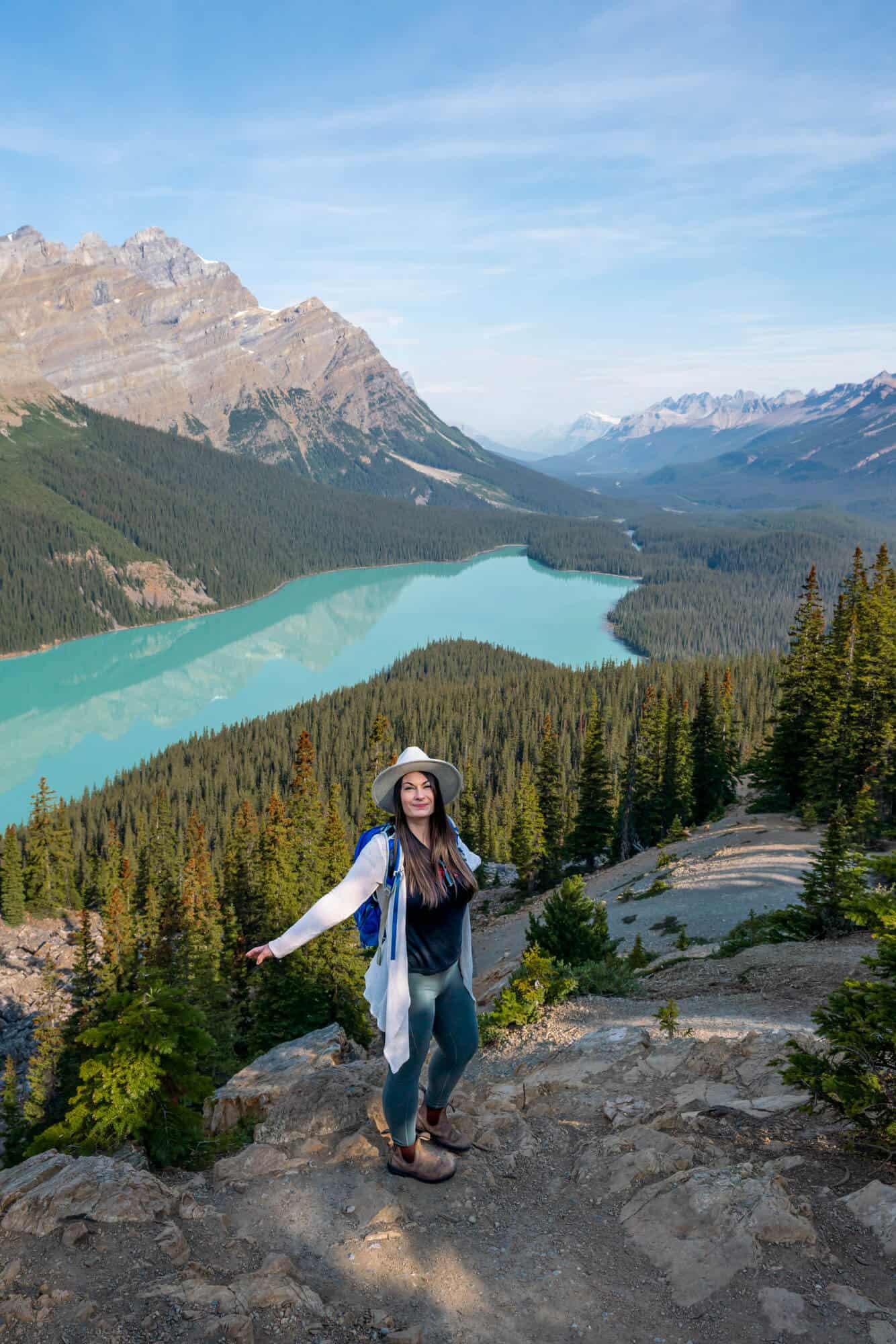
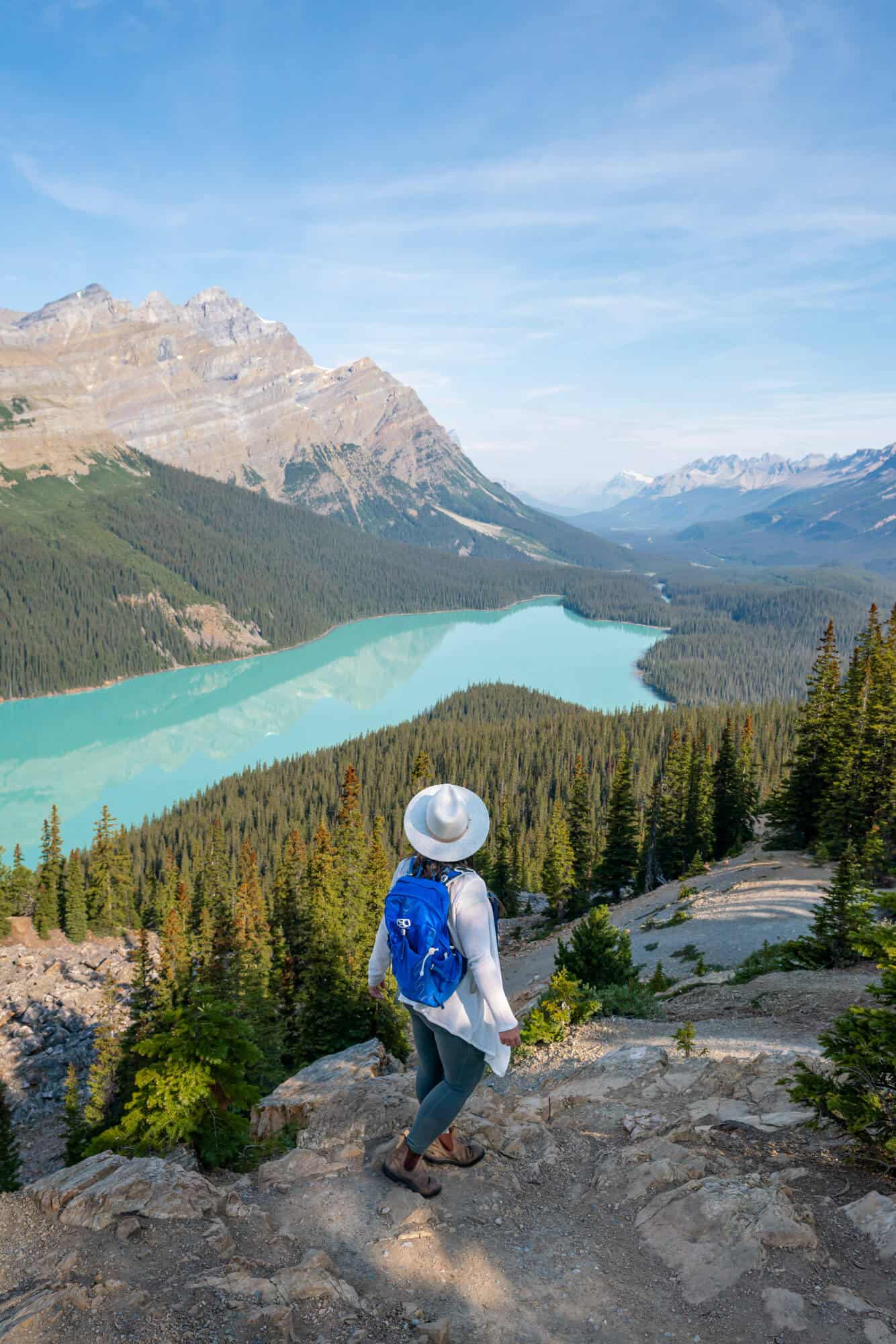
Next, continue driving along the Icefields Parkway until you reach Peyto Lake, one of the best things to see in Banff.
This lake is known for its unique shape, resembling a wolf’s head from above. The viewpoint for Peyto Lake is only a short hike from the parking lot and opens up to a vast panoramic view of the lake and mountains.
It’s possible to hike to the bottom of Peyto Lake but it is only recommended for really experienced hikers (even I have no desire to do it!) But I think viewing Peyto Lake from above is what makes it special and different to both Lake Louise and Moraine Lake.
Peyto Lake can get busy and tends to fill up with tour busses so I would try to get here as early as you can.
Waterfowl Lakes
If you hadn’t gotten your fill of Gatorade coloured lakes yet, there’s more! The Waterfowl Lakes are a series of Lakes flanked by the majestic Mount Chephren. The lakes are a top spot for camping or just stopping by for a picnic on the shore.
It’s easy to miss Waterfowl Lakes as the lake closest to the highway only really comes into view after you’ve driven too far – that’s why I recommend the Gypsy app!
There two ways to see the Waterfowl Lakes, you can pull in the campsite and park at the day lot area and then walk in or you can stop on the side of the road. The first option does take up more time, but you can extend your visit by seeing all the lakes.
The second option is to pull in to the rest area by the shore of the lake. Just use caution when doing this as there is no official “left turn” here and you cannot stop on the highway. Alternatively keep driving and then find somewhere to turn around and come back.


The Big Bend
The Big Bend is one of my favourite spots in the Icefields Parkway, probably because I find the name funny. The name may not be elaborate but it does explain this part of the road perfectly – it’s a big bend in the road.
You will know the Big Bend when you reach it – you will encounter a big bend/turn in the road before gaining some elevation.
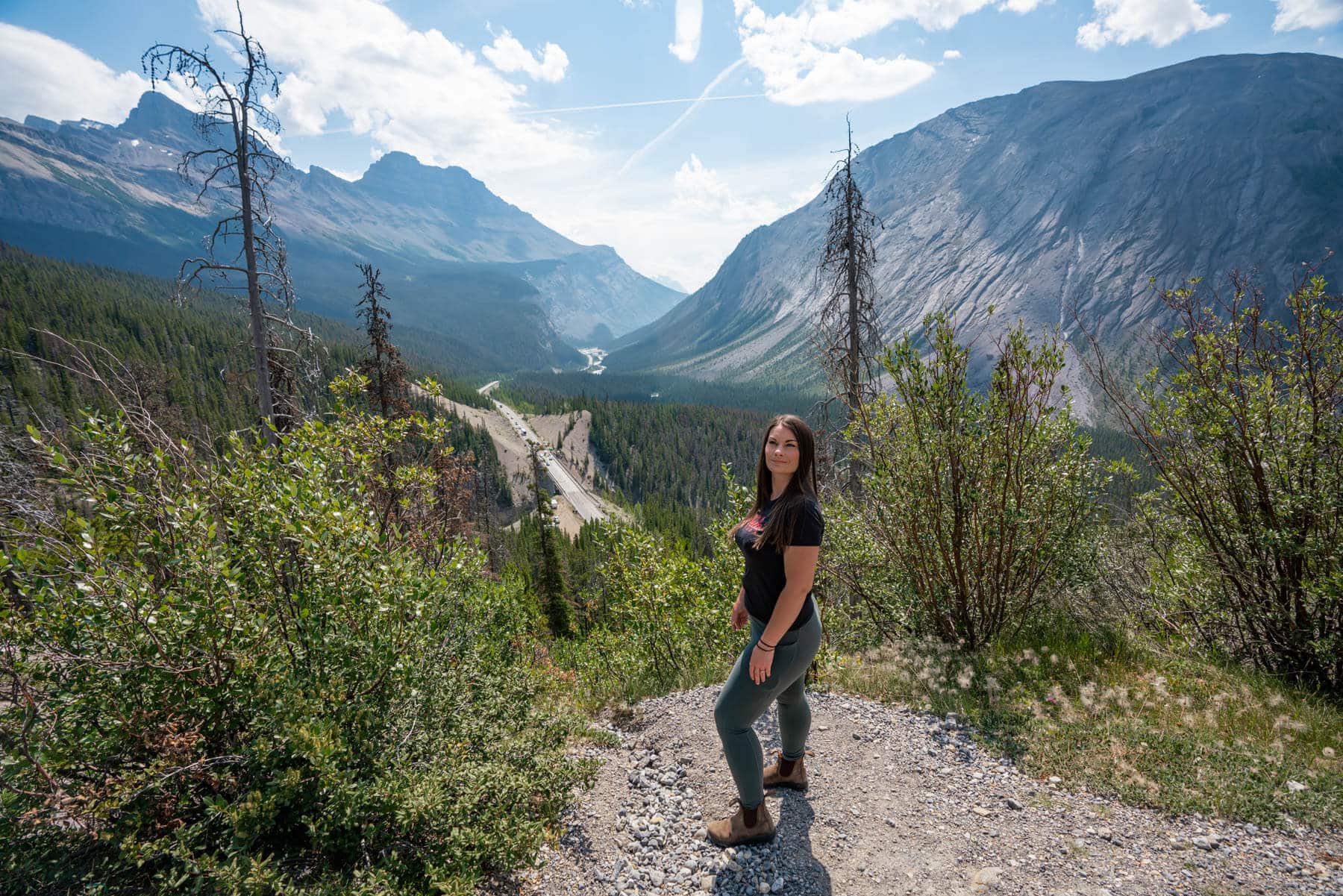
When you get to the end of the Big Bend, there will be a pull out on your right hand side. You may see some tour busses and cars pulled over. This isn’t just a rest stop – it’s a lookout!
Pull over and take a moment to stretch your legs while taking in one of the most iconic views along the Icefields Parkway. This view features the very bend you just drove through but from a high vantage point that really puts into perspective just how big the mountains surrounding you really are.
Columbia Icefields
The next stop of this Banff 4 day itinerary is the famous Columbia Icefields, the largest icefield south of arctic. The icefield stretches over 325 square kilometres and reaches depths of up to 365 metres.
It’s also the source of multiple glaciers, including the famous Athabasca Glacier, the most visited glacier in North America.
One of the coolest facts I learned the first time I visited the Columbia Icefields is that the Snow Dome glacier feeds three different oceans: the Arctic Ocean, Pacific Ocean and Atlantic Ocean. This is known as the Continental Divide – isn’t that fascinating?
You can also take an Ice Explorer tour onto the Athabasca Glacier. These massive vehicles are specially designed to drive on glaciers and provide an up-close and personal experience on the icefield.
At the Columbia Icefields Discovery Centre, you can learn about this incredible natural wonder through interactive exhibits and displays. You can also get food here, but it is VERY expensive (hence the suggestion to bring lots of snacks!)

Tangle Creek Falls
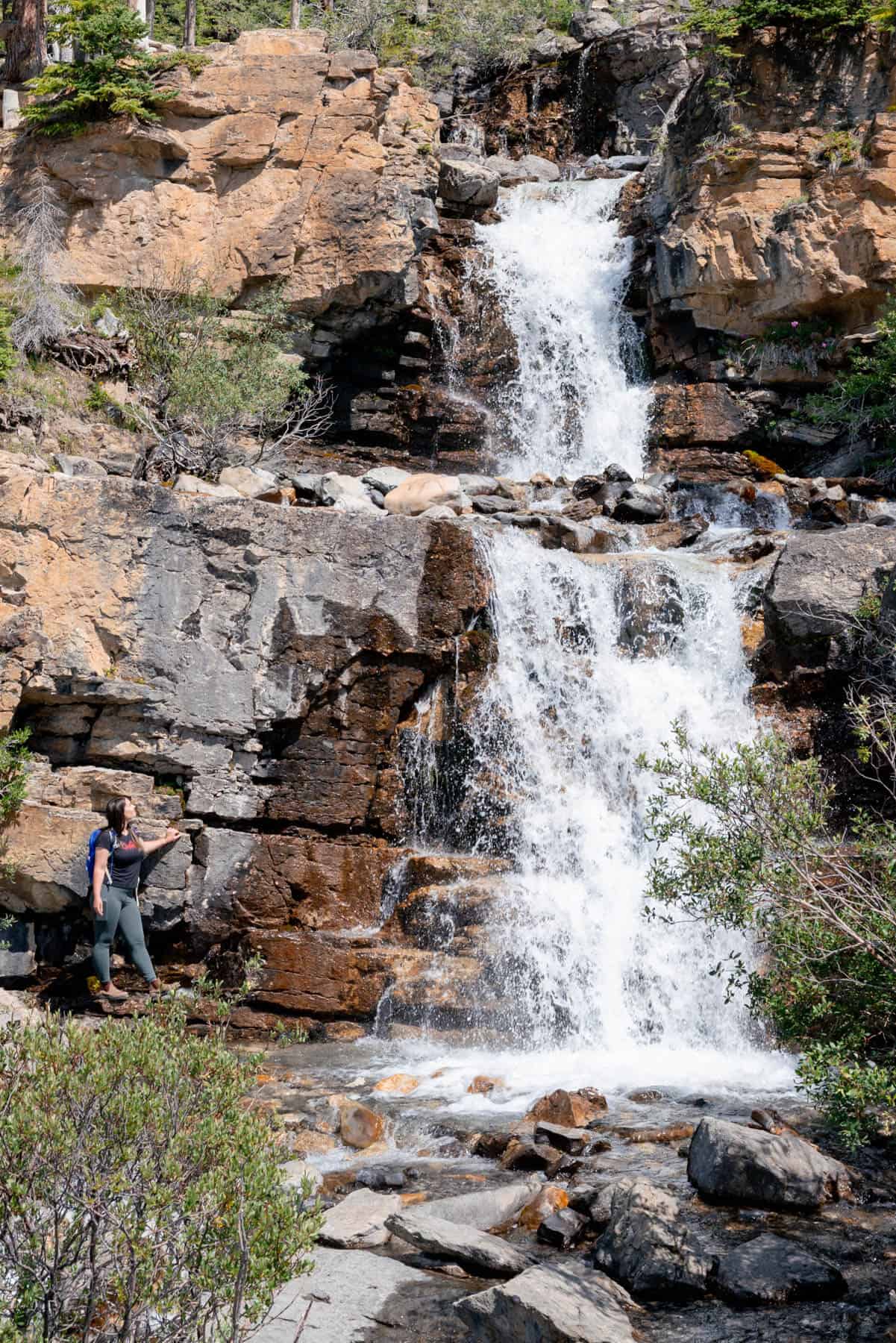
If you want to check out one last attraction on the Icefields Parkway, Tangle Creek Falls is a short drive just past the Skywalk.
I think this is a pretty neat waterfall to visit – it cascades down several levels and you can hike up to the higher section too. There is a small parking lot on the left hand side and a crosswalk allowing you to get to the waterfall on the other side of the road.
We spend probably 10-15 minutes here. But if you want you can skip it and head back to Banff. Make sure you keep an eye out on the way back for any wildlife!

Dinner At Lake Louise Station
End your four days in Banff National Park with a meal to remember. The Lake Louise Station is one of the best places to eat in Banff and a favourite of mine.
Located inside the old Lake Louise Station, this restaurant serves up delicious Canadian cuisine in a cozy and historic setting. The menu features locally sourced ingredients and classic dishes with a modern twist.
The Bison short ribs are AMAZING – if you order anything, make sure its this!
I loved the setting of this restaurant. They have old photographs of the Chateau Lake Louise is its various stages throughout history, it gave me “Overlook Hotel” vibes (iykyk)
While we were waiting for our food we wandered the grounds of the station including an old steam train that is on display. We even got to see the famous Rocky Mountaineer pull up!
The Lake Louise Station only operates certain days of the week and has a short opening period. Check ahead of time to see if it is open during your visit to Banff.
How Many Days In Banff
How many days should you spend in Banff? There is so much to see and do in Banff and you will probably find even more things you’d like to see or do once you arrive. There are views in every corner of this National Park and you’ll want to soak in those views for as long as you can.
In my opinion, 4 days in Banff is the minimum I would spend here, especially as a first time visitor. If you can spend longer here, definitely do! There are an abundance of amazing hikes and Banff is a photographers dream. During my recent trip to the rockies I spent a total of 4 days in Banff town and 2 days in Lake Louise and I still felt that was a short trip.
How To Get To Banff
Flying To Banff
The easiest way to get to Banff is to fly into Calgary and then either rent a car or take a shuttle bus. Calgary International Airport is the biggest airport in Alberta and a 1.5 hour drive from Banff Town. Airlines serviced by Calgary International Airport include Air Canada, Delta, American Airlines and Westjet.
If opting to take the shuttle from Calgary to Banff, the best options are Airport Shuttle Express, Banff Airporter and Brewster Express.
Drive
From Calgary: If you’re already in Calgary or driving from the airport, the journey time to Banff with no stops is approximately 1 hour and 30 minutes. From Calgary take the Highway 1 West, staying on highway one for approximately 115km and turn off once you see signs for Banff/Banff Avenue.
From Edmonton: The journey time from Edmonton to Banff is approximately 4 hours. From Edmonton, pick up the Highway 2 South until you see signs for Calgary. Just before reaching Calgary, take exit 271 and merge onto the Highway 201 West. Continue for 22 kilometres then take exit 36 and merge onto Highway 1. Continue until you see signs for Banff and Banff Avenue.
From Vancouver
There are several routes from Vancouver to Banff that you can take, depending on if you are driving straight there and want the quickest route or you are extending your trip into a road trip.
Route Option 1: Approximate journey time: 10-12 hours. This is the most direct and quickest route from Vancouver to Banff. Pick up Highway 1 East from Vancouver and keep going until you reach Hope. Merge onto the Highway BC-5 N for 302 kilometres until you reach Kamloops, then pick up the Highway 1 East again. Stay on the Highway 1 for the rest of the journey through Golden. After you cross the border Banff Town is around a 50-minute drive.
Route Option 2: This route is similar to route 1 but goes via Kelowna and Manning Park. Use this route is you are doing a road trip over several days and want to explore some more of BC.
Route Option 3: This route is the longest but hits up some of BC’s best attractions and tourist towns such as Whistler and Revelstoke. For this route you’ll head north on the Highway 99 (Sea to Sky Highway) and can stop in Whistler for a few days before continuing onto Lillooet, Kamloops, Sicamous and Revelstoke.
Where To Stay In Banff
Lodging in Banff doesn’t come cheap but the town does offer a variety of hotels for a variety of budgets and needs. One of the things I really liked about Banff town was how pedestrian friendly it was. It’s so easy to walk around Banff Avenue and surrounding areas. I would recommend staying along Banff Avenue or close by as you’ll have the option to walk into town without having to worry about parking and it’s also an easy walk to the main bus stops.
Hostel: HI Banff
One of the best budget options in Banff is the HI Banff Alpine Centre. There are numerous options here from mixed dorms to private rooms. Although prices are a little high for a hostel, you’ll find high prices across Banff lodging options in general. The HI Banff is a bit further out from the main section of Banff Avenue so you may have to take a bus or taxi. The other option is to walk but this would take 20-30 minutes one way.
Budget: Irwin’s Mountain Lodge
I stayed at Irwin’s Mountain Lodge during my time in Banff and I was really happy with my stay here. The hotel sits on Banff Avenue and is a little bit out from the main throng of the main street, which is great because this area is a little quieter at night. The rooms were really spacious and clean with all the amenities you could need including shampoo, hand wash and lotion from locals brands.
The underground parking here does have a height limit which is pretty low for trucks or big SUV’s. There is oversized vehicle parking around the back of the hotel but spaces are limited. Some nights we would return to the hotel and notice that the tiniest cars had parked back here when they would have easily fit in the underground parking. So even though it is reserved for oversize, don’t expect to be guaranteed a space.
Moderate: Fox Hotel & Suites
The Fox Hotel & Suites is one of the best moderate hotels in Banff and perfect for your 4 days in Banff. The Fox Hotel has a fantastic location and is situated along the same stretch as Irwin’s Mountain Lodge. Most restaurants, bars and shops are within a 15-minute walking distance. Amenities include a fitness room, onsite laundry, complimentary parking, continental breakfast included in room-rate, wifi. complimentary roam bus passes and a hotel pool themed to the Cave & Basin.
Luxury: Banff Springs Hotel
If you are wanting the best of the best in Banff then the Fairmont Banff Springs Hotel is for you. The Banff Springs Hotel is one of the most iconic hotels in Canada. This hotel is almost as old as the National Park itself, opening in 1888. It is known as the castle in the rockies due to its old style architecture and was one of the original Canadian Pacific Railway hotels. It was opened to encourage tourism to the area and continues to do so to this day. It is now owned by the Fairmont Hotels brand. A night in this hotel in the height of summer will set you back approximately $800 CAD per night.
Important Things To Know Before Visiting Banff
Come prepared for rain and cold temperatures
It’s summer in the mountains, that means it’s going to be warm right? Not necessarily. It may not feel like it but Banff National Park sits at an elevation of 1383 metres and weather in the mountains can change drastically at a moments notice. You may experience sun, wind, rain and clouds all within a few days. Come prepared with a rain coat and umbrella.
Be prepared for hiking
Even the smallest hikes in Banff requires some sort of planning. Always remember to bring your ten hiking essentials even on the easiest trails and conditions can change rapidly and sometimes you can underestimate the difficulty of certain trails. Good hiking boots, a comfy backpack and hiking poles are just a few of my hiking must-haves.
Be prepared for early mornings
A trip to Banff is a once in a lifetime experience. Getting up early and making the most of each day is the best way to see Banff. In the high season it gets very busy so early mornings are the best way to get ahead of the crowds. You’ll be amazed at how much you can get done before many people even start their day.
Explore More of the Canadian Rockies
Want to explore the best of the Canadian Rockies? Check out these other detailed travel guides to help you explore!
Canadian Rockies Travel Guides:
Click A Pin Below To Save For Later!



![Best Things To Do In Squamish, BC [2025]](https://acitygirloutside.com/wp-content/uploads/2021/04/Squamish-Post-Cover-Photo-New-768x512.jpg)
![Cheap Eats Whistler: 32 Best Budget Restaurants [2025]](https://acitygirloutside.com/wp-content/uploads/2023/11/cheap-eats-whistler-768x512.jpg)
