Yosemite Or Banff – Which National Park For Your Next Trip?
So you’re deciding whether to spend your next vacation in Yosemite or Banff? I don’t blame you! Both of these world-class national parks should be on everyone’s bucket list.
Visiting either is a great choice – I have spent a fair bit of time in both of these national parks, and they are equally impressive, but for very different reasons.
Banff and Yosemite have many differences and really cannot be compared, so choosing one over the other can be quite the dilemma. However, there are a few factors that can help you decide which one to visit depending on your interests and preferences.
In this article, I’ll compare and contrast these two iconic national parks to help you decide which one is best for your next trip!
A City Girl Outside contains affiliate links. If you decide to make a purchase through these links, I will earn a commission at no extra cost to you. Thanks for reading!
Essential Links For Planing Your Trip
✔️ Getting Around: The best way to Yosemite and Banff National Parks is by renting a car. You can search for rental cars on Discover Cars.
✔️ Recommended Experiences in Yosemite:
✔️ Recommended Experiences in Banff:
✔️ Best Hotels in Yosemite:
✔️ Best Hotels in Banff:
Yosemite Or Banff – Comparison Overview
| Feature | Yosemite NP | Banff NP |
|---|---|---|
| Location | California, United States | Alberta, Canada |
| Size | 750,000 acres | 1.6million acres |
| Best Hike | Mist Trail or Taft Point | Big or Little Beehive |
| Best Place to Stay | Rush Creek Lodge at Yosemite | Banff Park Lodge |
| Which is better for Public Transit? | ❌ | ✅ |
| Nearest International Airport | San Fransisco International (SFO) | Calgary International Airport (YYC) |
| Best Lookout Point | Moraine Lake Rock Pile | Glacier Point |
Location & Accessibility
Let’s start with location – Yosemite is located in California, while Banff is located in Alberta, Canada. So right there, you have a major difference – they are in different countries!
Initially, you’ll want to think about the logistics of getting to both parks – are you already in California? The United States? Canada? Will you be driving or flying?
Both parks are easily accessible by car but getting to Yosemite requires a bit more planning as it’s further away from major cities. Also, some areas of Yosemite may require reservations and permits, especially during peak season.
On the other hand, Banff is more centrally located and can be easily accessed from nearby towns with a variety of transportation options.
The below section lists these difference in more detail, including exact locations of both parks, what the closest airports are, and how to get there.
Where is Yosemite National Park?
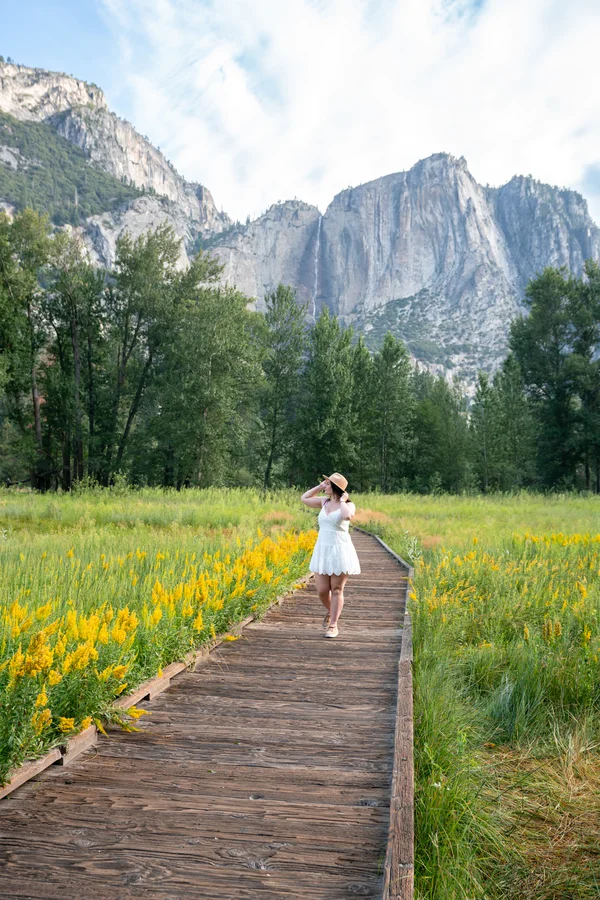
Yosemite National Park is located in the Sierra Nevada mountain range of California, approximately 170 miles east of San Francisco and around 200 miles west of Reno, Nevada. The park spans over 750,000 acres, showcasing a diverse landscape of granite cliffs, waterfalls, meadows, and ancient giant sequoias.

Where is Banff National Park?
Banff National Park is located in the Canadian Rocky Mountains, approximately 80 miles west of Calgary, Alberta. Founded in 1885, it is Canada’s first national park and spans over 2,500 square miles of stunning alpine scenery, including snow-capped mountains, dense forests, and turquoise glacial lakes.
How to get to Yosemite National Park?
Getting to Yosemite National Park can be done in several ways depending on where you’re coming from. If you’re flying, the nearest major airport is Fresno Yosemite International Airport (FAT), which is about an hour and a half drive to the park.
If you’re coming from international locations, you can also fly into San Francisco International Airport (SFO) or Sacramento International Airport (SMF), both around four hours away by car.
If you are already in the USA and prefer to drive, Yosemite is accessible from several major highways. The most common route comes from Highway 120, which leads directly to the park. Make sure to check weather and road conditions, especially in winter, as they can affect accessibility.
💡 Top Tip! The best entrances to Yosemite National Park are Big Oak Flat, and Arch Rock.
How To Get To Banff National Park
Getting to Banff National Park is quite straightforward whether you’re traveling by car or flying. The nearest major airport is Calgary International Airport (YYC), located about 90 minutes and 143km away from Banff by car.
If you are coming from the U.S. or other international locations, you can fly directly into Calgary International Airport. It serves as a hub for both domestic and international flights.
If you’re already in Canada, and want to drive, Banff National Park is accessible from several major highways. The most common route comes from the Trans-Canada Highway (Highway 1) that leads directly to the park.
You will take the Highway 1 whether driving the route from Whistler to Banff, or Revelstoke to Banff. If coming from Vancouver to Banff, you will take BC Highway 5, before picking up the Trans-Canada Highway.
If you are driving from the USA, you will need to cross the border at either the Coutts (Sweetgrass) port of entry in Alberta or Roosville port of entry in British Columbia.

Is Yosemite or Banff Bigger?
Banff National Park is significantly larger than Yosemite National Park. Banff encompasses approximately 1.6 million acres, making it one of the largest national parks in North America. In contrast, Yosemite spans around 750,000 acres, this means that Banff is about twice the size of Yosemite. Both parks are beautiful, but if you’re looking for vast wilderness and diverse ecosystems, you might prefer the larger size of Banff.
What is Yosemite known for?
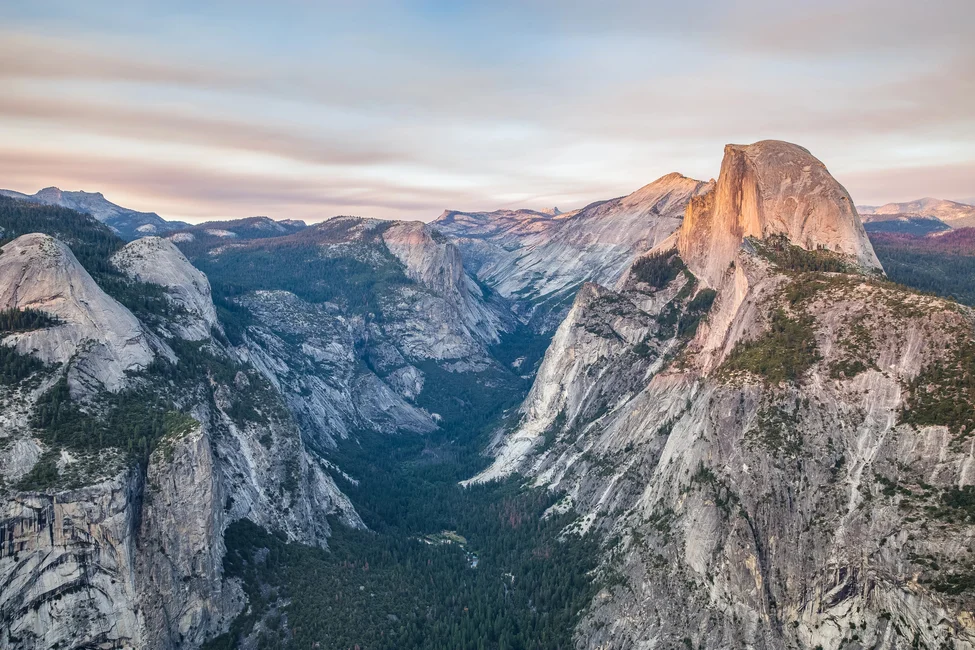
Yosemite National Park is renowned for its striking natural beauty and ecological features. One of its most famous characteristics is its monumental granite cliffs, particularly El Capitan and Half Dome, which attract climbers and photographers from around the world.
The park is also known for its breathtaking waterfalls, including Yosemite Falls, the tallest in North America. Another notable feature is its giant sequoia trees, some of which are over 3000 years old.
What is Banff National Park known for?
Banff National Park is famous for its mountainous landscapes and glacial lakes. One of the park’s most iconic features is Lake Louise, recognizable for its turquoise waters, making it a popular spot for photography and canoeing.
Another iconic sight is Moraine Lake, often regarded as one of the most beautiful lakes in the world, thanks to its mesmerizing blue hue and dramatic mountain scenery. Banff is also known for its wildlife, including elk, grizzly bears, and mountain goats.
Reservations & Permits
Yosemite
Yosemite has four major entry points to the park – during peak hours, a ranger will be at the booth to check you have a parks pass and a reservation (if visiting during peak hours). If you did not purchase a pass online in advance, you can purchase one at the entry gate – they only accept credit cards.
There are several types of pass you can purchase:
- Private Vehicle Pass: ($35 USD) Allows entry for a private, non-commercial vehicle and its occupants (up to 15 people) into the park. Valid for up to three days. ($30USD for motorcycles)
- Annual Pass: ($70 USD) Unlimited access to Yosemite for one year from the date of purchase.
- America The Beautiful Pass: ($80 USD) Granting entrance to all national parks in the United States for one year.
- Per Person Pass: ($20 USD) Allows entry for one individual without a vehicle, including those entering by foot or bicycle (anyone under 15 years is free)
Reservations – This is new for Yosemite as of 2024 (no reservations were required in 2023). You must have this pass in addition to a parks pass fee if you are entering the park during peak hours. The reservation system is to help manage the amount of visitors inside the park. If you do not have a reservation, you will be turned away at the gate.
Below are the hours and times of year, that you will need to book a reservation for:
- April 13 through June 30: A reservation is required from 5 am to 4 pm on Saturdays, Sundays, and on holidays (May 27 and June 19).
- July 1 through August 16: A reservation is required from 5 am to 4 pm every day.
- August 17 through October 27: A reservation is required from 5 am to 4 pm on Saturdays, Sundays, and holidays (September 2 and October 14).
A vehicle reservation is good for 3 days and costs $2 per reservation. You can reserve your spot through this link.
Half Dome Permits: If you plan to hike Half Dome, you must obtain a permit in advance through a lottery system. Only 300 people are permitted to hike Half Dome per day. There is a preseason lottery that typically happens in March, and then a daily lottery depending on any cancellations or no shows. You can apply for the lottery through this link.
Camping Reservations: If you plan on camping inside the park, reservations are needed for all campgrounds during peak season (Mid-April through October). From November to April, Camp 4 is the only campground that operates on a first-come, first-served basis. You can book your reservation online or by calling (877)444-6777.
❗️Important: Reservations are required to enter Yosemite from April through to October
Banff
Similar to Yosemite, Banff National Park requires visitors to have an entry pass when entering the park. However, there is no reservation system currently in place.
There are no “entry booths” like there are at Yosemite. You can purchase your pass in advance online, or stop at one of the visitor centres before, or when you get there.
There are two types of passes you can purchase for Banff National Park:
- Day Pass: This pass is valid for one day and allows entry to all national parks in Canada, including Banff. It costs $11 CAD per person or $22 CAD per family (up to seven people traveling together).
- Discovery Pass: This pass grants unlimited access to over 80 national parks and historic sites in Canada for one year. It costs $75.25 CAD per person or $151.25 CAD per family/group (up to seven people traveling
I always purchase an annual Discovery Pass, which you can either purchase online in advance and have it mailed, or you can buy it in person. I usually stop in at the Visitor Centre in Golden to buy mine. You can purchase online through the Parks Canada website here.
Unlike Yosemite, Banff National Park does not require timed entry, or a reservation to enter, during peak times. However, there are some areas that require more planning, such as Moraine Lake.
In 2023, Parks Canada closed Moraine Lake Road to private vehicles, which means you can no longer drive directly to the lake.
To access Moraine Lake, there is a shuttle service that operates from mid-May to mid-October. The shuttle runs every 20 minutes from the Park & Ride at the Ski Lake Louise parking lot, and costs $8 CAD per person round-trip. These get booked FAST – you can reserve through the Parks Canada website here.
Alternatively, you can book a tour, especially if you want to see Moraine Lake at sunrise. This tour includes round-trip transportation from Banff, with a stop at Moraine Lake for sunrise, and then a second stop at Lake Louise. A warm beverage is included to keep you warm while you watch the peaks turn orange! You can book online in advance here.
Camping Reservations: Similar to Yosemite, reservations are required for all campgrounds within Banff National Park during peak season (May through September). You can make your reservation online or by calling (877)737-3783.
Weather & Climate
Another factor to consider is climate – Yosemite has relatively mild temperatures year-round, with warm summers and cool winters. Banff, on the other hand, experiences extreme temperature fluctuations throughout the year due to its location in the Rocky Mountains.
I have visited Yosemite both in the snow ,and during the height of summer. The park was absolutely stunning with a blanket of snow, however this means many roads get closed in winter. In August temperatures were reaching almost 30°c (86°f) and this felt much hotter as there was little breeze in the valley.
Yosemite also experiences thunderstorms in the summer, which can bring heavy rain and lightning. One thing I did notice in Yosemite, it that during the summer it is hot at night also. I was very surprised when it was super warm on my a 4am sunrise hike!
In Banff, summer temperatures usually average around 20°c (68°F), but can reach highs of 35°C (86°F) and higher. Winters are much colder with temperatures averaging -10°C (14°F) and dipping as low as -40°C (-40°F).
I visited Banff in August one year, and temperatures were very mild with cloudy conditions. However a few days later it was REALLY hot! The climate in the Rocky Mountains is very unpredictable and can change at a moments notice.

Hiking in Yosemite Vs Banff
Hiking is one of the top activities when visiting Yosemite and Banff. I’ve hiked in both Yosemite and Banff, and both parks have some truly breathtaking trails.
My experience of hiking in Yosemite, is that it’s a park that’s geared more towards experienced hikers, and not so much beginners. A lot of the hikes are on the harder side, however there are a few trails that are great for beginners and intermediate hikers.
On the other hand Banff has a bigger variety of hikes, from beginner and family-friendly, to overnight backpacking trips. I personally preferred the hikes in Banff because if you are new to hiking, you can still get to some of the best viewpoints without much experience.
Below are some of the best hikes in both parks, including some of my personal favourites.
Best Hikes in Yosemite
Mist Trail to Vernal and Nevada Falls: This popular trail offers spectacular views of two majestic waterfalls, Vernal Falls and Nevada Falls, with a steep ascent providing a rewarding experience for those willing to challenge themselves.
- Difficulty: Moderate
- Length: 10.3km (6.4 miles)
- Elevation: 673 metres (2208 ft)
- Round-Trip Time: 4-6 hours
Half Dome via Little Yosemite Valley: This challenging hike takes you to the iconic Half Dome. This hike is NOT for beginners, and should only be attempted by experienced hikers. A permit is required for this hike due to its popularity and difficulty.
- Difficulty: Strenuous
- Length: 11.1km (6.9 miles)
- Elevation: 813 metres (2667 ft)
- Round-Trip Time: 5-7 hours
Upper Yosemite Falls Trail: This challenging hike ascends to the top of Yosemite Falls, offering breathtaking views along the way. It’s perfect for experienced hikers looking for a rigorous workout.
- Difficulty: Strenuous
- Length: 10.6km (6.5 miles)
- Elevation: 992metres (3254 ft)
- Round-Trip Time: 5-7 hours
Artist Point Trail: The artist point trail is a lesser-known hike in Yosemite National Park. It leads to a lookout point very similar to that of Tunnel View, I did this at sunrise on my most recent visit. The trailhead can be found just behind the Tunnel View lookout.
- Difficulty: Easy to Moderate
- Length: 3.2km (2 miles)
- Elevation: 232metres (761 ft)
- Round-Trip Time: 1 hr 22 minutes
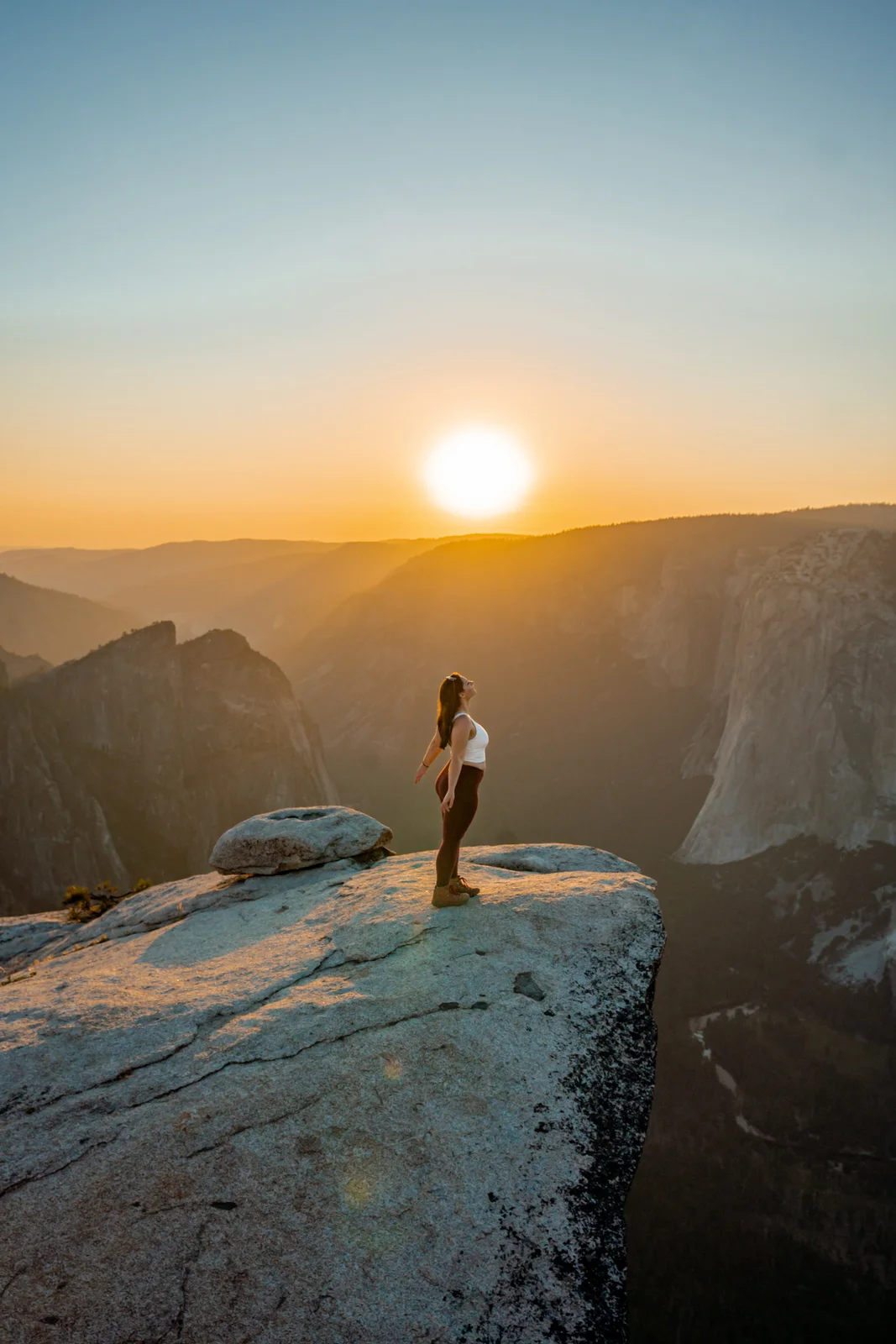
Taft Point and The Fissures: Taft Point is a short but popular hike in Yosemite – I absolutely loved this hike at sunset, it tops my list of things to do in Yosemite.
- Difficulty: Easy
- Length: 3.7 km (2.3 miles)
- Elevation: 108metres (354 ft)
- Round-Trip Time: 3-5 hours
Best Hikes in Banff
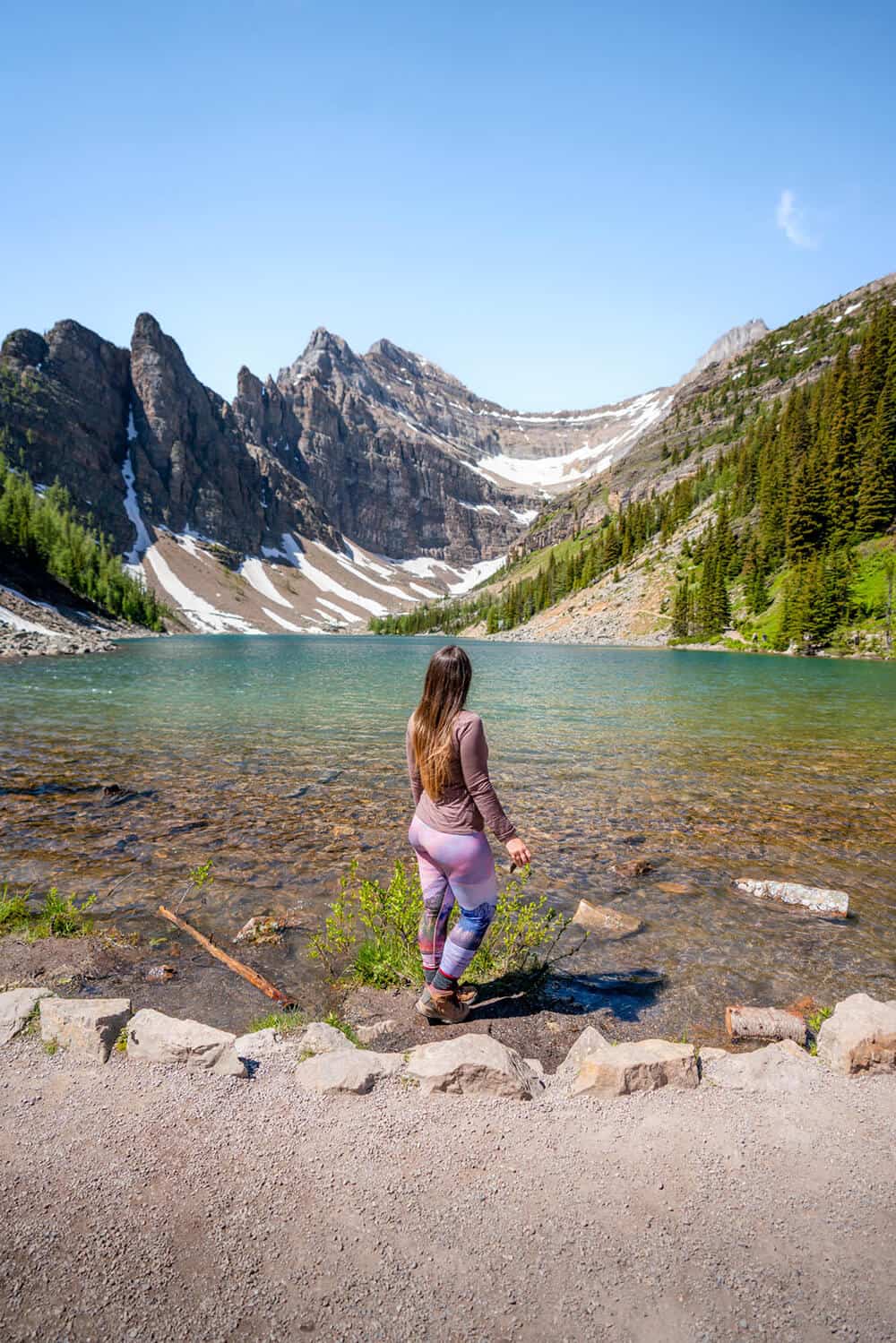
The Lake Agnes Tea House: is a beautiful and moderate trek that takes you through lovely forests to a stunning alpine lake, where you can enjoy a cup of tea while taking in the mountain views.
- Difficulty: Moderate
- Length: 7.4km (4.6 miles)
- Elevation: 384 metres (1,259 ft)
- Round-Trip Time: 2-3 hours
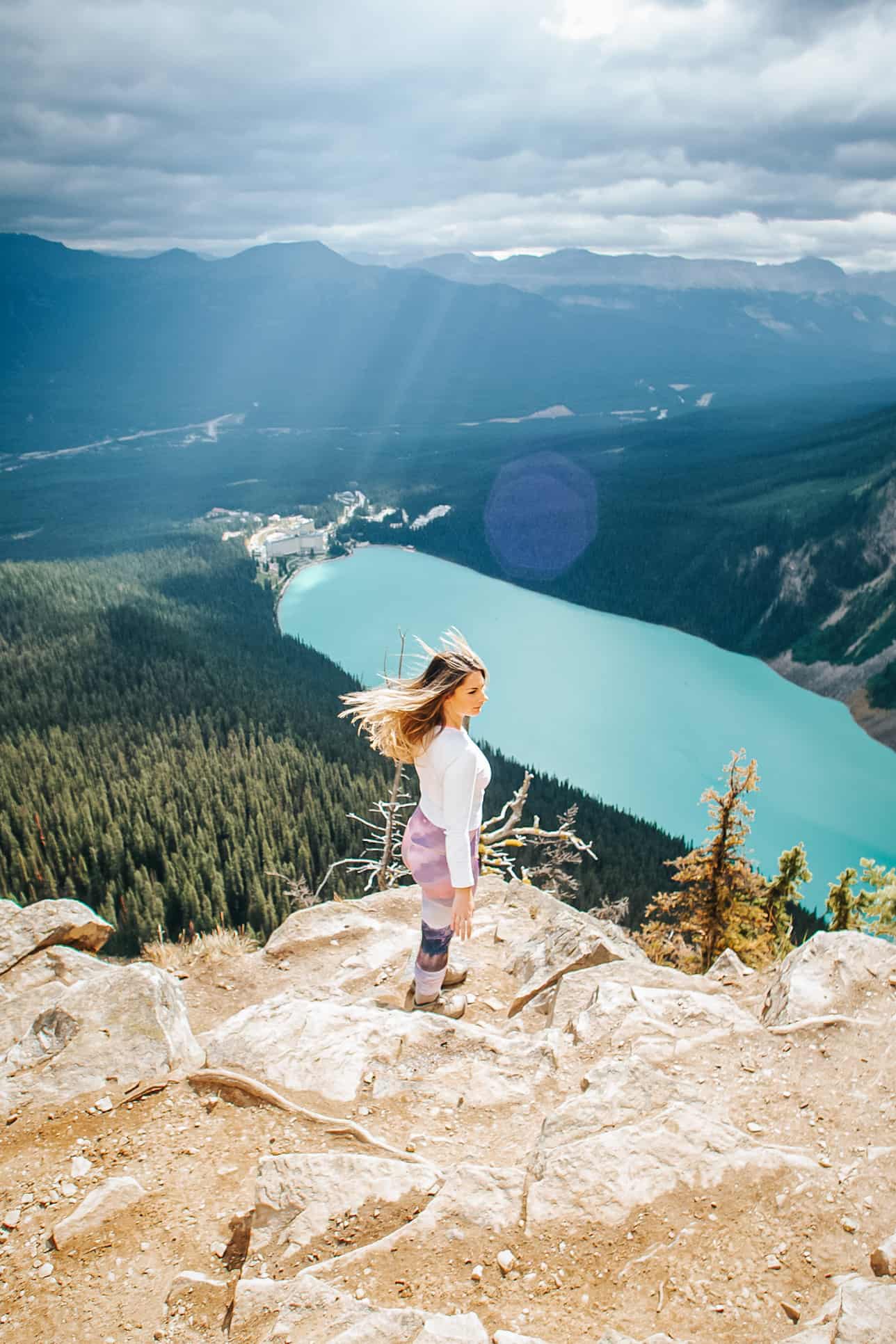
The Big Beehive Trail: The Big Beehive trail my absolute favourite hike in Banff. This hike leads to a panoramic viewpoint that looks down onto Lake Louise.
- Difficulty: Hard
- Length: 10.8km (6.7 miles)
- Elevation: 718 metres (2,355 ft)
- Round-Trip Time: 5-6 hours
Plain of Six Glaciers: This hike is a bit longer and more challenging, but the views are worth it. It takes you to a stunning viewpoint of six glaciers, with opportunities to see wildlife along the way.
- Difficulty: Moderate
- Length: 14.6km (9 miles)
- Elevation: 514 metres (1,686 ft)
- Round-Trip Time: 4-5 hours
Sentinel Pass: This is another challenging hike, and is best hikes during fall when the larches turn their iconic yellow colour.
- Difficulty: Hard
- Length: 11.1km (6.9 miles)
- Elevation: 749 metres (2.457 ft)
- Round-Trip Time: 5-7 hours
Viewpoints in Yosemite Vs Banff

The great thing about both Yosemite and Banff, is that there are plenty of beautiful viewpoints that you can drive to that require almost no hiking or walking. Below are some of my favourites:
Viewpoints in Yosemite
- Tunnel view: Tunnel View is the most famous viewpoint in Yosemite, it offers a breathtaking panoramic view of El Capitan, Half Dome, and Bridalveil Fall.
- Glacier point: Glacier Point is another iconic viewpoint in Yosemite, especially at sunset. It is accessible by car and offering stunning views of the valley and Half Dome.
- Yosemite Falls: Getting to the main viewing area for Yosemite Falls requires a short walk from the parking lot, but it is well worth it for the stunning views.
- Valley View: Valley View is a less-popular viewpoint, similar to Valley View but with the Merced River in the foreground.
Viewpoints in Banff
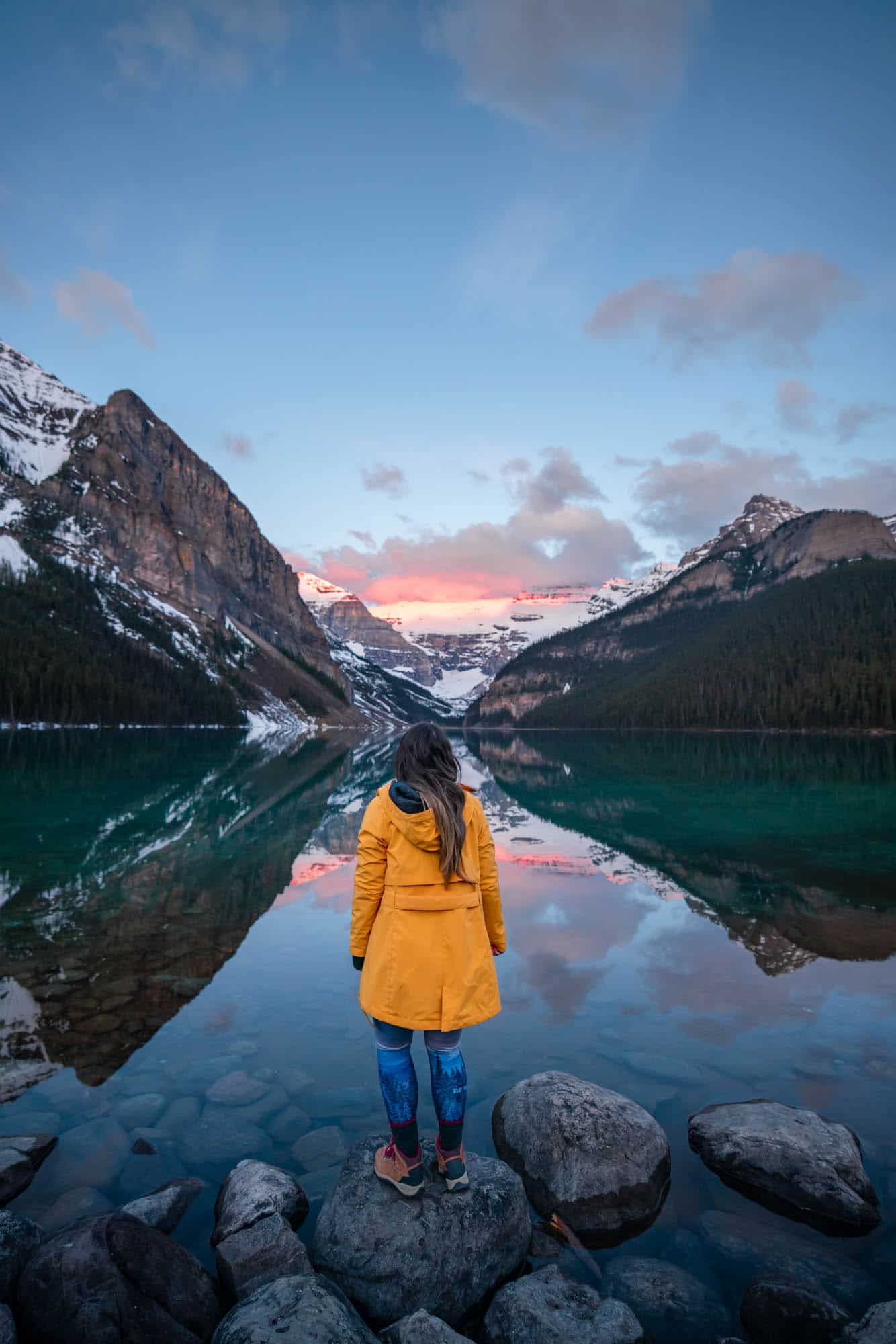
- Lake Louise Lakeshore: This is the busiest view in all of Banff National Park. The Lakeshore is always busy because it is a short 5-minute walk from the parking lot. But if you continue to walk around to the right-hand side of the lake, you’ll find some quieter spots.
- Moraine Lake Rock Pile: The best place to see Moraine Lake is from the rock pile, which is a short walk up a set of rocky stairs that leads to the main viewing area.
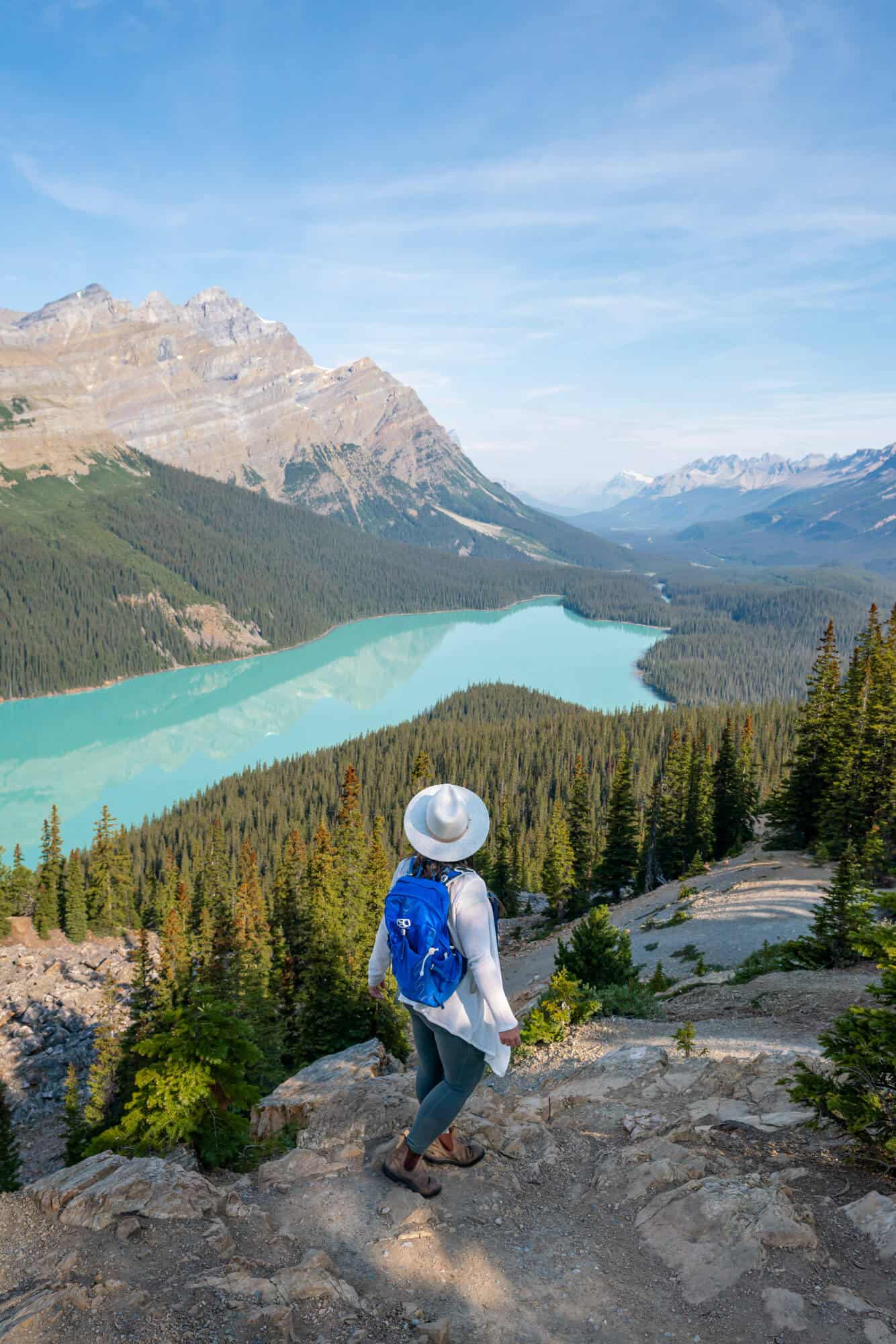
- Peyto Lake: Peyto Lake is the hardest viewpoint to get to on this list, but it’s still very easy! It takes a bit more effort as the walk is all uphill, but it isn’t that long and should only take about 15-minutes to reach the top.
- Surprise: Corner: Surprise Corner is a more unique lookout in Banff. This viewpoint looks out towards the Banff Springs Hotel which sits on a hill surrounded by mountains peaks.
Public Transportation in Banff Vs Yosemite
Public Transportation in Yosemite
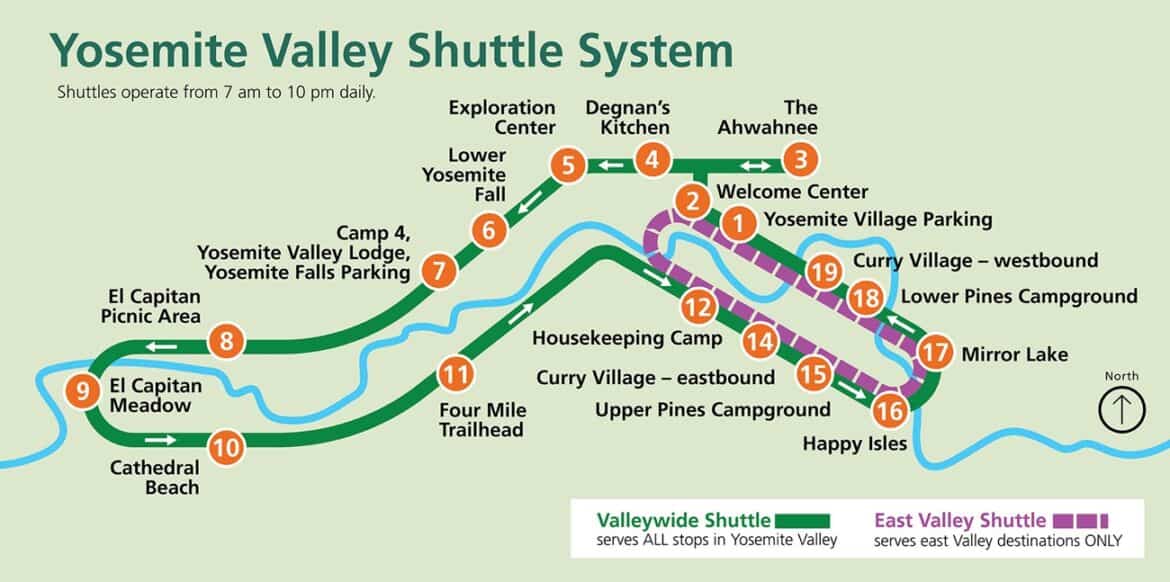
Yosemite National Park offers a free shuttle to help you get around the park. The Yosemite Valley Shuttle System runs year-round and there two major routes available. The Valleywide shuttle route circles the Yosemite Valley connecting most of the major attractions, while the East Valley shuttle is a condensed route that circles Curry Village and several campgrounds.
If you’re planning on venturing outside of the Yosemite Valley, YARTS (Yosemite Area Regional Transportation System) offers public bus transportation to popular destinations such as Wawona, Mariposa Grove and El Portal.
Public Transportation in Banff
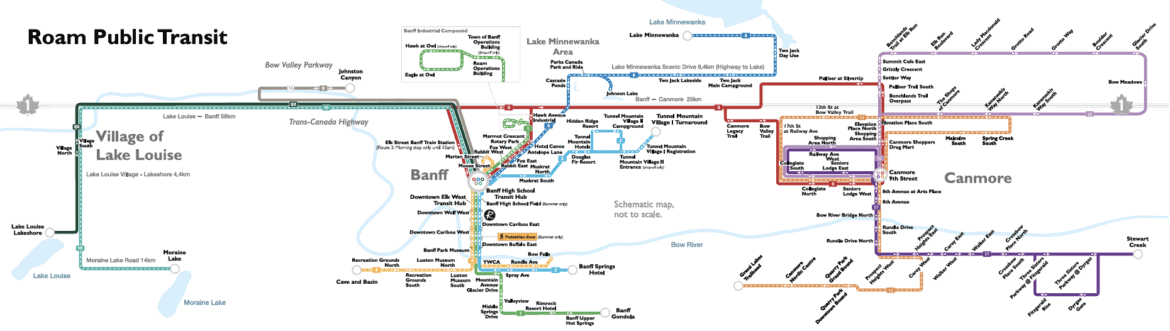
Banff has a fantastic network of busses that you can take throughout the park, which makes visiting Banff without a car much easier. The Roam transit system is significantly bigger than the Yosemite shuttle system, however the system is not free like Yosemite.
The Roam Transit service provides buses that run frequently, connecting you to key locations within the town and surrounding areas, including popular attractions like the Banff Gondola and Lake Louise. Check out the official website for up to date schedule times.
Depending on the route, you may have to book in advance, such as the bus to Lake Louise. Other routes you can pay for with cash/coins when you board. If you plan on using the bus system all day long, you can also purchase a day-pass from the visitor centre.
If you are visiting the Banff Gondola, there is also a free shuttle that goes to the Banff Gondola from several downtown locations. You can check out the schedule here.
How long to spend in Yosemite Vs Banff?
The amount of time you spend in both places will differ. The minimum amount of days I think you should spend at least 3 full days in Yosemite and Banff (with travel days either side).
I recently spent 2 full days in Yosemite, with a travel day either side, and I would say one more full day would have been perfect. Many of the hotels in Yosemite are actually outside of the park, so you’ll have to drive in each day.
Where as with Banff, most accommodations are within walking distance of Downtown – which means you can walk to some attractions from your door. The close proximity of hotels to Downtown will also help you maximize your time. Overall there is more to do in Banff, so I recommend spending at least 3 days in Banff.
If you want to explore further afield, such as the Icefields Parkway (and I highly suggest you do!) then 4 days in Banff would be perfect.
Best time to visit Yosemite Vs Banff?
When to visit Yosemite National Park
Peak tourist season in Yosemite starts in June and ends in August. During this time, the park is crowded and prices for accommodations are higher.
The best times to visit Yosemite are during the shoulder seasons of April-May and September-October when the weather is mild, fewer tourists, and lower prices.
However, if you’re hoping to see waterfalls at their fullest strength, it’s recommended to visit during late spring or early summer when snowmelt from the mountains results in powerful cascades. This is especially true for Yosemite Falls.
Fall is when the leaves change colour in Yosemite Valley. This time of year you’ll experience sunny days and cooler temps, but the waterfalls are not as powerful.
The winter is the cheapest for accommodation and you’ll find fewer crowds, however many of the roads within the park close, so you’ll have less options for activities and viewpoints.
When to visit Banff National Park
Similar to Yosemite, the peak tourist season in Banff is during the summer months of June-August. However, tourist season can extend into September. The crowds start dying down after Labour Day (September 2nd in Alberta).
I think the best times to visit Banff are late June/early July and early to mid September. This is when the weather is mild and fewer tourists. I also like early July because the lakes have thawed but there’s still a dusting of snow on the peak – which is incredibly beautiful!
If you’re hoping to see wildlife in Banff, visiting in the springtime is recommended as many animals come out of hibernation during this time.
Winter in Banff, is a popular time for skiing and other winter sports. While it may be colder, there are still plenty of activities to enjoy such as ice skating on frozen lakes, or the famous ice festival at Lake Louise. If you’re planning a winter trip, Banff would be my choice of park between the two.
Is Yosemite or Banff better for couples?
It depends! If you’re looking for a more romantic trip, then Banff is by far the better destination. Banff has an abundance of spas and world-class fine-dining restaurants. My recommendation for a romantic getaway to Banff, would be a stay at either the Fairmont Banff Springs Hotel or the Fairmont Chateau Lake Louise – both of these luxury hotels offer stunning views and luxurious amenities. Banff also has a quiet, peaceful atmosphere that is perfect for couples looking to relax and enjoy each other’s company.
Which park is better for kids & families?
Both parks are incredibly family-friendly, but in different ways. Banff has an abundance of guided tours, like the Lake Minnewanka Cruise, and this Lake Louise tour. There’s also many gondolas to choose from, like the Lake Louise Sightseeing Gondola and Banff Gondola which allows you to see panoramic mountain views without the effort.
Yosemite is also very kid-friendly with tons of amazing views and lookout points. Mariposa Grove was one of the places that I found were popular with families. One thing I think Yosemite has does have the edge over Banff is, you can take your kids to get sworn in as a Jr.Ranger – how cool is that!?
📌 Read More: I have a full comparison guide to help you choose between the Lake Louise Gondola Vs the Banff Gondola!
Cost of visiting
Is Banff or Yosemite more expensive?
Both Yosemite and Banff are very similar in terms of cost of lodging and food. However there are some things to think about when putting together your budget.
- Will you be flying?
- Will you be renting a car?
- Is your currency worth more than either destination? (for example, Americans save money visiting Canada because the USD is worth slightly more than CAD. Or Brits converting £ to $)
Gas is by far cheaper in the US – It doesn’t matter where you are in the states, it’s going to be cheaper than Canada because the price is per gallon and not litre.
In terms of accommodation costs, I have worked out the “average” of what a hotel for 3 nights in Banff vs Yosemite would cost in peak season (July) and surprisingly Yosemite came in cheaper! The average cost of a 3 night stay in Banff will cost you $1,799 CAD ($1,314 USD) whereas the average 3 night vacation to stay near Yosemite will cost you $1,554 CAD ($1,135 USD).
Which park is better for budget travellers?
Banff is better than Yosemite for budget travellers, and there are a few reasons why. First of all, Banff has a couple of hostels within the park. Both the HI Banff Alpine Centre and Samesun Banff are located within the town of Banff, with easy access to attractions on foot or by bus. Yosemite on the other hand, does not have any hostels in or near the park entrance.
Lodging in general is more varied in Banff, with a variety of budgets. The hotels in Yosemite and near the main entrances, tend to be more expensive.
Both parks do have campgrounds, I found the campgrounds in Yosemite to be very well kept and in central locations. The campgrounds in Banff are scattered throughout the park.
Banff has a much bigger selection of restaurants, including chain restaurants like Chilis and Boston Pizza, as well as fast-food like McDonalds.
Banff’s close proximity to Calgary means its much easier to book a shuttle from the airport, which is great if you are choosing to visit Banff without a car. Getting a shuttle to Yosemite without a car requires more planning. There is no dedicated shuttle direct to the park from San Francisco Airport. You’ll need to take a Greyhound bus to Merced and then transfer to a second bus.
Accommodation Options
Banff has a much bigger inventory of accommodation than Yosemite. There are three hotels with Yosemite National Park, and 2 of them are in Yosemite Valley.
If you’re looking to stay inside the park, Yosemite has several campgrounds available for reservation, as well as a few lodges and rustic cabins.
Whereas Banff is a residential town (located inside Banff National Park) and there are accommodation options from cabins and hostels, to luxury 5-star hotels.
With a bigger inventory of hotels, Banff is naturally busier than Yosemite, which still maintains a quietness and seclusion that Banff sometimes lacks.
Below are my top accommodation choices for both Yosemite and Banff:

Where to stay in Yosemite
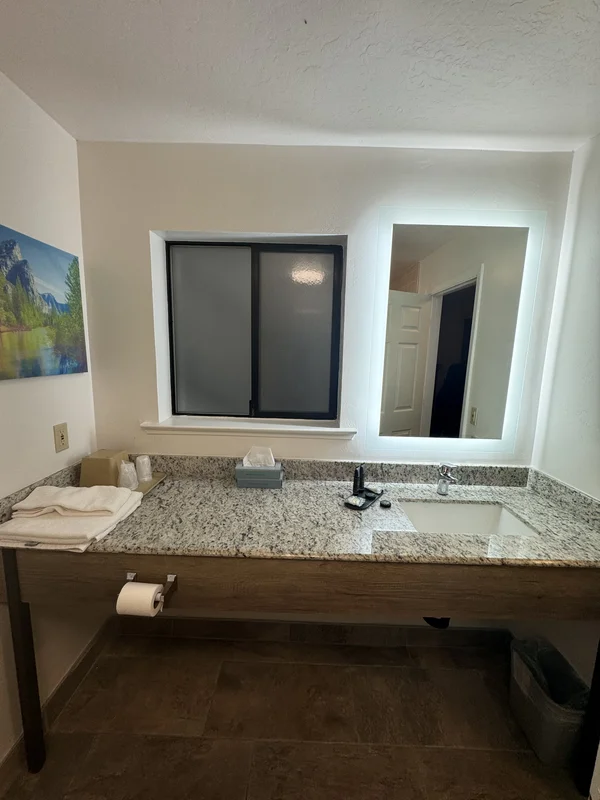
- Yosemite View Lodge: I have stayed at the Yosemite View Lodge on two visits to Yosemite now, and the hotel never disappoints. It’s not luxury by any means, but the rooms are BIG with two queens and a very spacious bathroom. I love having space to spread out so the larger rooms are a huge bonus for me. We saved money on our trip by cooking our own meals in the kitchenettes in the room. And the best part? A massive balcony/porch that leads out to amazing views of the Merced River! Yosemite View Lodge is located in El Portal, which is around a 10 minute drive to the Arch Rock entrance of the park.
- Rush Creek Lodge at Yosemite: Rush Creek Lodge is a gorgeous property in a prime location – only around 5 minutes from the Big Oak Flat entrance to Yosemite. This makes it the closest accommodation to the park without actually staying inside Yosemite. The lodge is the first one near Yosemite to open in over 25 years. Amenities include a pool, hot tub, unlimited s’mores, and a lovely spa.

Where to stay in Banff
- Banff Park Lodge: The Banff Park Lodge is my favourite moderate hotel in Banff. The location cannot be beaten! The location makes mornings so easy, you can walk down Banff Avenue with little to no people, and enjoy a coffee. I stayed here on a recent trip and loved how spacious the room was. It was also really convenient to have the sink outside of the bathroom when getting ready in the mornings.
- Moose Hotel & Suites: The Moose Hotel & Suites offers an upgrade from the Banff Park Lodge. It’s a popular choice in Banff, situated at the quieter end of Banff Avenue. The hotel includes pet-friendly rooms, a hot tub, as well as a fitness centre. The hotel also has an amazing rooftop hot tub that overlooks Banff Avenue.
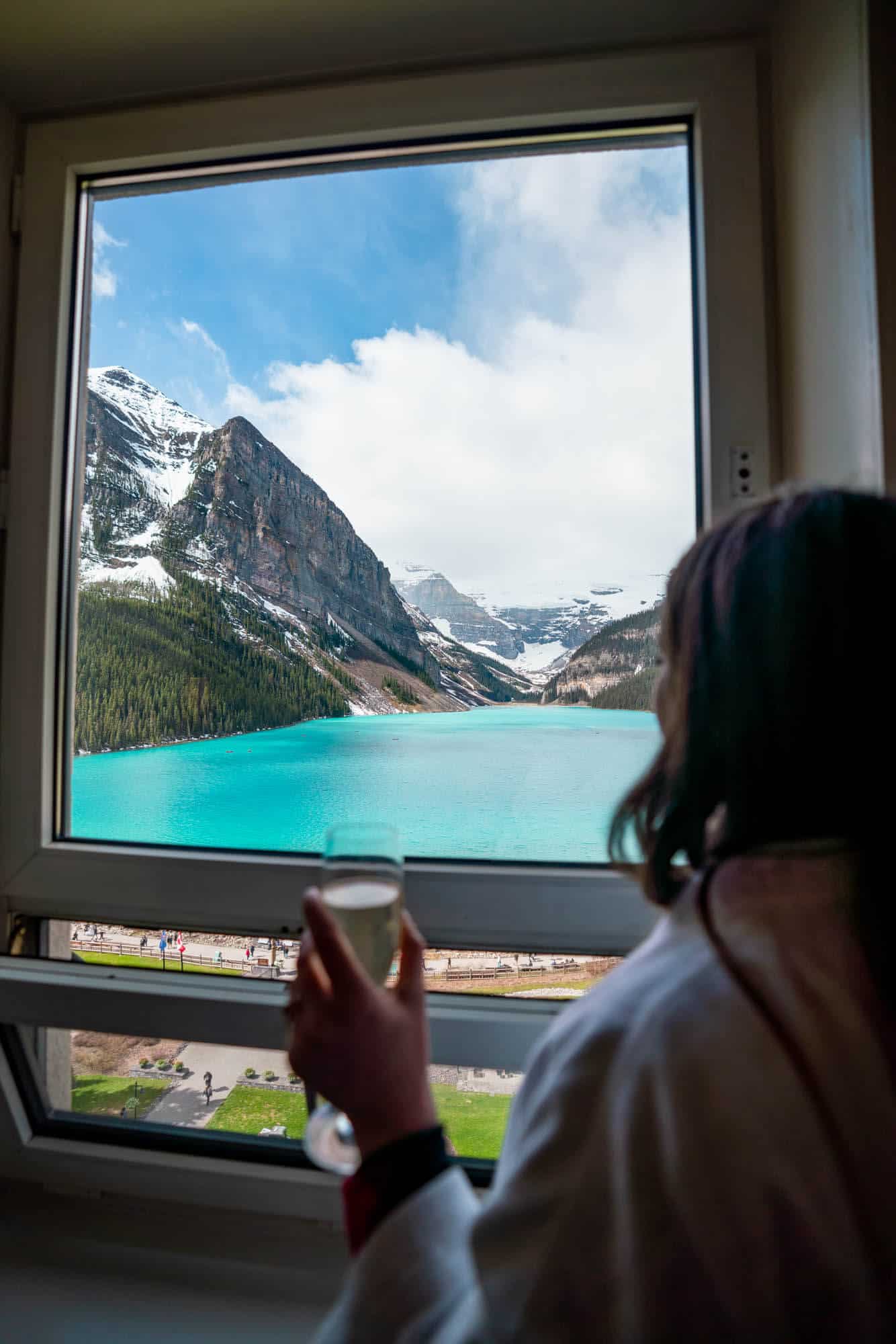
- Fairmont Chateau Lake Louise: If you want ultimate luxury stay in Banff, the Fairmont Chateau Lake Louise is it! This is the only hotel that sits on the shores of Lake Louise. I stayed here in a lake view room a couple of years ago, and it was an experience in itself. Getting to wake up to the blue hues of Lake Louise every morning was truly a special experience. The rooms are small, but it’s an historic hotel, so this is to be expected. The hotel features several restaurants, a spa, and indoor pool. If you do choose to stay here, I recommend booking their afternoon tea. I have a full review of of the Fairmont Chateau Lake Louise here.
So which should you choose, Yosemite or Banff?
While I think you should definitely visit both during your lifetime, if you only have the budget/time for one, I would consider how you will get to either park to begin with, and what your budget is.
If you are already in the USA, visiting Yosemite might be the easier option of the two, especially as internal/domestic flights are much cheaper in the US.
You may also want to extend your trip and explore further afield. If choosing Banff, you can also explore the Icefields Parkway and Yoho National Park. If choosing Yosemite, the route from San Francisco down the coast on the Pacific Coast Highway is phenomenal!
Weather is also something to consider. Yosemite has warmer temps in summer, while Banff has more unpredictable conditions. Banff is by far the winner in winter!
One thing I know for sure, whicheverr one you choose, neither will disappoint!